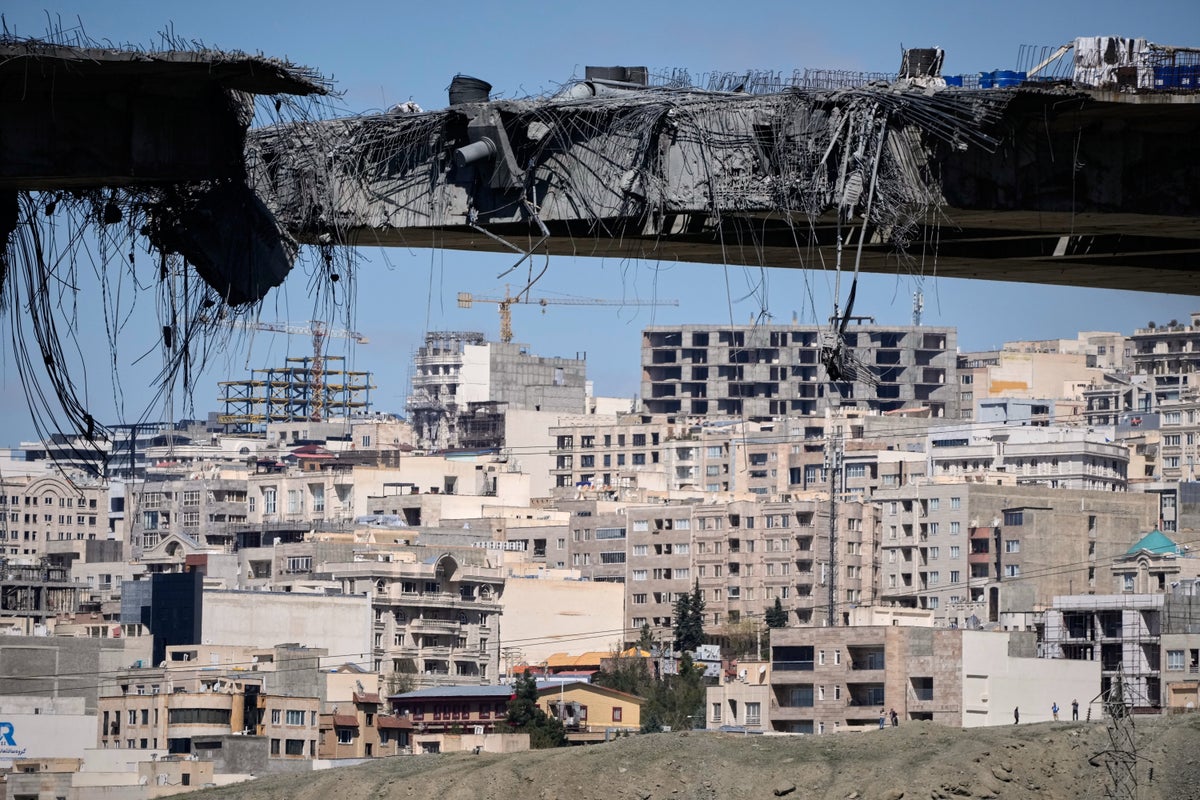
The detonation at 8:30 AM on Saturday did not trigger the catastrophic radiological release that regional monitors have feared for decades, but it signaled a terrifying shift in the geometry of the current conflict. A single projectile struck the outer perimeter of the Bushehr Nuclear Power Plant, tearing through an auxiliary support building and killing a security guard. While the reactor core remains intact and operational, the strike marks the fourth time in six weeks that the "red line" of nuclear infrastructure has been physically breached.
This is no longer a shadow war of cyberattacks and mysterious centrifuges failures. We have entered an era of kinetic atmospheric combat where the world’s most sensitive energy facilities are being used as backdrops for high-stakes brinkmanship. The death of a lone guard at the fence line is a grim punctuation mark on a month of escalating violence that has seen U.S. jets downed, petrochemical hubs incinerated, and the very concept of "nuclear safety" discarded in the pursuit of military leverage.
The Calculated Precision of Proximity
The geography of the Bushehr strike suggests a chilling level of intent. This was not a missed shot. The projectile hit near the fence line—close enough to shatter windows and claim a life, yet far enough from the containment dome to avoid a meltdown that would poison the Persian Gulf. This is "message warfare." By hitting the perimeter, the attackers—widely assumed to be U.S. or Israeli forces under the banners of Operation Epic Fury and Operation Roaring Lion—are demonstrating that the shield of "international safeguards" is gone.
For years, the Bushehr plant was considered a "soft" target in political terms but a "hard" one in military ones because of its status as a commercial facility. Unlike the underground enrichment halls of Fordow or Natanz, Bushehr is a visible, 1,000-megawatt light-water reactor built with Russian assistance. It provides a significant portion of Iran's civilian power.
Striking it doesn't just threaten a radiation leak; it threatens the basic stability of the Iranian power grid. The "why" behind this specific strike is simple: it forces Tehran to divert its dwindling air defense resources away from the capital and toward the southern coast.
The Infrastructure Toll
The damage to the auxiliary building is more than cosmetic. These secondary structures often house:
- Redundant cooling system controls that manage the spent fuel pools.
- Security communications hubs essential for plant lockdown procedures.
- On-site emergency response equipment used to mitigate the effects of a primary strike.
By degrading these "safety pillars," as IAEA Director General Rafael Grossi calls them, the attackers are effectively peeling back the layers of a domestic nuclear program until only the core remains exposed. It is a slow-motion siege of a radioactive fortress.
The Downed Jet and the Search for the Missing
The context of the Bushehr strike cannot be separated from the wreckage of a U.S. F-15E Strike Eagle currently sitting in the Iranian desert. On Friday, just twenty-four hours before the Bushehr perimeter was hit, Iran successfully downed the American fighter jet. While one crew member was recovered in a frantic search-and-rescue operation, a second remains missing.
The timing is far from coincidental. Historically, when a high-value asset like a Strike Eagle is lost, the subsequent response is a "punishment strike" designed to re-establish dominance. The Bushehr incident, along with the simultaneous bombing of the Special Petrochemical Zone in Mahshahr, serves as a loud, explosive response to the loss of American hardware.
The Iranian government is now using its state media to urge citizens to hunt for "enemy pilots," a rhetorical escalation we haven't seen since the height of the 20th-century conflicts. This isn't just about a nuclear plant anymore; it’s about the visceral reality of pilots in parachutes and guards in body bags.
The Myth of the Surgical Strike
There is a dangerous fiction being sold in Western capitals: the idea of the "surgical" nuclear strike. Analysts often claim that modern munitions can disable a facility's "capability" without touching its "radioactivity."
The reality on the ground at Bushehr proves otherwise. When a projectile hits a perimeter, it creates a cascade of failures.
- Shockwaves can misalign delicate sensor arrays within the reactor hall.
- Fragment damage can sever backup power lines, forcing a reliance on diesel generators that may have already been sabotaged or depleted.
- Human error spikes as security personnel—like the guard killed on Saturday—are forced to operate under active fire.
If the goal is to stop a nuclear program, hitting the fence is the least efficient way to do it. It does nothing to stop the centrifuges spinning 500 miles away. Instead, it creates a high-probability environment for a "black swan" event—a scenario where a secondary explosion or a fire in an auxiliary building leads to a cooling failure that no one intended.
The Petrochemical Pivot
While the world focuses on the nuclear angle, the broader economic war is being fought in the Khuzestan province. The strikes on the Bandar Imam Petrochemical Complex on the same day as the Bushehr attack were arguably more devastating to Iran’s immediate survival.
Iran's economy is currently gasping for air. By targeting the petrochemical sector, the U.S.-Israeli coalition is cutting off the regime's last remaining source of hard currency. This is a total-war strategy. The message to the Iranian leadership is clear: We can take your power, we can take your money, and we can pierce the perimeter of your most protected sites.
A Failed Policy of Kinetic Containment
We have seen this cycle before, but never with this much at stake. The transition from Operation Midnight Hammer in 2025 to the current full-scale invasion suggests that the "limited strike" model has failed. If the objective was to force Iran back to the negotiating table, the result has been the opposite.
Instead of a diplomatic retreat, we see:
- Heightened Hostility: Iran's "Operation True Promise 4" has launched hundreds of ballistic missiles toward Israel.
- Proxy Activation: Regional shipping routes are now almost entirely paralyzed by drone swarms and naval mines.
- Technological Escalation: The use of Iranian drones to hit the Oracle HQ in Dubai shows that the "battlefield" now extends to the corporate headquarters of American tech firms.
The strike near Bushehr is a symptom of a strategy that has run out of options. When diplomacy dies, and cyber-warfare reaches its limit, the only tool left is the high-explosive projectile. But using that tool near a nuclear reactor is like trying to perform surgery with a sledgehammer. You might remove the tumor, but the patient rarely survives the process.
The international community, led by the IAEA, is screaming for "maximum restraint," but those calls fall on deaf ears when pilots are missing and guards are being buried. The guard at Bushehr was just one man, but his death represents the final collapse of the "nuclear sanctuary" rule.
The next time a projectile misses the perimeter and hits the containment dome, we won't be talking about a single casualty or a damaged support building. We will be talking about a plume of Cesium-137 drifting over the Persian Gulf, a scenario for which there is no "surgical" fix.
The path to de-escalation is currently buried under the rubble of a secondary building in Bushehr. Unless someone stops the clock, the next strike won't be a message. It will be a catastrophe.

.png?width=1200&auto=webp&trim=0%2C0%2C0%2C0)