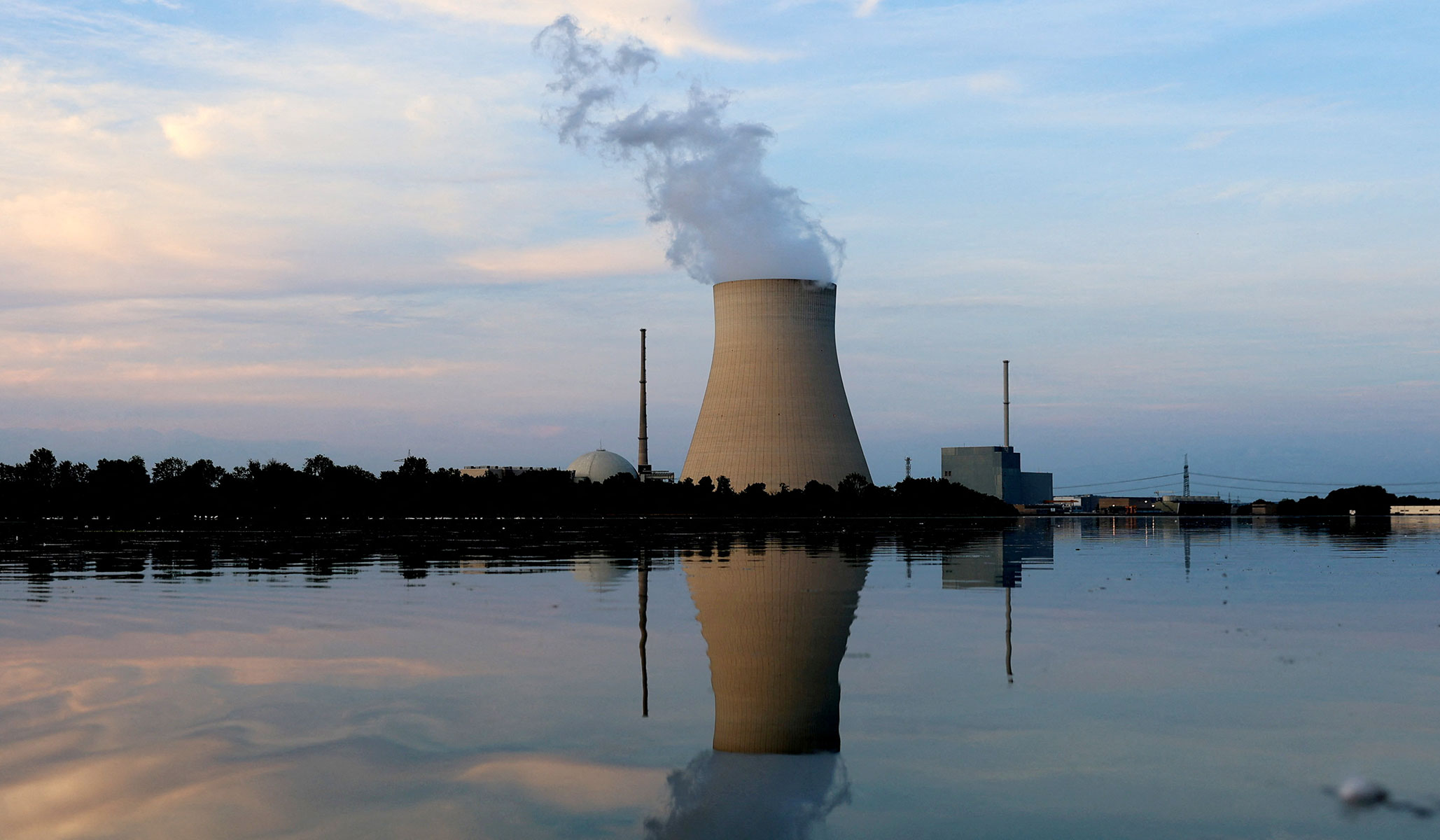
It’s gone. If you look up the Hudson River toward Buchanan, those massive concrete domes are still there, but the humming has stopped. For decades, the Indian Point Energy Center was the invisible heartbeat of New York City. People hated it. People loved it. Most people just forgot it existed until their ConEd bill spiked or a protest hit the evening news.
The story of the nyc nuclear power plant—specifically Indian Point—is honestly a mess of politics, engineering, and sheer anxiety. It wasn’t just one thing that killed it. It was a perfect storm of environmental pressure, cheap natural gas, and a governor who made its closure a personal mission. You can't talk about NYC energy without talking about the hole Indian Point left behind. It provided roughly 25% of the power for the city and Westchester. That is a massive amount of juice to suddenly lose. Recently making headlines lately: Strategic Signaling and Diplomatic Informalism the Mar a Lago Engagement Between Ambassador Garcetti and Foreign Secretary Misri.
What Indian Point Really Was
Indian Point wasn't just one plant; it was a complex. Unit 1 started up way back in 1962 but was shut down in the 70s because the emergency cooling system wasn't up to snuff. Units 2 and 3 were the workhorses. We’re talking about Westinghouse pressurized water reactors that basically ran around the clock.
They were reliable. That’s the thing about nuclear. Unlike solar or wind, which are great but intermittent, Indian Point just stayed on. It didn't care if the wind was blowing or if it was midnight in February. It pushed out about 2,000 megawatts. To put that in perspective, that’s enough to power millions of homes and keep the subway system—the literal lifeblood of the city—moving without a hitch. Further information into this topic are covered by BBC News.
But it was close. Too close for many. It sat about 25 miles north of Manhattan. Critics, including organizations like Riverkeeper and former Governor Andrew Cuomo, pointed out that if something went sideways, you couldn't evacuate 20 million people. The logistics were, frankly, impossible.
The Shutdown Reality Check
In April 2021, the last reactor, Unit 3, was powered down for good. Everyone cheered or cried depending on which side of the fence they sat on. But here is the part that gets messy: the carbon emissions.
When you flip the switch on a nyc nuclear power plant, you have to get that electricity from somewhere else. You don't just "save" that energy. New York replaced most of that carbon-free nuclear power with natural gas. Specifically, three new gas-fired plants: Bayonne Energy Center II, Cricket Valley, and CPV Valley.
The math is brutal.
According to data from the New York Independent System Operator (NYISO), the state's reliance on fossil fuels for electricity in the downstate region actually jumped after Indian Point closed. We went from a grid that was becoming cleaner to one that suddenly leaned back on gas. It’s a paradox. You close a nuclear plant to protect the environment, but the carbon footprint of the city’s grid goes up because the renewables weren't ready to take the full load yet.
The Safety Debate: Fact vs. Fear
Was it safe? Honestly, it depends on who you ask and what data you trust. The Nuclear Regulatory Commission (NRC) consistently gave Indian Point high safety ratings. They argued the plant was built to withstand earthquakes much larger than anything the Ramapo Fault could produce.
On the flip side, the "leaks" were real. Over the years, there were several instances where tritium-contaminated water leaked into the groundwater and eventually the Hudson River. Entergy, the company that owned the plant, and the NRC maintained these leaks didn't threaten public health. But "radioactive water in the river" is a headline that no amount of technical data can fix. It’s a PR nightmare.
Then there was the fish issue. The plant used a "once-through" cooling system. It sucked in billions of gallons of water from the Hudson to cool the reactors and then spit it back out warmer. This process killed a staggering number of fish larvae and eggs—some estimates say billions annually. For groups like Riverkeeper, this was a dealbreaker. They fought for decades to force the plant to build cooling towers, which would have cost Entergy billions. Entergy basically looked at the bill, looked at the falling price of natural gas, and decided it wasn't worth the fight anymore.
What Happens to the Site Now?
You can’t just turn off a nuclear plant and walk away. It’s a decades-long process called decommissioning. Currently, a company called Holtec International owns the site and is tearing it down.
The big controversy right now? The "dumping."
Holtec wanted to discharge about a million gallons of treated water containing residual tritium into the Hudson River. The locals lost it. It didn't matter that this is standard practice for nuclear plants worldwide. The backlash was so intense that Governor Kathy Hochul signed a law in 2023 specifically banning the discharge of any radiological substance into the Hudson River in connection with decommissioning.
This has stalled some of the work. It’s a legal stalemate. Holtec says it's safe and federally regulated; the state says "not in our river." While they argue, the spent fuel sits in "dry casks"—massive steel and concrete cylinders—on the property. It’ll probably stay there for a long time because the U.S. still doesn't have a permanent national repository for nuclear waste.
The Future of Nuclear Near NYC
Is nuclear dead for New York? Maybe not. While the big nyc nuclear power plant at Indian Point is gone, there is a lot of chatter about SMRs—Small Modular Reactors.
These aren't the behemoths of the 1970s. They are smaller, factory-built, and supposedly much safer. Some energy experts argue that if New York wants to hit its goal of a 100% zero-emission grid by 1940, it can't do it with wind and solar alone. The battery technology to store that much energy just isn't there yet.
There are still three nuclear plants operating in Upstate New York:
- Nine Mile Point
- Ginna
- FitzPatrick
The state actually subsidizes these plants to keep them open because they recognize that without them, the state’s climate goals would evaporate. It’s a weird double standard. We closed the one near the city because of population density and politics, but we pay to keep the ones upstate running to save the planet.
Actionable Insights for New Yorkers
If you’re wondering how the loss of Indian Point affects you daily, or what you can do about the changing energy landscape, here is the ground truth:
Watch your electricity bill's "Supply" charge. Since the closure, the volatility of natural gas prices has a much bigger impact on NYC residents. When gas prices spike globally, your ConEd bill spikes locally because we no longer have that massive "baseload" of fixed-price nuclear power. You might want to look into an ESCO (Energy Service Company) that offers a fixed rate if you hate surprises, but read the fine print carefully.
Support grid modernization. The real bottleneck isn't just generating power; it’s moving it. Projects like the Champlain Hudson Power Express are being built to bring hydropower from Quebec down to NYC. This is meant to fill the gap Indian Point left. Following the progress of these transmission lines is more important for the city's future than almost any other infrastructure project.
Get involved in the tritium debate. The decommissioning of Indian Point will take until at least the 2030s. If you live in the Hudson Valley or NYC, the decisions made about how to handle that waste will affect the river's ecosystem for a generation. Public hearings are still happening. Attend them.
Understand your "clean" energy. If you pay for "green power" through your utility, check where it actually comes from. Much of it is just Renewable Energy Certificates (RECs). The actual electrons hitting your toaster in NYC are still largely coming from gas plants in Queens and Brooklyn now that the nuclear option is off the table.
The era of the massive nyc nuclear power plant is over, but the fallout—economic, environmental, and political—is something we’re going to be dealing with for the next twenty years. It was a giant that provided a quarter of the city's power, and replacing a giant is never easy.