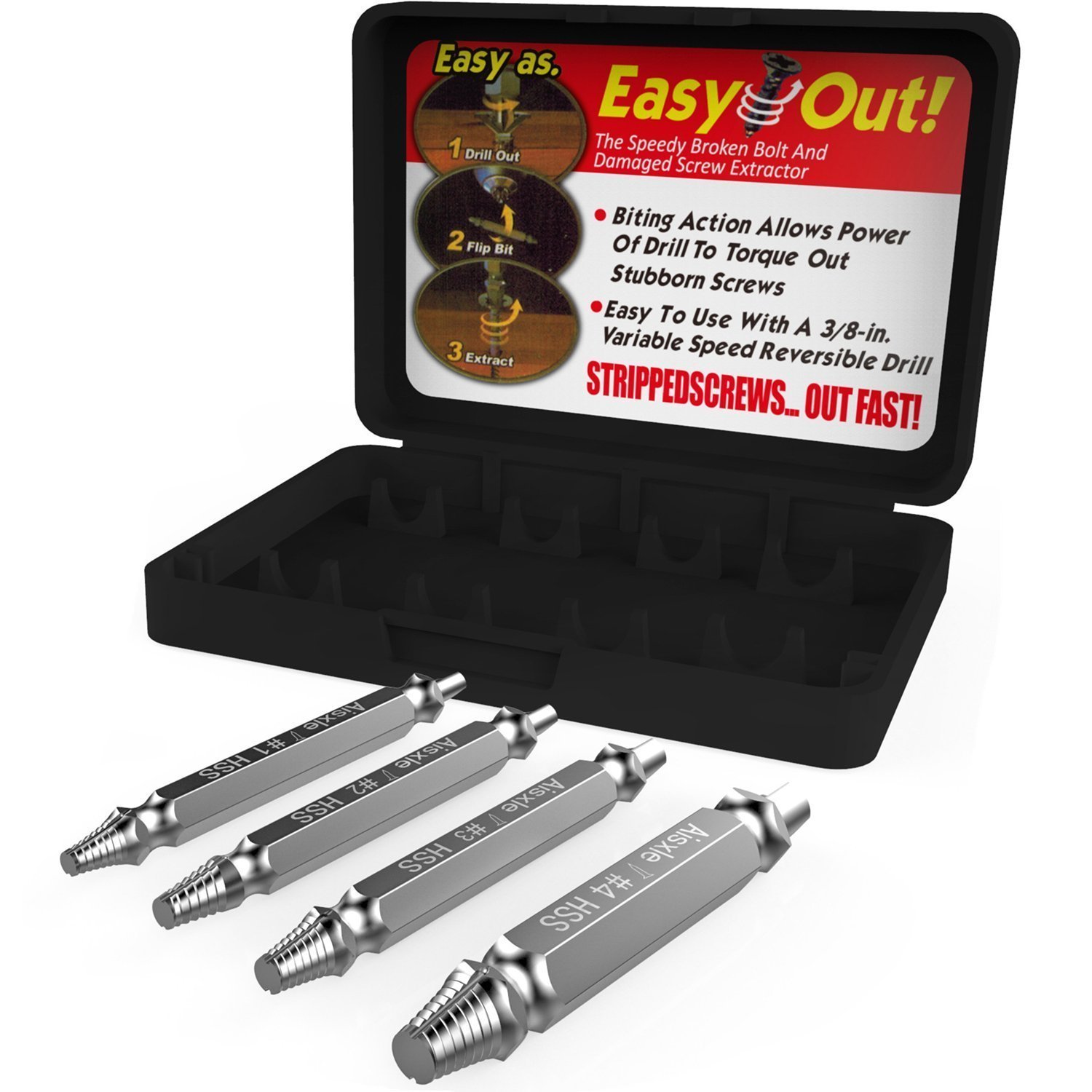
It happens to the best of us. You’re working on a project—maybe it's a car restoration or just fixing a leaky faucet—and then you hear that sickening snap. The head of the bolt or screw just shears right off. Or maybe you’ve been cranking on a Phillips head so hard that the metal has turned into a smooth, useless bowl of silver soup. You’re stuck. You're frustrated. Honestly, it’s one of those moments where you want to throw the wrench across the garage. But that’s where the "Easy Out" comes in, though anyone who has actually used one knows that the name is a bit of an overstatement. It’s rarely "easy," but it is effective if you don’t rush it.
Learning how to use easy out screw extractor tools is basically a rite of passage for any DIYer or mechanic. These things are essentially reverse-threaded drill bits made of hardened tool steel. The logic is simple: you drill a hole into the center of the stuck fastener, jam the extractor in, and turn it counter-clockwise. Since the extractor has left-hand threads, the more you turn it, the harder it bites into the screw. Eventually, the friction between the extractor and the screw becomes greater than the friction holding the screw in the hole. Then, magically, the broken piece starts to back out.
But here is the catch. If you snap an extractor inside a bolt, you are in a world of hurt. Extractors are incredibly hard, which makes them brittle. You can't drill out a broken extractor with a standard high-speed steel (HSS) bit. You'd need a solid carbide end mill and a very steady hand. So, let's talk about how to do this right the first time so you don't end up with a permanent, hardened steel plug in your workpiece.
The Setup is 90% of the Battle
Before you even touch the extractor, you need to prep the area. If the screw is rusted in place, hit it with some real penetrating oil. I'm not talking about the standard "blue can" stuff that everyone has on their shelf; you want something like PB Blaster, Liquid Wrench, or Kroil. Let it soak. Walk away. Have a coffee. Give it at least fifteen minutes, or even better, an hour. If you're dealing with a truly seized bolt in an engine block, hit it with a torch. Heat expands the metal, breaks the rust seal, and lets the oil seep into the threads.
Once it’s soaked, you need a center punch. This is the step most people skip because they’re in a hurry. Don't skip it. If you try to drill into a jagged, broken bolt without a pilot point, your drill bit will "walk" all over the surface. It’ll mar the surrounding metal and you’ll end up drilling off-center. Use a hammer and a sharp center punch to create a divot exactly in the middle of the broken screw. This gives your drill bit a place to live.
Picking the Right Drill Bit
You can't just grab a random bit and start spinning. Size matters here. Most easy out sets come with a guide telling you exactly which size drill bit to use for each extractor. If you don't have the guide, the rule of thumb is to use a bit that is roughly half the diameter of the screw shank.
Go slow. Use a drop of motor oil or cutting fluid on the tip of the bit. If you’re drilling into stainless steel, go even slower. High speeds create heat, and heat "work-hardens" the metal, making it nearly impossible to finish the hole. You want to see nice, curly metal ribbons coming out. If you're seeing smoke and fine dust, you're going too fast and ruining your bit. Drill deep enough that the tapered end of the extractor can get a solid "bite," usually about 1/4 inch to 3/8 inch depending on the size of the fastener.
Getting the Extractor to Bite
Now for the main event. Insert the extractor into the hole you just drilled. You don’t want to use a power drill for this part. I know it’s tempting. I’ve seen people do it. But the torque of a drill is too violent and lacks the "feel" you need. Use a T-handle tap wrench. If you don't have one, a small crescent wrench will work, but it applies uneven pressure to one side, which increases the risk of the extractor snapping.
Tap the extractor into the hole lightly with a hammer to set the teeth. Then, apply firm downward pressure while turning counter-clockwise. You’ll feel the extractor "dig" in. This is the moment of truth. If the bolt is really seized, you might feel the extractor start to flex. Stop. If it feels like it’s going to snap, it probably is. Back off, apply more heat, more penetrating oil, and try again.
Why Extractors Fail (And How to Avoid It)
Most failures happen because of "side-loading." This is when you're pulling the wrench toward one side instead of just rotating it. This puts a bending force on the brittle tool steel. You want pure rotational torque.
- The hole is too shallow: The extractor bottoms out before the threads can bite.
- The hole is too wide: You've left the walls of the screw too thin, and the pressure of the extractor is actually expanding the screw, wedging it even tighter into the threads.
- Impatience: Trying to "muscle" a bolt that hasn't been properly lubricated.
When the "Easy" Way Doesn't Work
Sometimes an easy out isn't the right tool. If you're dealing with a tiny #6 or #8 screw, extractors are so thin they snap if you even look at them funny. In those cases, you might be better off using a "left-hand drill bit." These are the secret weapon of professional mechanics. They look like regular bits but they cut while spinning in reverse. Frequently, the heat and vibration of the left-hand bit will catch the screw and just spin it right out while you're drilling the hole, skipping the extractor step entirely.
Another trick involves a sacrificial nut. If there is even a tiny bit of the screw sticking out, you can thread a nut onto it (or just hold it over the top) and weld the center of the nut to the broken stud. The intense heat of the weld breaks the rust loose, and now you have a fresh hex head to put a real wrench on. Obviously, this requires a welder and some skill, but it's often more reliable than a screw extractor.
Essential Gear Checklist
You don't need a whole shop, but you do need the right stuff. Don't buy the cheapest extractor set at the discount bin; they are made of inferior carbon steel that shatters easily. Look for High-Speed Steel or Cobalt sets from reputable brands like Irwin or Hanson.
- Center Punch: Hardened steel for marking your spot.
- Quality Drill Bits: Cobalt is best for hardened fasteners.
- T-Handle Tap Wrench: For even, controlled torque.
- Penetrating Oil: PB Blaster or similar.
- Propane or MAPP Gas Torch: For stubborn rust.
Safety First (Seriously)
Wear safety glasses. When an extractor snaps, it doesn't just break; it often shatters like glass, sending tiny, razor-sharp shards of hardened steel flying. Also, be careful with the torch near penetrating oil, as many of those formulas are highly flammable. Always have a fire extinguisher nearby if you're working on a car or near fuel lines.
Dealing with the Aftermath
Once the screw is out, don't just shove a new one in. The threads in the hole are likely gunked up with rust, metal shavings, or old thread-locker. Run a "chaser" tap through the hole to clean up the threads. If the threads were damaged during the extraction, you might need to step up to a Heli-Coil or a similar thread repair insert. This involves drilling the hole slightly larger, tapping it, and screwing in a stainless steel wire coil that mimics the original thread size.
Honestly, the biggest lesson in how to use easy out screw extractor tools is knowing when to stop. If you've been fighting a bolt for two hours and you're getting angry, walk away. Most broken extractors are the result of "one last hard pull" fueled by adrenaline and frustration.
Next Steps for Your Project
- Inspect the hole: Use a flashlight to check if the internal threads are still intact or if they’ve been "galled" (smeared) by the broken bolt.
- Clean the threads: Use a wire brush or a thread chaser—not a cutting tap—to remove debris without removing more metal.
- Prevent future issues: When you install the replacement bolt, use a nickel-based anti-seize compound if the bolt is going into a high-heat area or into aluminum. This prevents galvanic corrosion and ensures you never have to use an extractor on this specific bolt ever again.
- Upgrade your hardware: If a bolt snapped because it was cheap, replace it with a higher grade (like Grade 8 for SAE or 10.9 for Metric) to ensure it can handle the required torque.