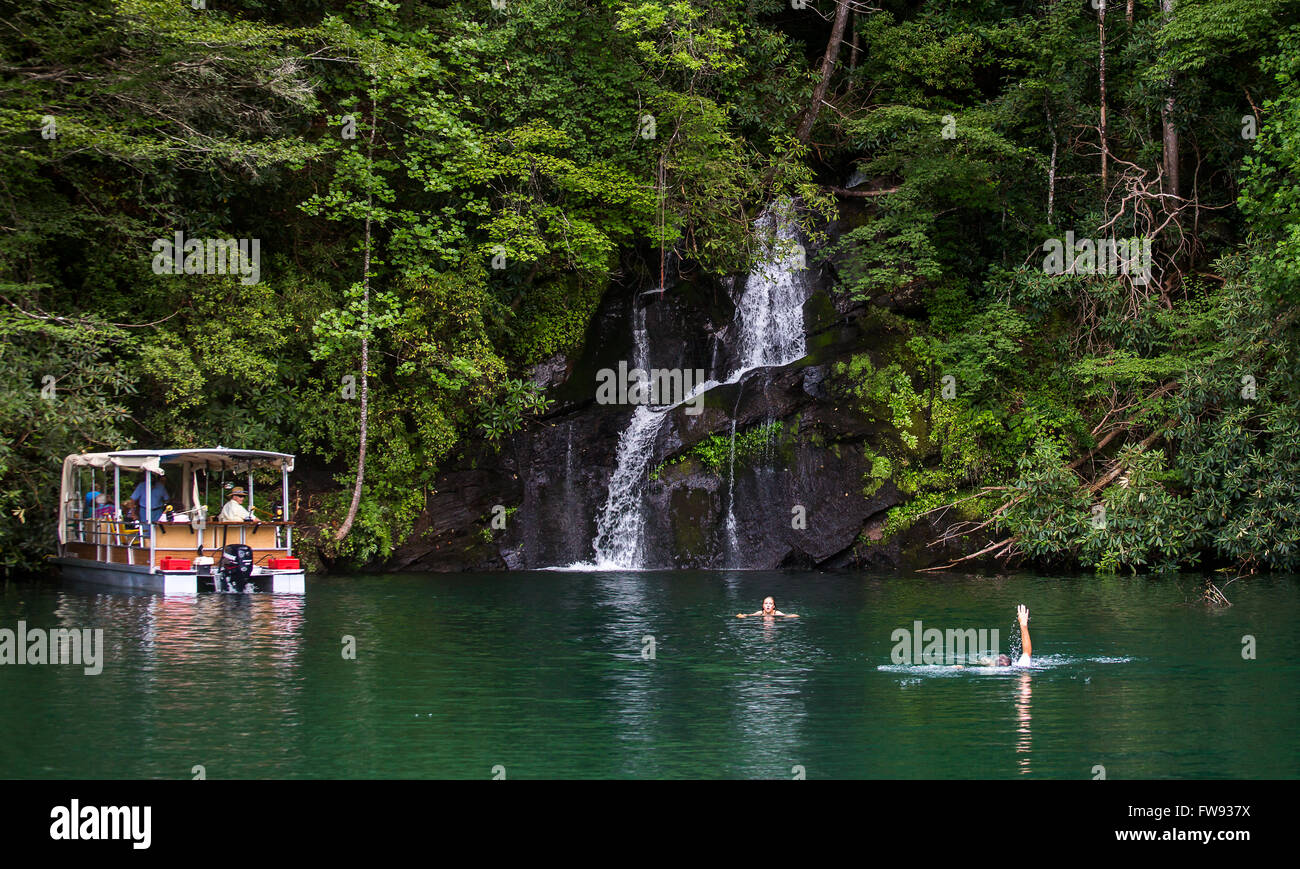
You’re floating in the middle of 7,500 acres of sapphire-blue water, surrounded by the Jocassee Gorges, and honestly, your phone’s GPS is probably lying to you. It happens. The signal drops the second you pass the Devil’s Fork State Park boat ramp, and suddenly, that digital map of waterfalls on Lake Jocassee you saved is a blurry mess of pixels. If you’ve never been here, Lake Jocassee isn't like your typical recreational lake with houses lining the shore. It’s a mountain reservoir where the Appalachian Mountains literally dive into the water. Most of the waterfalls here aren't accessible by car; you have to boat, kayak, or swim your way to them.
It’s deep. Like, 300 feet deep in places. Because the water is so clear and the surrounding land is protected by the Duke Energy Bad Creek project and the South Carolina DNR, the landmarks all start to look the same after a few hours of staring at hemlocks and white pines. For a different look, consider: this related article.
Why a Map of Waterfalls on Lake Jocassee is Harder to Read Than You Think
Most people think they can just point a pontoon north and stumble upon Wright Fork Falls or Laurel Fork. They’re wrong. The shoreline is incredibly jagged. There are fingers of water—locals call them "arms"—that stretch miles back into the mountains. If you take the wrong turn into the Horsepasture River arm when you meant to go toward the Thompson River, you’ve just added forty minutes of idling to your trip.
A reliable map of waterfalls on Lake Jocassee needs to show the topographic lines, not just little blue dots. Why? Because some of these falls, like Mill Creek Falls, are tucked so far back into narrow coves that you can’t even see them until you’re practically under the spray. Further insight on the subject has been shared by National Geographic Travel.
The Big Five You Actually Care About
There are dozens of unnamed trickles after a heavy rain, but there are five main spots everyone looks for.
- Whitewater Falls: Not the big one you see from the overlook on Highway 178, but the lower section that spills into the lake. It's massive.
- Wright Fork Falls: Often called "remote," even by Jocassee standards. It has this sort of tiered, staircase look that’s killer for photos.
- Laurel Fork Falls: This is the rockstar. It’s an 80-foot drop that falls directly into the lake. You can pull your boat right up to the base, which is kinda terrifying and awesome at the same time.
- Mill Creek Falls: It’s subtle. It’s quiet. You’ll find it in a narrow cove where the water temperature drops about ten degrees instantly.
- Thompson River Falls: This one requires a bit more "lake sense" to find because the entrance to the cove is hidden by a slight bend in the shoreline.
The Secret to Navigating the Toxaway Arm
If you look at a map of waterfalls on Lake Jocassee, the Toxaway River section looks like a giant crooked finger pointing north. This is where the "real" Jocassee happens. You’ll pass under the jumping rock—a 20-foot tall ledge where teenagers (and brave adults) hurl themselves into the abyss. Don't get distracted.
The Toxaway arm is home to Laurel Fork Falls. To get there, you have to navigate through what looks like a dead end. Follow the channel markers. Seriously. There are submerged trees in Jocassee that have been preserved by the cold, deep water for decades. If you stray too far from the "river path" shown on your map, you might clip a prop on a "standing" dead tree that’s only two feet under the surface. It’s eerie.
Laurel Fork is unique because the Foothills Trail actually crosses right over the top of it via a suspension bridge. If you look up while you're in your boat, you might see hikers staring down at you like you’re part of the scenery. It’s one of the few places where the boating world and the backpacking world collide so directly.
Wind, Weather, and Why Your Map Won't Save You
The wind on Jocassee is a beast. Because the lake is nestled in a bowl of mountains, the wind gets funneled. You might have calm water at the boat ramp, but once you get past the main body and head toward the Whitewater River arm, the whitecaps can start jumping.
I’ve seen kayakers get stranded because they didn't realize how long it takes to paddle back against a headwind. A paper map of waterfalls on Lake Jocassee is great for finding the falls, but it won't tell you that the Thompson River arm acts like a wind tunnel.
Pro tip: Always start your day by traveling into the wind. That way, when you’re tired and sunburned at 4:00 PM, the wind will literally push you back toward Devil’s Fork.
What the Maps Get Wrong About Water Levels
Lake Jocassee is a pumped-storage facility. Duke Energy moves water between Jocassee and Lake Keowee to generate power. This means the lake level can fluctuate. If the lake is "full pond," some of the smaller falls might just be a wet rock face. If the lake is down ten feet, suddenly a waterfall that was hidden underwater reveals itself.
- High Water: Great for Laurel Fork; you can get the boat closer.
- Low Water: Better for Mill Creek; you get more of the rocky drop.
Most maps assume a static water level. They don't account for the fact that the "shoreline" is a moving target.
The Wildlife Factor Near the Falls
When you’re staring at your map of waterfalls on Lake Jocassee, keep an eye on the banks. This area is the only place in the world where you’ll find the Oconee Bell in such high concentrations. It’s a tiny white flower that only grows in these specific acidic, moist environments.
Also, bears.
Yes, Black Bears swim. It’s not uncommon to see one crossing the Toxaway arm while you’re hunting for waterfalls. Give them space. They aren't interested in your turkey sandwich; they just want to get to the other side to forage for berries. If you see a "log" swimming across the lake, look closer. It might have ears.
Logistics: Getting Your Hands on a Real Map
Don’t rely on a screenshot from a blog post. Go to the ranger station at Devil’s Fork State Park. They usually have the "waterproof" versions that show the specific cove names. If you’re renting a boat from Ecoclean or Jocassee Lake Tours, they’ll usually give you a laminated one. Use it.
The lake is divided into "sectors" by the locals.
- The Main Body: Huge, open, can get choppy.
- The Whitewater Arm: West side. Leads to Lower Whitewater Falls.
- The Thompson Arm: North-West. Very secluded.
- The Toxaway/Horsepasture Arm: North-East. This is where the high-density waterfall action is.
If you only have four hours, stay in the Toxaway arm. You can hit Wright Fork and Laurel Fork and still make it back before the afternoon thunderstorms roll in. And they will roll in. In the summer, the Jocassee Gorges create their own microclimate. You'll see clouds stacking up over the mountains around 2:00 PM. When you hear thunder, don't check the map—just go back.
Practical Steps for Your Waterfall Hunt
First off, check the discharge schedule if you can, though for casual boaters, the lake level is what matters most. Download the Duke Energy Lake Level app before you leave the house. If the lake is more than 5 feet below full pond, be extremely careful in the narrow channels leading to the falls.
Pack more fuel than you think you need. Idling deep into the fingers of the lake burns more gas than you’d expect, especially if you’re fighting a breeze.
Bring a physical anchor. Most of the waterfalls are in coves where the water is still 40 to 60 feet deep. If you want to jump out and swim under Wright Fork Falls, you need a long anchor line or someone needs to stay at the helm. You can’t just "beach" the boat; the banks are usually steep rock or thick rhododendron.
Finally, take a compass. It sounds old-school, but when every cove looks identical and your phone is dead because you took 400 videos of Laurel Fork, a basic north-south orientation will get you back to the dam. From the dam, you can see the lights of the park.
Get a high-quality topographical map. Mark your "Point A" (the ramp) clearly. Navigate by the mountain peaks, not just the water's edge. The peaks don't change when the water level drops.