Buying a diamond is a weird experience. You walk into a store, or maybe you’re scrolling through a site like Blue Nile or James Allen, and you see two stones that look identical. Both are 2 carats. Both are round. But one is $8,500 and the other is $54,000. It feels like a glitch in the matrix, honestly.
But it’s not a glitch. It’s the diamond market in 2026, where "worth" is a moving target shaped by rarity, origin, and some very specific math. If you’re asking how much is a 2 carat diamond worth, the short answer is that a natural stone usually lands between $8,000 and $60,000. If you want the "investment grade" stuff—D color, Flawless—you could easily push toward $85,000.
But who actually buys that? Most of us are just trying to find a rock that looks huge and sparkly without taking out a second mortgage.
The 2 Carat "Jump" and Why It Happens
There’s this thing in the industry called "price per carat." It’s basically a tax on your desire for a round number. Diamonds aren't priced linearly. A 2 carat diamond isn't twice as expensive as a 1 carat diamond; it’s often three or four times more expensive.
Why? Because big diamonds are rare. It’s way harder for the earth to spit out a clean 2-carat crystal than it is to find two 1-carat ones.
As of January 2026, the market has split into two very different worlds. You’ve got natural diamonds, which are holding onto their value because supply is getting tighter. Major mines in Botswana and Canada are maturing, and there hasn't been a massive new "find" in years. Then you have lab-grown diamonds, which have basically crashed in price—in a good way for your wallet, anyway.
The Real Cost of Natural 2 Carat Diamonds
If you’re looking for a natural, mined-from-the-earth stone, here is the reality of what you'll pay right now:
- The "Budget" Professional Choice: You can find an SI1 clarity, K color stone for around $8,500 to $11,000. It’ll have a slight warm tint, but in a yellow gold setting, it looks classic.
- The Sweet Spot: This is where most people land. An H or G color with VS2 clarity. You’re looking at $18,000 to $26,000. This is the "safe" zone where the diamond looks white and eye-clean.
- The High-End Luxury: D color, VVS1 clarity. These are for the purists. Expect to drop $45,000 to $58,000.
How Much Is a 2 Carat Diamond Worth if It's Lab-Grown?
Let's talk about the elephant in the room. Lab-grown diamonds are chemically, physically, and optically identical to natural ones. The only difference is the price tag and the resale value.
Honestly, the price drop in labs has been insane. Back in 2019, a 2 carat lab diamond might have cost you $8,000. Today, in 2026, you can pick up a stunning, high-quality 2 carat lab-grown diamond for **$1,500 to $3,500**.
That’s not a typo.
You can literally save $20,000 by choosing the lab version. The trade-off? Resale. If you try to sell that lab diamond in five years, you might get 10% of what you paid. A natural diamond usually retains 30-50% of its retail value (though never buy a diamond as a "financial investment" unless you're buying museum-quality stones).
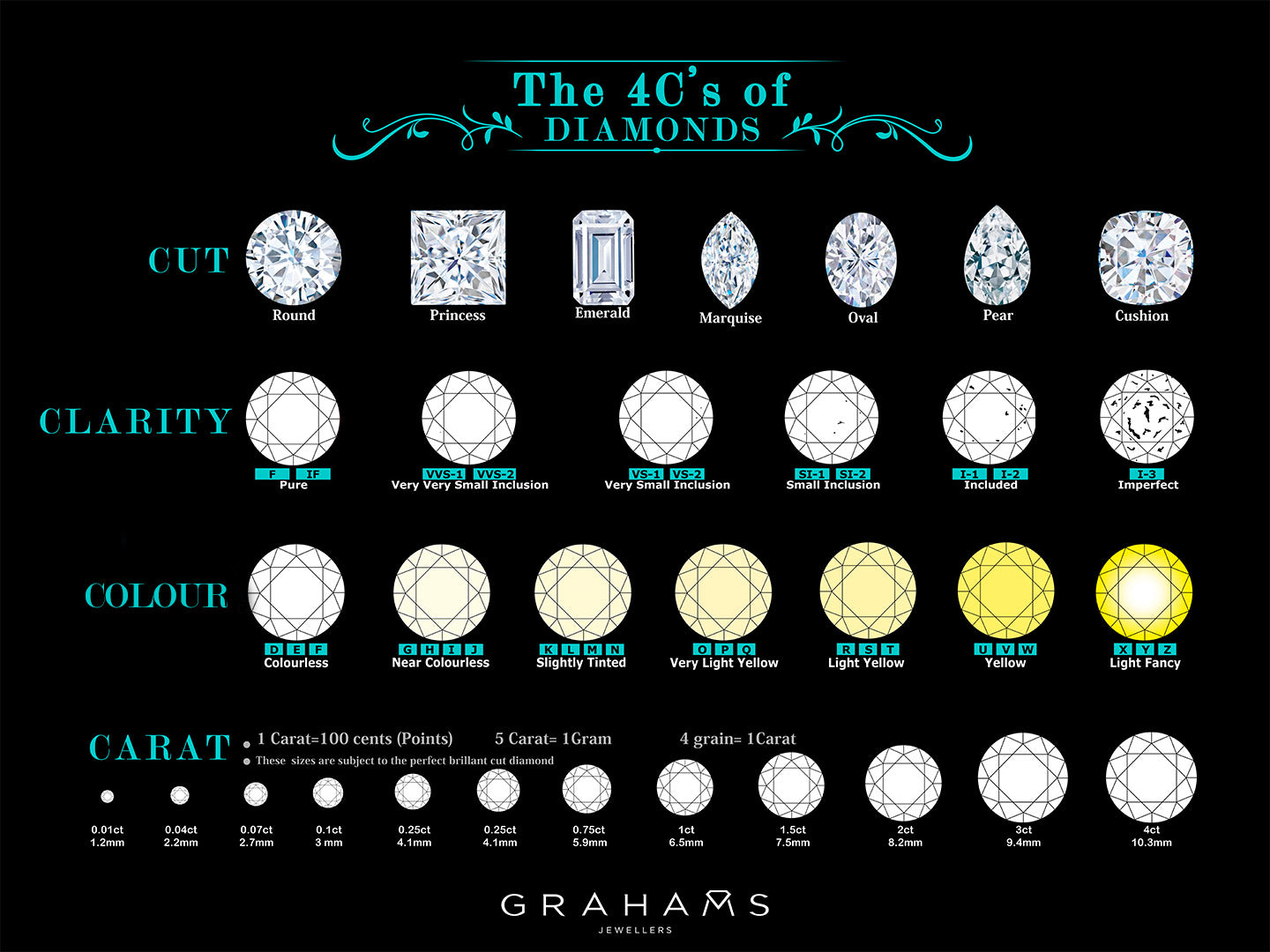
What Actually Drives the Price? (The 4Cs)
You've heard of the 4Cs, but most people focus on the wrong one.
1. Cut is King. If you have a 2 carat diamond with a "Fair" cut, it’s going to look dull and maybe even smaller than it is. A "Triple Excellent" or "Ideal" cut is non-negotiable. An Ideal cut 2 carat stone will reflect so much light that it hides minor inclusions and masks a bit of yellow color.
2. The Color Trap. Most people think they need a D, E, or F (Colorless). You don't. Unless you’re comparing them side-by-side under jeweler’s lights, a G or H looks perfectly white to the naked eye. Moving from an F to an H can save you $5,000 instantly.
3. Clarity Secrets. Don't pay for "Flawless." You’re paying for a status that requires a microscope to see. Look for "Eye-Clean" SI1 or VS2 stones. If the inclusions are on the edges where the prongs will hide them, you've hit the jackpot.
4. The Fluorescence Factor. This is the "secret" price killer. Some diamonds glow blue under UV light. In natural diamonds, strong fluorescence can make the stone look "milky" or "oily" in sunlight, which drops the price by 15-25%. However, "faint" fluorescence can actually make a slightly yellowish diamond look whiter. It's a pro move if you know what to look for.
Why 2026 is a Weird Time to Buy
The market is currently reacting to new trade realities. We're seeing the "Rapaport Price List"—the industry bible for diamond pricing—show some interesting trends. Higher-quality natural stones (2 carats and up) are actually seeing a slight price bump because luxury buyers are moving back toward "heritage" and "rarity" stories.
Meanwhile, the "mid-range" natural market is feeling the heat from labs.
Another thing: Shape matters. A 2 carat Round Brilliant is the most expensive shape because it wastes the most "rough" diamond during the cutting process. If you go for an Oval, Pear, or Emerald cut, you can often save 15-20% and the diamond will actually look larger on the finger because of the elongated surface area.
A Quick Comparison (Approximate 2026 Retail)
| Diamond Type | Quality (G/VS2) | Price Range |
|---|---|---|
| Natural Round | Excellent Cut | $21,000 - $27,000 |
| Natural Oval | Excellent Cut | $17,000 - $22,000 |
| Lab-Grown Round | Ideal Cut | $1,800 - $3,200 |
How to Avoid Getting Scammed
Price doesn't always equal value. Here is how you protect yourself:
- Demand a GIA or IGI Report: If the jeweler says "trust me" or shows you a "house certificate," walk away. The Gemological Institute of America (GIA) is the gold standard. IGI is the leader for lab-grown stones.
- Check the "Hollow" Carat: Some 2 carat diamonds are "deep cut." This means the weight is hidden in the bottom (the pavilion) where you can't see it. You’re paying for 2 carats but it looks like a 1.7 carat from the top. Always check the millimeter measurements. A standard round 2 carat should be about 8.1mm across.
- The "Under-Carat" Trick: A 1.90 carat diamond is significantly cheaper than a 2.00 carat diamond, but the size difference is invisible to the human eye. This is the single best way to save 20% on a "2 carat" look.
Actionable Next Steps for Your Search
If you're ready to pull the trigger, don't just walk into a mall store. Mall jewelers have massive overhead and often mark up stones by 100% or more.
- Set a hard budget first. Decide if you care more about the "Natural" origin or the "Visual Size." If size is the goal, go lab.
- Browse online wholesalers. Sites like James Allen or Blue Nile let you see 360-degree videos of the actual stone. This is crucial for checking if an SI1 stone is truly "eye-clean."
- Prioritize Cut above everything. A 2 carat diamond is a big surface area; if the cut is bad, the lack of sparkle will be very obvious.
- Look for 1.85ct - 1.95ct stones. Use search filters to find these "under-size" gems. They are the best value in the industry right now.
- Get a second opinion. Once you find a stone, many independent appraisers will look at the listing for a small fee and tell you if the price is fair based on current 2026 market data.
At the end of the day, a 2 carat diamond is worth exactly what it's worth to you. Whether it's a $2,000 lab stone that lets you go on a killer honeymoon or a $30,000 natural heirloom, the "value" is in the moment it represents. Just make sure you aren't paying D-color prices for an H-color stone.