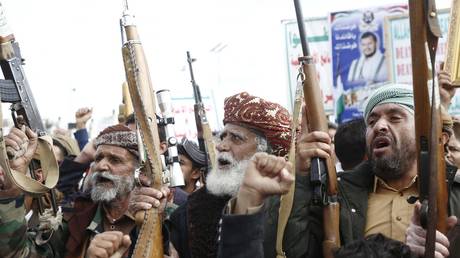
The missiles are flying again. This time, they aren’t just about a local power struggle in the mountains of Saada or a symbolic gesture for a distant cause. On March 28, 2026, the Houthis officially threw their weight into the massive U.S.-Israeli conflict with Iran, launching ballistic missiles at southern Israel. While the Israeli Arrow system swatted the first threats out of the sky, the message was sent. The "Axis of Resistance" isn't dead, and Yemen is now the southern anvil to Iran’s northern hammer.
If you’ve been watching the news, you know the region is a tinderbox. After the February 28 strikes that took out Supreme Leader Ali Khamenei, many thought the Iranian network would crumble. They were wrong. The Houthis—officially known as Ansar Allah—waited a month, watched the board, and then chose their moment. They aren't just some ragtag militia anymore. They're a regional power with a reach that extends over 2,000 kilometers. In similar developments, we also covered: The Sabotage of the Sultans.
More Than Just an Iranian Proxy
It’s easy to call the Houthis an Iranian puppet, but that’s a lazy take. It misses the reality of how they operate. They’re Zaydi Shiites, a branch of Islam unique to Yemen, and they’ve been fighting for their own survival since the 1990s. They don't take every order from Tehran. Honestly, they’re often more radical and aggressive than their patrons in the IRGC.
They gained power because they were better organized and more motivated than the corrupt government they ousted in 2014. Since then, they’ve survived a decade of Saudi-led bombing campaigns and U.S. "maximum pressure." You don't survive that by being a simple puppet. You survive by building a domestic arms industry, mastering asymmetric warfare, and holding a population of millions under a tight, ideological grip. The Guardian has analyzed this important issue in extensive detail.
What’s in the Houthi Arsenal
The firepower they’ve amassed is terrifying for a group that started with AK-47s and technicals. Thanks to a mix of Iranian blueprints and local assembly, they can now strike targets across the Red Sea and deep into the Mediterranean.
Long Range Ballistic Missiles
The stars of their show are the Toofan and Burkan-3 missiles. These aren't just metal tubes filled with fertilizer. They're sophisticated, multi-stage ballistic missiles with ranges up to 2,000 km. When they fire these from the mountains of northern Yemen, they can reach Eilat or even Tel Aviv. Even if they get intercepted, they force Israel and the U.S. to burn through million-dollar interceptors to stop a "cheap" Yemeni threat.
The Drone Swarms
The Samad-4 and Waid-2 drones are their favorite tools for economic sabotage. These "suicide drones" (kamikaze) have ranges of 2,500 km. They don't need a runway. They can be launched from the back of a truck in a hidden valley, fly low to evade radar, and hit a tanker or an oil refinery with surgical precision.
Naval Terror
This is where the Houthis actually scare global economists. They have anti-ship cruise missiles like the Al-Mandeb series and Unmanned Surface Vehicles (USVs)—remote-controlled boats packed with explosives. They've already proven they can shut down the Bab al-Mandab Strait. If they decide to go after shipping again, like they did during the Gaza crisis, they could choke off the Red Sea and send global oil prices into the stratosphere.
The Strategy of the Southern Front
Why did they wait a month to join the war? It wasn't because they were scared. It was strategic. By holding back while Israel and the U.S. focused on Hezbollah and Iranian bases, the Houthis remained the "fresh" force. Now that the U.S. is deep into a campaign against the Iranian mainland, the Houthis are opening a second front that forces Western navies to peel off resources from the Persian Gulf to protect the Red Sea.
It's a classic pincer move. Iran pressures the Strait of Hormuz, and the Houthis pressure the Bab al-Mandab. If you close both, you effectively kill global maritime trade in the Middle East.
What Happens if They Target the Neighbors
The big "if" is Saudi Arabia. Right now, there’s a fragile truce between Riyadh and Sanaa. The Saudis are desperately trying to stay out of the U.S.-Iran war. But the Houthis have already warned: if anyone allows their airspace or bases to be used for strikes against Iran, they’re a target.
If the Houthis start hitting Saudi oil facilities at Abqaiq again, the global economy isn't just going to "feel the pinch"—it’s going to break. We’re talking about a world where gas hits $10 a gallon and supply chains for everything from electronics to grain simply stop.
The Reality on the Ground in Yemen
While the leaders in Sanaa talk about "Death to America," the average Yemeni is starving. This is the part people forget. Yemen is still home to one of the worst humanitarian crises on the planet. Over 19 million people need aid. The Houthis use this as a shield; they know the West is hesitant to launch a full-scale invasion of Yemen because of the civilian cost.
They’ve turned their country into a fortress where the misery of the people provides the political cover for the elite to play regional chess. It’s a brutal, effective system.
What You Should Watch For
The next 72 hours are critical. Look for these signs to see if this is a one-off launch or a total war:
- Red Sea Shipping Alerts: If the Houthis issue "exclusion zones" for commercial ships, expect an immediate spike in insurance rates and oil prices.
- U.S. Carrier Movement: If the U.S. moves a carrier strike group back toward the Gulf of Aden, they’re preparing for a massive "decapitation" strike on Houthi leadership.
- Saudi Air Defense Activity: Watch for Patriot missile batteries moving to the southern Saudi border. That's the signal that the truce is dead.
Don't expect this to end with a diplomatic handshake. The Houthis have spent 20 years preparing for this exact moment—a chance to be the vanguard of the "Axis" when everyone else is on the ropes. They aren't going back to the mountains.
Check the latest maritime security updates from UKMTO or NAVCENT if you have interests in global trade. The Red Sea is no longer a safe transit zone; it’s a combat theater.