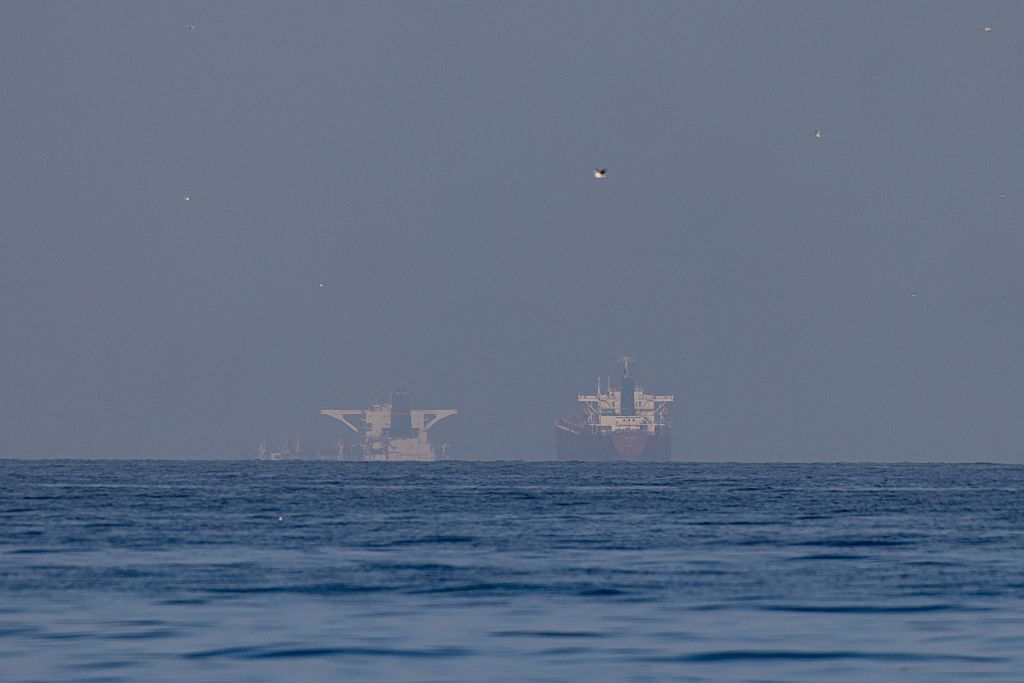
The Persian Gulf is currently a tinderbox. For decades, the global obsession stayed locked on the Strait of Hormuz—the literal neck of the world's energy supply. If Iran closes it, the world's economy stops. That was always the binary choice: open or closed. But the recent escalation following Donald Trump’s latest "total blockade" ultimatum has shifted the target. Iran isn't just looking at the water anymore. They're looking at the lights. Specifically, the power plants and desalination facilities that keep the Gulf states habitable.
If you live in Dubai, Riyadh, or Abu Dhabi, your life depends on a very fragile sequence of engineering. You need electricity for cooling. You need that same electricity to turn seawater into drinking water. Iran knows this. Their latest threats to strike power infrastructure in response to U.S. pressure isn't just a military maneuver. It's an existential threat to the modern miracle of the Arabian Peninsula.
Why the Strait of Hormuz Ultimatum Changed Everything
The old rules of engagement are gone. Usually, the U.S. threatens sanctions, Iran harasses a tanker, and everyone goes back to a tense status quo. This time feels different. Trump’s administration has signaled a "zero-drop" policy, aiming to physically or financially prevent any Iranian crude from leaving the Gulf. This isn't just "maximum pressure" anymore. It's an attempt at economic erasure.
Iran’s response has been remarkably blunt. They’ve signaled that if they can't export oil, nobody in the region will enjoy the fruits of their own exports. But instead of just targeting tankers—which can be insured, escorted, or rerouted—they're pointing their missiles at the power grid. Think about the vulnerability there. A tanker is a moving target. A power plant is a massive, stationary sitting duck.
The Fragility of Desert Infrastructure
We often forget how artificial life in the Gulf really is. Without constant, massive inputs of energy, these cities would become uninhabitable within days. Most of the GCC (Gulf Cooperation Council) countries rely on a handful of mega-scale Integrated Water and Power Plants (IWPPs).
Take the Jebel Ali facility in Dubai. It’s one of the largest in the world. If that goes dark, you don't just lose the ability to charge your phone. You lose the air conditioning in a climate where temperatures regularly hit 50°C. More importantly, you lose the water. There is almost no natural freshwater. You’re drinking the sea, and the sea requires massive amounts of power to become potable.
Iran’s tactical shift recognizes that hitting a power plant causes more domestic chaos than hitting a ship. It forces the local governments—Saudi Arabia, the UAE, Kuwait—to put pressure on Washington to de-escalate. It’s a bank shot. They’re holding the comfort of millions of people hostage to get the U.S. to back off the Strait.
Missiles vs Missile Defense
The big question everyone asks: Can't the Patriot batteries or the THAAD systems just shoot them down?
Technically, yes. The Gulf states have some of the most sophisticated air defense networks on the planet. They’ve spent billions. But as we saw with the 2019 Abqaiq–Khurais attack, no system is perfect. Saturation is the problem. If Iran launches a coordinated swarm of low-flying "suicide" drones and cruise missiles simultaneously, some will get through.
The math is simple and terrifying. A drone that costs $20,000 can cause $200 million in damage if it hits a critical transformer or a desalination unit. You can't protect every square inch of a power grid with a million-dollar interceptor. The cost-to-kill ratio is completely skewed in favor of the attacker.
The Economic Ripple Effect
If these threats move from rhetoric to reality, the global markets won't just react to oil prices. They'll react to the total destabilization of the world's most concentrated wealth centers.
- Insurance premiums: Shipping and infrastructure insurance in the Gulf would skyrocket, making it nearly impossible to operate.
- Expat flight: The massive foreign workforce that runs these economies won't stay if the AC and water are intermittent.
- Sovereign risk: The "safe haven" status of cities like Dubai would vanish overnight.
Iran isn't just threatening a war. They're threatening an undoing of forty years of urban development.
What Happens if the Lights Go Out
The immediate aftermath of a strike on a major Gulf power plant would be sheer logistical horror. Most of these facilities have some redundancy, but not enough to cover a total loss.
Emergency generators only last so long. Hospitals have priority, but the general population would be left in the heat. In the desert, heat isn't an inconvenience. It's a killer. If the desalination plants stop, the water reserves in most Gulf cities are measured in days, not weeks.
This is the leverage Iran is using. They want the U.S. to understand that the price of "zero oil" is the potential "zero water" for its allies. It’s a high-stakes game of chicken where the pedestrians are the ones who get hurt first.
Modern Warfare is Infrastructure Warfare
The days of army-on-army battles in the dunes are over. This is about "gray zone" conflict. You use proxies. You use drones. You target the things people need to survive to make the political cost of a conflict too high to bear.
Trump’s ultimatum on the Strait of Hormuz was designed to be a knockout blow to the Iranian economy. But in a globalized world, there's no such thing as a localized punch. Iran’s counter-threat shows they’ve mapped out the exact pressure points of their neighbors. They know that a blackout in Riyadh is just as effective as a blockade in the Strait.
How to Prepare for the Unthinkable
If you're operating a business in the region or holding assets there, the "peace dividend" is officially over. The geopolitical risk has been repriced.
Energy diversification is no longer a "green" goal; it's a survival strategy. Countries like the UAE are already pushing hard into nuclear (the Barakah plant) and massive solar farms. These are harder to knock out entirely because they're more distributed than a single gas-fired plant. But for now, the dependence on those massive coastal hubs remains a glaring weakness.
Watch the skies, but keep an eye on the grid. The next major conflict in the Middle East might not start with a shot across the bow of a ship. It'll start with a flicker in the lights.
Governments in the region need to accelerate the decentralization of their water and power systems immediately. If you're a private entity, investing in independent solar and atmospheric water generation isn't just a luxury—it's your insurance policy against a geopolitical stalemate that has finally reached the breaking point.