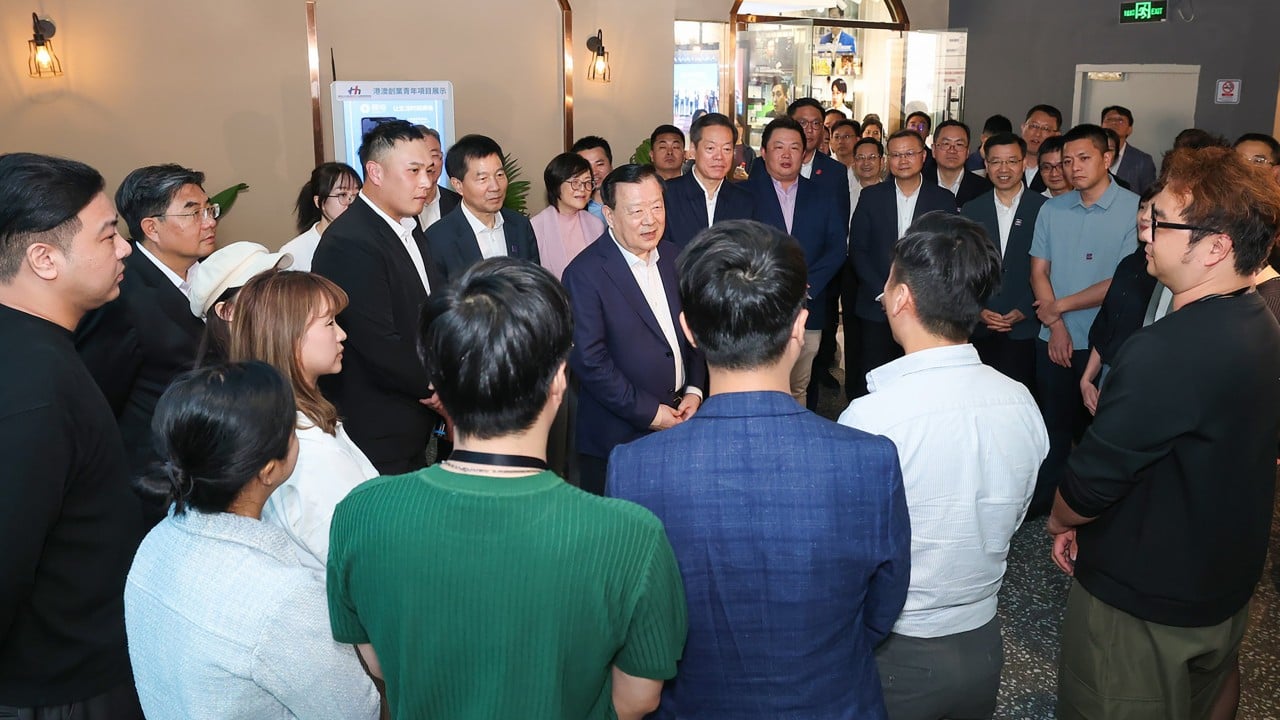
Beijing isn't just talking about integration anymore; they're on the ground making sure it happens. This week, Xia Baolong, the top official overseeing Hong Kong and Macao affairs, wrapped up a five-day research tour across the Greater Bay Area (GBA). He didn't just stick to the usual glitzy hubs of Shenzhen. He hit Guangzhou, Zhaoqing, and Foshan, sent with a very specific mission: see how these cities are actually preparing to swallow Hong Kong’s high-end services and tech ambitions.
If you've been following the GBA narrative, you know it's often dismissed as a "paper project." Skeptics love to point out the three different legal systems, three currencies, and distinct customs borders. But the vibe in March 2026 is different. With the 15th Five-Year Plan now in play, Beijing is demanding that Hong Kong stops acting like an island and starts acting like a high-performance engine for the mainland.
The end of the wait and see era
For years, many in Hong Kong’s business sector took a "wait and see" approach to the GBA. It was something that happened "over there" in Guangdong. Xia’s visit to cities like Zhaoqing and Foshan signals that the perimeter is expanding. These aren't just manufacturing towns anymore. They're being groomed as the landing zones for Hong Kong’s "new quality productive forces"—a phrase you're going to hear until you're tired of it.
What’s the actual goal here? It’s not just about building bridges. It’s about "alignment of rules." Xia is looking at how to make the professional standards in Hong Kong—law, accounting, engineering—work natively in a city like Foshan. If a Hong Kong firm can't operate in Zhaoqing as easily as it does in Central, the GBA fails. Beijing knows this, and that's why this tour focused on "proactive alignment."
Why Zhaoqing and Foshan matter more than you think
You might wonder why a top Beijing official is spending time in Zhaoqing instead of just hosting meetings in a Shenzhen skyscraper. It’s because the "inner circle" of the GBA (HK-Shenzhen-Guangzhou) is already saturated. For the next phase of growth, Hong Kong needs space, and the mainland needs Hong Kong’s "soft power" expertise.
- Foshan is a manufacturing titan. It's where the hardware is made.
- Zhaoqing offers the land and resources that Hong Kong desperately lacks.
- Hong Kong provides the capital and the international legal framework.
When Xia Baolong visits these sites, he's checking the plumbing. He’s asking if the "Northern Metropolis" projects in Hong Kong actually connect to the industrial chains in Guangdong. If the tech developed at the Hong Kong-Shenzhen Innovation and Technology Park (Hetao) can’t be mass-produced in Foshan because of a regulatory bottleneck, the visit was a failure. From the official readouts, it looks like he’s pushing for a "one-hour living circle" that isn't just about travel time, but about administrative ease.
Breaking the three systems barrier
The biggest headache has always been the "One Country, Two Systems" friction. How do you integrate a common law city with a civil law mainland? You don't change the laws; you bridge the mechanisms. We’re seeing this now with the "primary evaluation" roadmap for medical products and the new rail standards Hong Kong just launched.
Honestly, the shift is pragmatic. The 15th Five-Year Plan, which just kicked off, emphasizes "high-level self-reliance in science and technology." China is under pressure. It can't afford for Hong Kong to be a standalone financial center that doesn't talk to the tech hubs next door. Xia’s tour is basically a performance review for regional officials. He’s making sure the "reform mindset" isn't just a buzzword in a PowerPoint presentation.
Moving beyond the hardware
We’ve built the bridges. We’ve built the high-speed rail. Now, the focus is on "talent and data." You can see this in the recent flurry of activity:
- The Global Talent Summit Week in Hong Kong just wrapped up, trying to lure professionals who can bridge the gap.
- Cross-border data flows are being piloted to allow hospitals and banks to share info without hitting a digital wall.
- The "Study in Hong Kong" campaign is positioning the city as the gateway for mainland students to get a global education while staying within the GBA ecosystem.
It’s about creating a lifestyle where a coder lives in Zhaoqing (where rent is cheap), works for a Hong Kong startup, and spends their weekend in Macao. It sounds like a PR dream, but the infrastructure is finally catching up to the rhetoric.
What this means for your next move
If you’re a business owner or a professional in Hong Kong, the message from Beijing is clear: look North or get left behind. The "unique gateway" role is being redefined. It’s no longer enough to be a door; you have to be the hallway.
Start by looking at the specific incentives in the "Cooperation Zones" like Qianhai or Hengqin. These aren't just for big tech. They’re increasingly looking for service providers who can handle "foreign-related" legal and financial issues. If you’re not exploring how your specific skill set translates to the mainland’s 15th Five-Year Plan goals—specifically in AI, chips, and "new quality productive forces"—you're missing the biggest shift in the regional economy since the 1990s.
Check the updated GBA youth employment schemes or the "GoGlobal" task force resources. The support is there, the officials are watching, and the borders are thinning. The integration isn't a future possibility; it's the current work order.