In a small, dimly lit tea house in the heart of Muscat, a retired diplomat named Omar watches the news on a flicker-prone television. He doesn't look at the maps or the casualty counts anymore. He looks at the chairs. Specifically, he looks at the empty ones. For forty years, Omar watched the Americans fill those chairs. They were loud, often arrogant, and frequently clumsy, but they were there. They held the space.
Now, Omar sees a different kind of architecture emerging. The American chair is pushed back from the table, not out of a planned exit, but because the person meant to sit in it is distracted by a shouting match in the hallway.
Washington is currently a house divided against itself, struggling to reconcile a legacy of Middle Eastern intervention with a populist urge to pull the shutters closed. This friction has created a muddle—a messy, incoherent approach to a region that rewards only clarity. While the United States oscillates between "America First" isolationism and reactionary military strikes, a quiet, methodical guest is waiting in the foyer.
Xi Jinping does not shout. He does not demand democratic reforms. He brings a checkbook, a blueprint for a high-speed rail line, and a promise of "non-interference."
The Cost of a Distracted Superpower
To understand why this matters, you have to look past the grandstanding at political rallies. Think of a cargo ship captain navigating the Strait of Hormuz. For decades, that captain relied on a specific set of assumptions: the U.S. Navy would ensure the oil kept flowing, the U.S. State Department would keep the local monarchs in line, and the U.S. dollar would remain the undisputed language of trade.
When those assumptions blur, the captain starts looking for a backup plan.
The current American administration inherited a Middle East that was already weary of "forever wars." The response was a pivot—a word that sounds graceful but has felt more like a stumble. By trying to confront Iran one day and then signaling a total withdrawal from Syria the next, Washington has signaled something far more dangerous than hostility: unreliability.
Trust is the most expensive currency in the desert. Once it devalues, you can’t simply print more.
Consider the hypothetical case of a Saudi energy minister. In the old world, a call to Washington was the first and last step in any crisis. Today, that minister looks at the political volatility in the U.S. Capitol and sees a partner who might change their mind after the next election cycle. He sees a country that is suddenly the world’s largest oil producer, making it a competitor rather than just a customer.
Then he looks East.
The Dragon in the Desert
China’s entry into this vacuum isn't a military invasion. It is a slow, rhythmic heartbeat of infrastructure and investment. While American policymakers are bogged down in the moral complexities of the Gaza-Israel conflict or the internal logistics of the Abraham Accords, Beijing is signing twenty-five-year "strategic partnerships."
China is now the top trading partner for almost every major player in the Middle East. They are the biggest buyer of Iranian crude and the biggest customer for Saudi oil.
Beijing’s strategy is built on a simple, cold logic: We want your energy, and we will help you build your cities, and we will never mention your human rights record.
For a regional autocrat, that is an intoxicating pitch.
This isn't just about trade routes. It’s about the underlying operating system of the global economy. If the Middle East begins to price its oil in the Yuan—the so-called "Petroyuan"—the foundational strength of the American economy begins to crack. The U.S. dollar’s status as the world’s reserve currency is largely propped up by the fact that you need dollars to buy energy. If that requirement vanishes, the American ability to sanction enemies or fund its own massive debt evaporates.
The Summit of Two Worlds
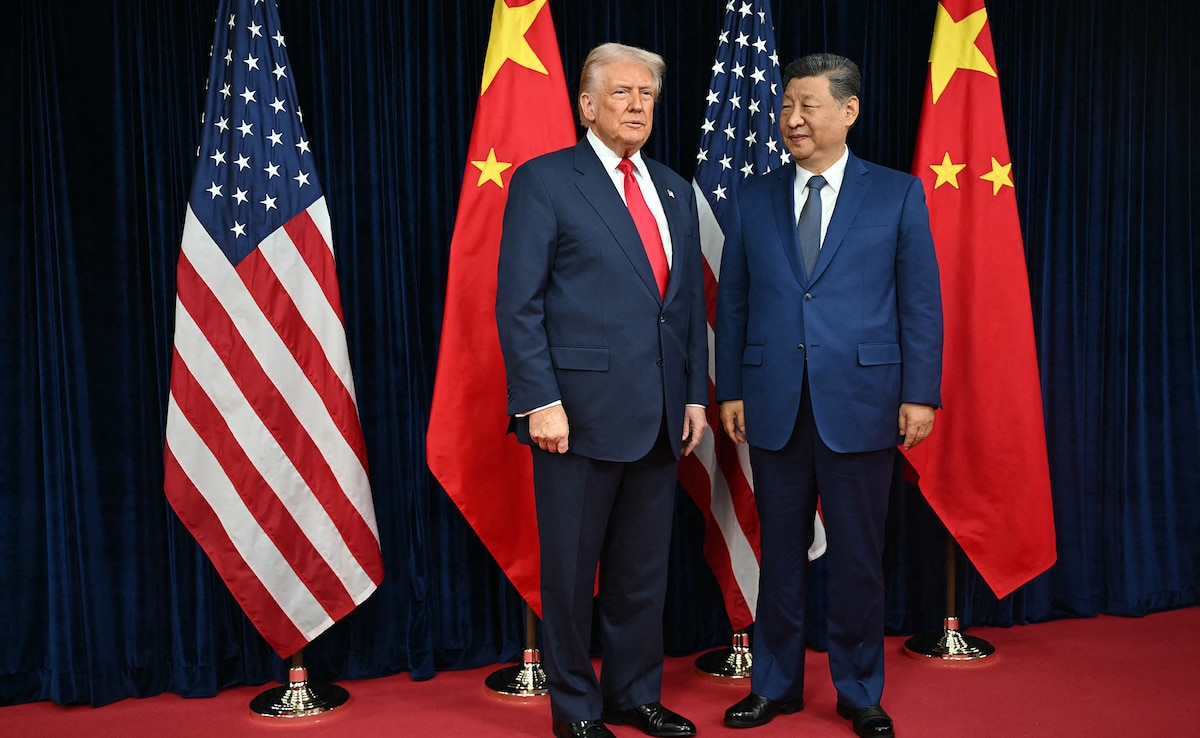
As a China-U.S. summit approaches, the stakes aren't just about trade tariffs or spy balloons. Xi Jinping walks into the room knowing he has a hidden card in his pocket. He knows that the American "muddle" in the Middle East has given him the greatest gift a strategist could ask for: an opening.
The American delegation arrives with a list of grievances. They want China to stop supporting Russia; they want China to stop its maritime aggression. But Xi can look across the table and see a rival whose attention is fractured. He sees a President who must balance the demands of a pro-Israel domestic base with a youth movement demanding a ceasefire, all while trying to keep an eye on a surging China.
It is hard to win a game of chess when you are also trying to put out three different fires in the room.
Beijing uses this. They position themselves as the "adult in the room," the neutral mediator. When China brokered the restoration of ties between Saudi Arabia and Iran in 2023, the world gasped. It wasn't because the deal was particularly deep; it was because the Americans weren't even in the building.
The image of Saudi and Iranian officials shaking hands in Beijing was a silent scream. It told the world that the era of the "unipolar moment" was over.
The Invisible Stakes for the Average Person
It is easy to dismiss this as high-level geostrategy that doesn't affect the person buying groceries in Ohio or the teacher in London. That is a mistake.
When the U.S. loses its grip on Middle Eastern diplomacy, it loses its ability to stabilize global energy markets. When China gains the power to dictate the terms of trade in the Persian Gulf, the price of everything—from the plastic in your phone to the fuel in your car—begins to shift toward Beijing’s interests.
More importantly, the "muddle" creates a security vacuum. History hates a vacuum. When the U.S. appears indecisive, regional powers feel the need to take matters into their own hands. They form new, often volatile alliances. They build up their own militaries. They stop listening to the calls for restraint coming from the White House.
The result is a world that is less predictable and more prone to sudden, violent spasms.
A House With No Foundation
Imagine a bridge. One side is anchored in the democratic ideals of the West—messy, loud, but transparent. The other side is anchored in the authoritarian efficiency of the East. For decades, the Middle East was forced to stay on the Western side of that bridge because there was no other way across the river.
The American muddle hasn't just weakened the bridge; it has made the other side look like a more stable destination.
The tragedy is that the U.S. has all the tools to remain the partner of choice. It has the technology, the financial depth, and a cultural influence that China cannot match. But those tools are useless if there is no hand on the lever. If the American leadership remains paralyzed by domestic infighting and a lack of a coherent regional vision, the "pivot to Asia" will fail because the ground will have given way in the Middle East.
Xi Jinping is a patient man. He understands that you don't need to defeat a superpower in a head-on collision if you can simply wait for it to tire itself out. He is watching the American clock, waiting for the moments of exhaustion, the moments of confusion, and the moments where the chair at the table remains empty.
Back in the tea house in Muscat, Omar turns off the television. The screen goes black, leaving only a faint reflection of the room. He knows that soon, the news won't be about what the Americans are doing in the region. It will be about what is being done in their absence.
The most powerful thing a nation can lose isn't its wealth or its weapons. It is its relevance. Once you are no longer the person everyone has to call before they make a move, you aren't a superpower anymore. You’re just a spectator.
The chair is waiting. Someone will sit in it.