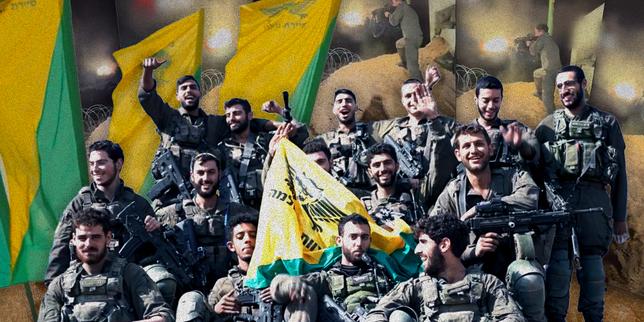
The Golani Brigade has long functioned as the psychological heartbeat of the Israel Defense Forces (IDF). While paratroopers are often viewed as the polished intellectuals of the military, Golani soldiers represent the raw, gritty reality of the Israeli melting pot. They are the infantrymen who take the most ground and pay the highest price. However, the current conflict in Gaza has pushed this storied unit into a state of unprecedented operational and moral friction. The brigade is currently caught between the crushing weight of its own casualties and a growing body of international evidence suggesting that its tactical aggression has crossed the line into systemic misconduct. This is not merely a story of war; it is a study of what happens when a military’s "brown beret" culture—defined by a "follow me" ethos—collides with the dehumanizing reality of prolonged urban insurgency.
Since October 7, Golani has faced a dual-front crisis. They were among the first to be overrun during the initial Hamas assault, suffering losses that would have disbanded lesser units. Since then, they have been the tip of the spear in neighborhoods like Shujaiya, a place that has become a graveyard for Golani officers over multiple decades. The "trauma" often cited in media reports is not an abstract concept here. It is a functional reality. When a unit loses its entire command structure in a single ambush, the replacements are often younger, less experienced, and carrying a heavy burden of revenge. This internal pressure cooker has led to a series of incidents that have moved beyond the fog of war into the territory of documented war crimes. If you found value in this piece, you should check out: this related article.
The Shujaiya Trap and the Price of Prestige
In the Israeli consciousness, the Golani Brigade is synonymous with resilience. You don't join Golani for the perks; you join for the fight. But the fight in Gaza has changed. The brigade’s history in the Shujaiya district of Gaza City is a recursive nightmare. In 2014, an anti-tank missile struck a Golani M113 armored personnel carrier, killing seven soldiers. In December 2023, a complex ambush in the same neighborhood killed nine more, including a Colonel and a Lieutenant Colonel.
These losses do more than just thin the ranks. They erode the thin layer of discipline that separates an elite fighting force from a vengeful militia. Investigative trails show a direct correlation between high-casualty events for the brigade and subsequent "neighborhood clearing" operations that involve the destruction of civilian infrastructure without clear military necessity. It is a cycle of blood. The soldiers see their friends die in a booby-trapped school, and the response is to level the entire block. While the IDF leadership maintains that every strike is vetted, the sheer volume of "victory photos" posted by Golani soldiers standing in front of burning homes suggests a breakdown in command and control. For another perspective on this development, refer to the recent update from NBC News.
Documentation and the Digital Battlefield
We have entered an era where the soldiers themselves provide the evidence for their own prosecution. Golani personnel have been particularly prolific on social media, filming themselves destroying shops, mocking displaced persons, and in some cases, documenting the use of Palestinian civilians as "human shields" to check tunnels. These are not isolated incidents captured by hostile drones; these are "trophy videos" uploaded to TikTok and Telegram.
The investigative reality is that these videos provide a timeline of escalation. Early in the ground invasion, the content focused on bravado. As the months dragged on and the casualties mounted—including the tragic accidental killing of three Israeli hostages by Golani troops who mistook them for a threat—the tone shifted. The content became more nihilistic. When soldiers stop fearing their own military police and start seeking validation from an angry public back home, the chain of command has effectively snapped.
The Myth of the Most Moral Army
The IDF frequently leans on the "Purity of Arms" doctrine, a moral code intended to guide soldier behavior. For the Golani Brigade, this code is currently being rewritten in the dust of Gaza. The "how" of these alleged crimes is rooted in a tactical shift toward "zero risk" for Israeli troops. This means that if a building is suspected of harboring a sniper, the building is flattened, regardless of whether the inhabitants have had sufficient time to flee.
- Tactical flattening: Using D9 bulldozers to erase entire residential rows to create "buffer zones."
- Arbitrary detention: Rounding up all males of military age in a sector, often subjecting them to public humiliation for the sake of a photograph.
- Operational loitering: Occupying private homes for extended periods and intentionally destroying personal property as a "deterrent."
These actions are often justified by the brigade’s defenders as necessary evils in a war against a non-state actor that hides in civilian tunnels. But the sheer scale suggests something more systemic. It suggests a brigade that has been given a green light to prioritize its own psychological catharsis over the laws of armed conflict.
A Legacy at the Breaking Point
The Golani Brigade was founded in 1948, and its symbol is the olive tree. The roots are supposed to represent a deep connection to the land, while the sturdy trunk represents strength. Today, that tree is charred. The internal trauma of the brigade is real—thousands of its veterans are returning with severe PTSD, unable to reconcile the "hero" narrative with the reality of what they were ordered to do in Gaza.
There is a growing rift within the Israeli military establishment. Older officers, who remember the Lebanon wars, see the current conduct of the Golani Brigade as a strategic disaster that will isolate Israel for a generation. Younger officers, many of whom are ideologically aligned with the nationalist-religious right, view any restraint as a sign of weakness. This isn't just a military problem; it’s a civilizational one for Israel. If the "people's army" becomes an instrument of unchecked destruction, the social contract that sustains the state begins to dissolve.
The Accountability Gap
What happens when the war stops? Historically, the IDF has been reluctant to prosecute its own, especially members of units as politically significant as Golani. To put a Golani soldier on trial is to put the "everyman" of Israel on trial. Yet, the international pressure from the ICC and ICJ is mounting. The evidence is no longer just hearsay; it is geolocated, timestamped, and often narrated by the soldiers themselves.
The brigade’s leadership continues to insist that these are "exceptional cases" handled by the Military Advocate General. However, the data points to a pattern. When the same "exceptions" happen in every neighborhood from Beit Hanoun to Rafah, they are no longer exceptions. They are the policy. The Golani Brigade is currently a mirror held up to Israeli society, reflecting a transition from a defensive force into a vengeful occupation guard.
The price of this shift will not just be paid in The Hague. It will be paid in the mental health clinics of Tel Aviv and the broken families of the soldiers who realized too late that you cannot destroy a city without also destroying a piece of yourself. The brigade that once stood for the survival of the state is now navigating a moral labyrinth with no clear exit.
Ask yourself what remains of an elite unit when the mission shifts from victory to erasure. The answer is found in the silence of the officers who refuse to speak on the record and the loud, chaotic videos of the young conscripts who think they are untouchable. The Golani Brigade is currently the most dangerous place in the Middle East—not just for the people in front of their guns, but for the soldiers behind them.