The smell of gasoline is distinctive. It is sharp, chemical, and strangely nostalgic for anyone who grew up around lawnmowers or old garages. But when that scent is paired with the jagged edge of a torn rag and the smooth, cold surface of a glass bottle, the nostalgia vanishes. It becomes the smell of an ending.
In a quiet corner of New York, a city that prides itself on being a mosaic of every friction and faith on earth, a man sat with twelve of these bottles. Twelve. It is a specific, deliberate number. One or two might be a frantic impulse; twelve is a manufacturing line. It is a commitment to a particular kind of silence.
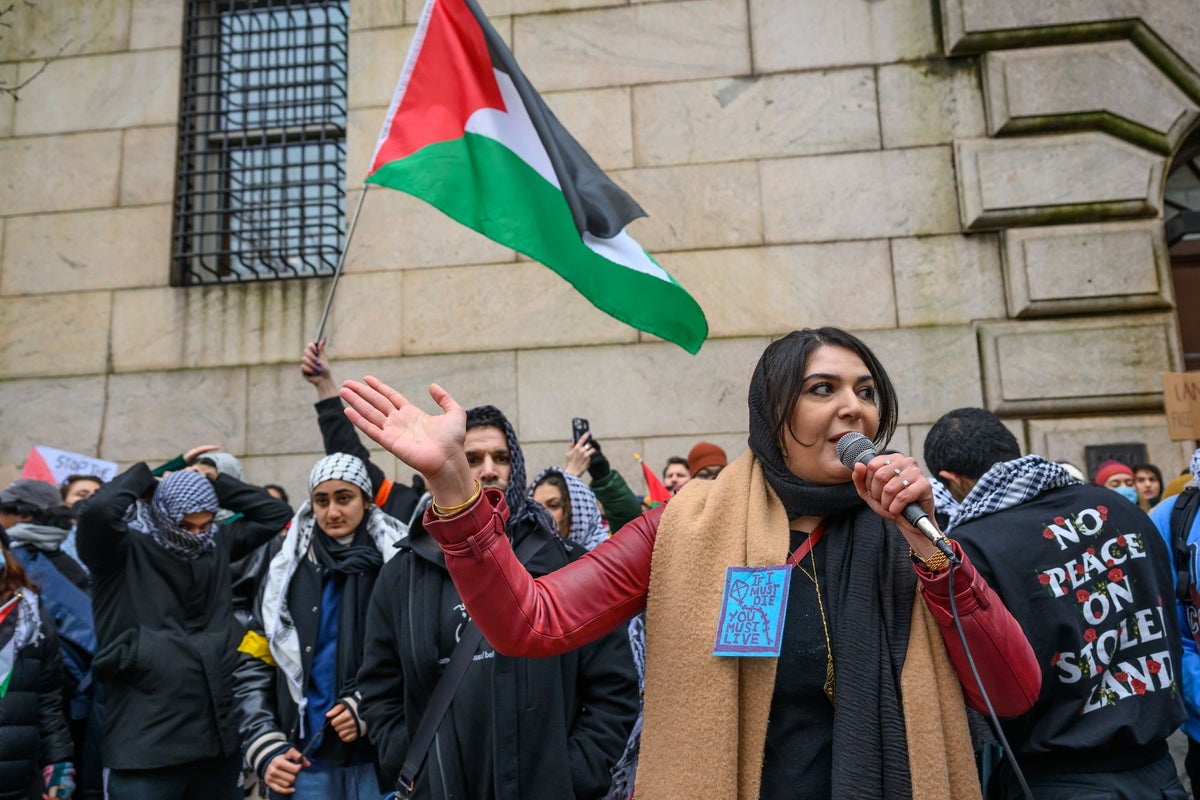
Federal investigators recently pulled back the curtain on a plot that felt less like a modern crime and more like a ghost from a darker century. The target wasn't a military installation or a government building. It was a home. Specifically, the home of a Palestinian activist. While the city slept, while neighbors walked dogs and argued over coffee, a plan was unfolding to turn a private sanctuary into a furnace.
This is the reality of the invisible stakes we live among. We often talk about "tensions" or "discourse" in the abstract, using sanitized language to describe the jagged edges of human hatred. But discourse doesn't shatter a window at three in the morning. Discourse doesn't require a wick.
The Architecture of a Target
To understand the weight of this thwarted attack, you have to look past the police reports and into the hallway of a family home. Imagine the activist. Perhaps they were preparing a speech, or perhaps they were just doing the dishes. They are a person who uses their voice—a tool that is supposed to be protected in the grand experiment of democracy.
Then, consider the intruder’s logic. To the man with the Molotov cocktails, this person was no longer a neighbor or a fellow citizen. They had been reduced to a symbol. When we stop seeing faces and start seeing targets, the moral floor drops out from under us.
The FBI’s intervention wasn't just a win for law enforcement; it was a temporary barricade against the erosion of the civic soul. They tracked the movements, the intent, and the physical assembly of the weapons. They saw the transition from hateful thought to kinetic action. It is a terrifyingly short bridge to cross.
The Weight of Twelve
Why twelve?
Think about the physical act of preparing twelve firebombs. You have to source the fuel. You have to find the bottles. You have to cut the cloth. You have to store them somewhere—under a bed, in a closet, in a trunk. You have to live with them. Every hour they sit there, they radiate the intent of what is to come.
This wasn't a momentary lapse in judgment. It was a sustained, day-over-day choice to remain a killer in waiting.
We live in a time where the "other" is increasingly painted in primary colors—bright, flat, and devoid of nuance. When the world is simplified this way, violence starts to look like a solution instead of a tragedy. The man arrested in this plot wasn't just trying to hurt an individual; he was trying to incinerate an idea. He was trying to prove that if you scream loud enough—or burn bright enough—the other side will finally go quiet.
He was wrong. But the fact that he believed he was right is what should keep us awake.
The Invisible Shield
Most of us move through our days assuming a certain level of invisible safety. We trust that the floor will hold and the roof won't leak. We trust that our opinions, however controversial, won't result in our bedrooms being engulfed in chemical fire.
For many activists, that trust is a luxury they can no longer afford.
The "invisible stakes" here aren't just about one man in New York. They are about the precedent of fear. If the plot had succeeded, the message wouldn't have stayed in that one zip code. It would have vibrated through every community that feels vulnerable. It would have whispered to every person considering speaking out: is it worth the smell of gasoline?
The FBI agents who stepped in are often portrayed as suit-wearing bureaucrats in news cycles. But in this instance, they functioned as the literal barrier between a quiet night and a lifetime of trauma. They worked in the shadows to ensure that a different kind of shadow didn't move across a suburban lawn with a lighter in hand.
The Fragility of the Mosaic
New York is a city built on the impossible idea that we can all live on top of each other without tearing each other apart. It is a crowded, loud, beautiful mess. But that beauty is fragile. It relies on a silent agreement that we fight with words, with votes, and with protests—never with fire.
When someone brings twelve Molotov cocktails to that agreement, they aren't just attacking a person. They are attacking the agreement itself. They are saying that the mosaic is over.
We often see these headlines and move on to the next one, relieved that "nothing happened." But something did happen. A line was walked up to and nearly crossed. The intent existed. The bottles were filled. The rags were tucked in. The only difference between a headline about a "thwarted plot" and a headline about a "deadly tragedy" was a few hours of investigative timing.
Beyond the Crime Scene
The activist remains. Their house is still standing. The windows are intact. But the air is different now. How do you sleep knowing that someone spent their Saturday afternoon measuring gasoline for your front porch? How do you continue to speak when you know your voice has been mapped and tracked?
This is the psychological tax of extremism. It doesn't just aim to kill; it aims to colonize the mind with anxiety. It wants the target to look at every passing car with suspicion. It wants the target to stop talking, stop organizing, and start disappearing.
The real victory isn't just the arrest. It is the refusal to be silenced.
We are currently navigating a global climate that feels like a tinderbox. The sparks are everywhere—social media feeds, cable news, dinner table arguments. Most of these sparks die out. They are just heat and noise. But occasionally, someone decides to catch a spark and put it in a bottle.
The story of the thwarted New York plot is a reminder that the monsters aren't always under the bed. Sometimes they are in the garage, working with glass and gasoline, convinced that they are the heroes of a story that only ends in ash.
We have to be better at recognizing the humanity in the person across the street before the bottles start being filled. We have to realize that once the fire starts, it doesn't care who started it or why. It just consumes.
The glass is broken. The suspect is in custody. The city moves on. But somewhere, the scent of gasoline lingers in a memory, a chilling reminder of how close we are, at any given moment, to the heat of someone else’s hate.
The activist wakes up today. They breathe. They speak. And in that simple act of existing, the fire loses.