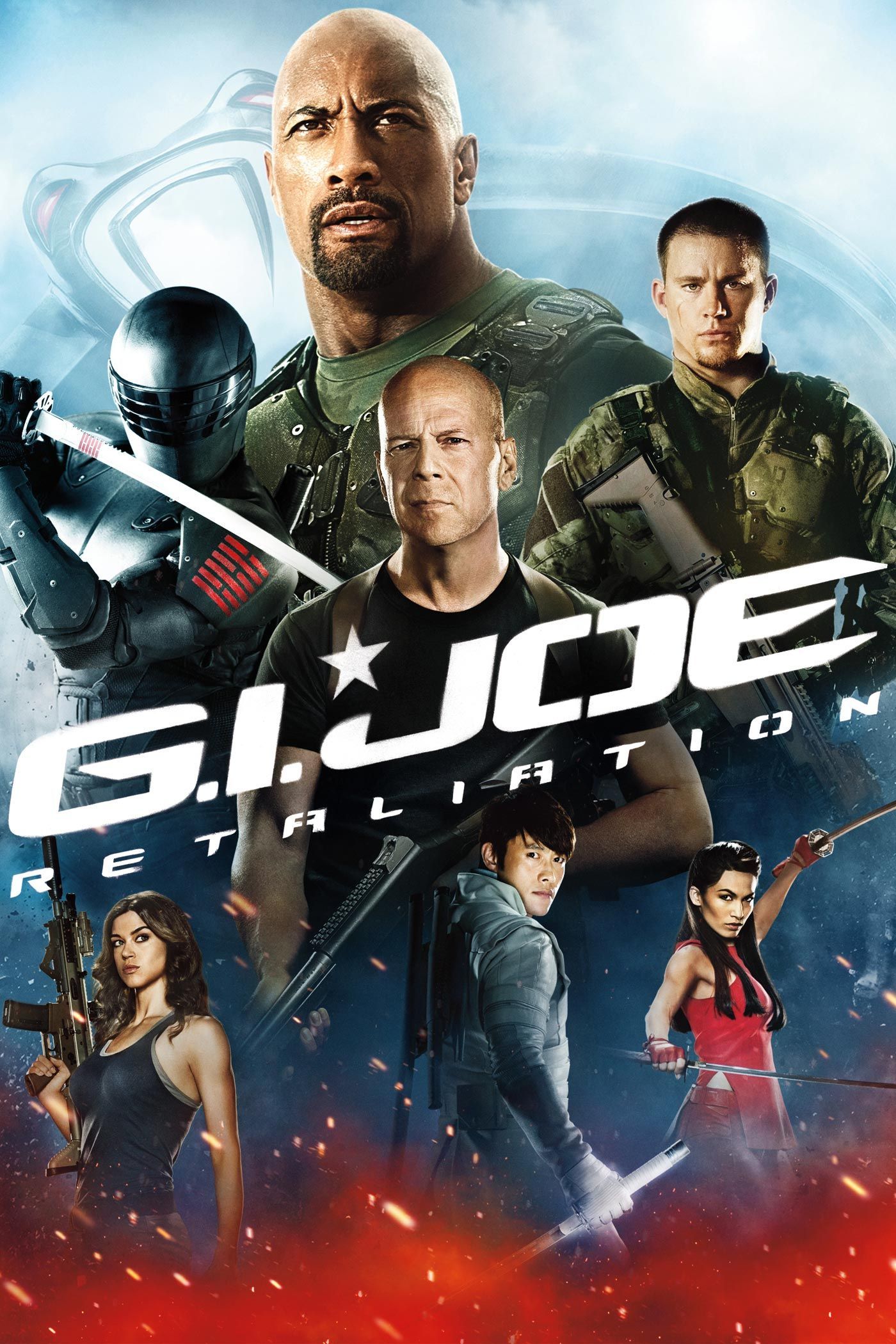
So, you remember the summer of 2012? Specifically, that weird moment when every movie theater was plastered with posters of Dwayne "The Rock" Johnson looking intense, only for the movie to vanish from the schedule weeks before release? Honestly, the story of G.I. Joe movie 2, officially known as G.I. Joe: Retaliation, is probably more chaotic than anything that actually ended up on screen.
It was a mess. A calculated, profitable, but undeniably strange mess.
Most people think sequels just happen because the first one made money. And yeah, The Rise of Cobra pulled in over $300 million in 2009, so a second round was inevitable. But Paramount didn't want more of the same. They wanted a "course correction." Basically, they wanted to erase the neon-lit, rubber-suit silliness of the first film and replace it with grit, real dirt, and—let’s be real—the most bankable man in Hollywood.
The Nine-Month Vanishing Act
In May 2012, Paramount did something almost unheard of. They pulled the movie just one month before its June release date. Why? The official line was a "3D conversion." Sounds fancy, right?
Kinda.
The truth was a bit more complicated. Test audiences supposedly liked the movie, but they really liked the chemistry between Dwayne Johnson (Roadblock) and Channing Tatum (Duke). The problem? The original cut killed Duke off in the first ten minutes.
The studio panicked. They saw Tatum’s star power rising—21 Jump Street and Magic Mike were hitting hard—and they realized they were throwing away a goldmine. So, they went back for reshoots. They added more "bromance" scenes between Roadblock and Duke, trying to soften the blow before the inevitable explosion that takes Duke out.
Why Retaliation Feels Like a Soft Reboot
If you watch G.I. Joe: Retaliation today, it feels like a totally different universe than the first film. Gone are the underwater ice bases and the accelerator suits that made everyone look like a budget Iron Man. Jon M. Chu, a director known more for Step Up 2 and Justin Bieber documentaries at the time, took the reins and decided to go "boots on the ground."
Chu focused on the "Real American Hero" vibe. He brought in:
- Dwayne Johnson as Roadblock (the new heart of the team).
- Bruce Willis as General Joe Colton (the literal "G.I. Joe").
- Adrianne Palicki as Lady Jaye.
- D.J. Cotrona as Flint.
The movie literally blows up the old team to make room for the new one. It’s brutal. One minute you’re looking at a squad of Joes, the next, it’s just Roadblock, Lady Jaye, and Flint hiding in a gym. It was a risky move. Fans of the first movie felt betrayed, but the general audience seemed to prefer the more "realistic" military aesthetic.
The Ninja Cliffside Battle: A Technical Marvel
We have to talk about the mountain sequence. It’s easily the best part of the movie. Snake Eyes and Jinx fighting Cobra ninjas while swinging on ropes across the Himalayas?
Absolute cinema.
They actually shot a lot of that practically at NASA’s Michoud Assembly Facility in New Orleans. They built a massive green screen wall and used stunt riggers who knew what they were doing. Even the VFX guys at ILM admitted that the challenge wasn't just the CGI; it was making sure the lighting looked right for people fighting in the shadows of a mountain.
It’s one of the few times a G.I. Joe movie 2 action set piece felt like it had real weight. No magic green lasers, just steel and gravity.
The Numbers: Was It Actually a Success?
Critics weren't kind. It sits at about a 28% on Rotten Tomatoes. Ouch. But Paramount didn't care because the box office told a different story.
Against a budget of roughly $130 million to $155 million, it raked in $375.7 million worldwide. It actually out-earned the first movie. It proved that people wanted to see The Rock shoot a tank-mounted machine gun. It also proved that the G.I. Joe brand had international legs, even if the "American Hero" part of the title felt a bit ironic in global markets.
What Most People Get Wrong About the Sequel
There’s a common misconception that Retaliation failed because we didn't get a G.I. Joe 3 immediately after. That’s not really what happened. The movie did its job. It made a profit.
The reason the franchise stalled wasn't the box office; it was the "creative struggle." Producer Lorenzo di Bonaventura has been open about the fact that they went through dozens of scripts for a direct sequel. They called it G.I. Joe: Ever Vigilant for a while. They wanted to bring back Johnson. They wanted to keep the momentum.
But then, Hollywood happened. Schedules got messy. The Rock became the busiest man on Earth. The studio shifted focus to a Snake Eyes origin story (which, as we know, didn't exactly set the world on fire in 2021).
Future Action: What’s Next for the Joes?
So, where does that leave us? If you're looking for a "G.I. Joe 3" that follows Roadblock, you might be waiting forever. However, the ending of Transformers: Rise of the Beasts (2023) changed everything.
The Joes are coming back, but they’re crossing over with the Autobots.
Next Steps for Fans:
- Re-watch Retaliation for the Ninjas: Forget the plot; watch the Storm Shadow/Snake Eyes arc. It’s the most faithful the movies have ever been to the Arashikage lore.
- Track the Crossover: Keep an eye on Derek Connolly’s upcoming script. He’s the guy who wrote Jurassic World, and he’s tasked with making the Joes and Transformers play nice on screen in 2026.
- Look for the "Classified" Influence: The toy line is currently booming. Expect any new movie designs to look more like the "Classified Series" figures—modern tactical gear with a hint of 80s color.
The legacy of G.I. Joe: Retaliation is basically a lesson in Hollywood survival. It wasn't a perfect movie, but it saved the franchise from being a one-hit-wonder. It gave us a definitive Snake Eyes vs. Storm Shadow rivalry and proved that sometimes, you just need a big guy with a bigger gun to sell a ticket.