The room where history happens is often smaller than you’d think. It isn’t always a grand hall with gold leaf and marble. Sometimes, it’s just a desk, a secure phone line, and the heavy, electric silence that precedes a conversation that could change the direction of thirty years of animosity.
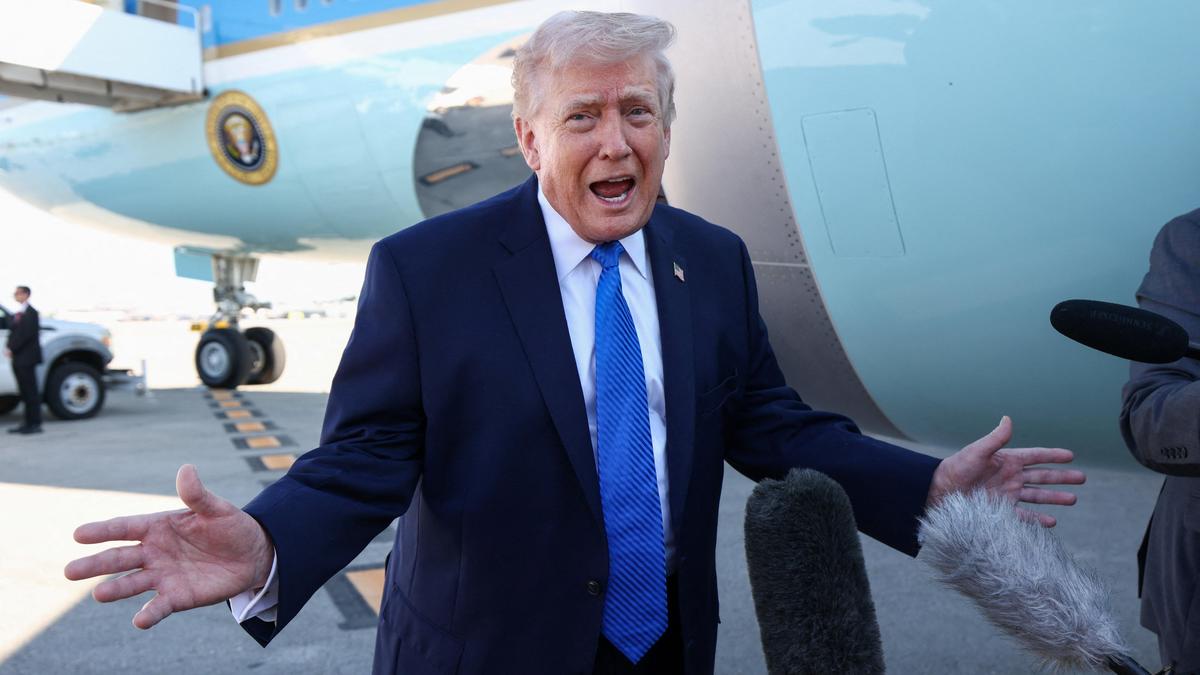
Donald Trump sits at that desk. He has a habit of leaning into the space between words, waiting for the leverage to reveal itself. During a recent gathering at Mar-a-Lago, the former president let a secret slip—or perhaps he dropped it intentionally, like a lure into deep water. He claimed the United States is currently in talks with a "top person" in Iran. Not just any official. The "most respected" person in the country.
Silence.
Then, the questions. Who is this ghost? In a nation defined by its rigid clerical hierarchy and its fierce, often theatrical defiance of the West, who carries enough weight to speak for the Islamic Republic while maintaining the respect of a man who values strength above all else?
The Architecture of a Secret
Diplomacy between Washington and Tehran usually looks like a game of shadows. Since the 1979 embassy takeover, the two nations have communicated through Swiss intermediaries, back-channel letters, and the occasional, awkward brush-up at the United Nations. But this feels different. Trump describes a direct line to a singular figure.
To understand the weight of this, you have to look past the headlines and into the living rooms of Isfahan and the boardrooms of D.C. Imagine a merchant in the Tehran bazaar. For him, "negotiations" aren't a political talking point. They are the difference between being able to afford imported medicine for his daughter and watching the Rial crumble further into worthlessness.
The "top person" Trump refers to holds the keys to that merchant’s pantry.
If these talks are real, they represent a fracture in the wall of "Maximum Pressure." They suggest that even in the most hardened hearts, there is a realization that the status quo is a slow-motion car crash. Trump isn't looking for a multi-party treaty signed by a dozen nations. He wants a deal. He wants the person who can say "yes" and make it stick.
The Power of the Singular
In the world of international relations, we often talk about "states" and "actors" as if they are monolithic blocks of stone. They aren't. They are collections of people with egos, fears, and legacies to protect.
When Trump mentions the "most respected" person, he is signaling a shift from institutional diplomacy to personal chemistry. It’s a gamble. It assumes that one man’s influence can override decades of institutionalized hatred.
Think about the risks for this unnamed Iranian. In the corridors of power in Tehran, talking to "The Great Satan" is often a one-way ticket to political exile—or worse. To be "respected" in that environment while engaging with Trump requires a level of internal gravity that few possess. Is it a high-ranking military commander? A reformist cleric with a hidden mandate? Or perhaps a shadow diplomat who has survived three decades of purges?
The stakes are invisible but absolute.
If the talks fail, the person on the other end loses their head, metaphorically or otherwise. If they succeed, the entire geopolitical map of the Middle East is redrawn overnight. The proxy wars in Yemen, the tension in the Strait of Hormuz, and the nuclear ticking clock all hinge on the breath between these two figures.
The Mirror of Ambition
There is a mirror at play here. Trump sees himself as the ultimate negotiator, the man who can walk into a room and find the "one guy" who matters. He believes the world is run by individuals, not systems.
Across the ocean, his counterpart likely believes the same.
The "top person" is someone who understands that the current path leads to a dead end. They are looking at a youth population in Iran that is increasingly disconnected from the revolution of their grandparents. They see the drones, the sanctions, and the shifting alliances of their neighbors.
They are tired.
This isn't just about uranium enrichment levels or oil quotas. It’s about the exhaustion of a long-term grudge. When two people who are "most respected" in their respective spheres decide to talk, they aren't just discussing policy. They are discussing the terms of a surrender to reality.
The Sound of the Unspoken
Critics will say this is bluster. They’ll point to the lack of a paper trail or the history of hyperbole. But in the high-stakes theater of global power, the claim itself is a weapon. By announcing the talks, Trump forces the Iranian leadership to look at one another with suspicion. He creates a vacuum that only the "top person" can fill.
It’s a psychological play.
If you were that person, sitting in a quiet office in North Tehran, hearing your name—or at least your reputation—invoked from a gilded club in Florida, what would you do? You would realize the door is open. But you would also realize that the person opening it expects you to walk through it alone.
The human element here is the isolation. Diplomacy is the loneliest job in the world when you are trying to end a war that everyone else has grown comfortable with.
History isn't made by committees. It’s made by two people in a room, or on a phone, deciding that the future is worth more than the past. Whether this "top person" exists or is a ghost conjured to stir the pot, the message has been delivered.
Somewhere, a phone is ringing.
The man on the other end knows exactly who he is. He knows the weight of the silence that follows. He knows that if he picks up, he isn't just answering a call. He is deciding if the next generation will live in the shadow of a mountain or in the light of a new day.
The dial tone hums, steady and indifferent, waiting for a voice to break it.