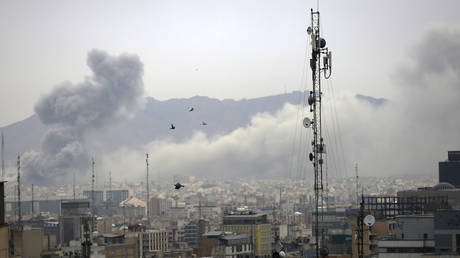
The dust in a Karaj classroom doesn’t settle like normal dust. It lingers, suspended in the shafts of afternoon sunlight that cut through broken window panes, tasting of pulverized concrete and something metallic that sticks to the back of the throat. When the strike hit, it didn’t sound like the thunderous roar of a traditional Tomahawk. There was no whistling descent, no screaming warning from the sky. Witnesses described a sharp, surgical "crack"—the sound of a whip snapping at the speed of sound—followed by a vacuum of silence that felt heavier than the explosion itself.
Somewhere in the wreckage of the Al-Hoda school, a wooden desk lies split perfectly down the middle. This wasn't the result of a stray fragment. This was the calling card of a weapon that, until that Tuesday morning, technically did not exist in the Pentagon’s active inventory.
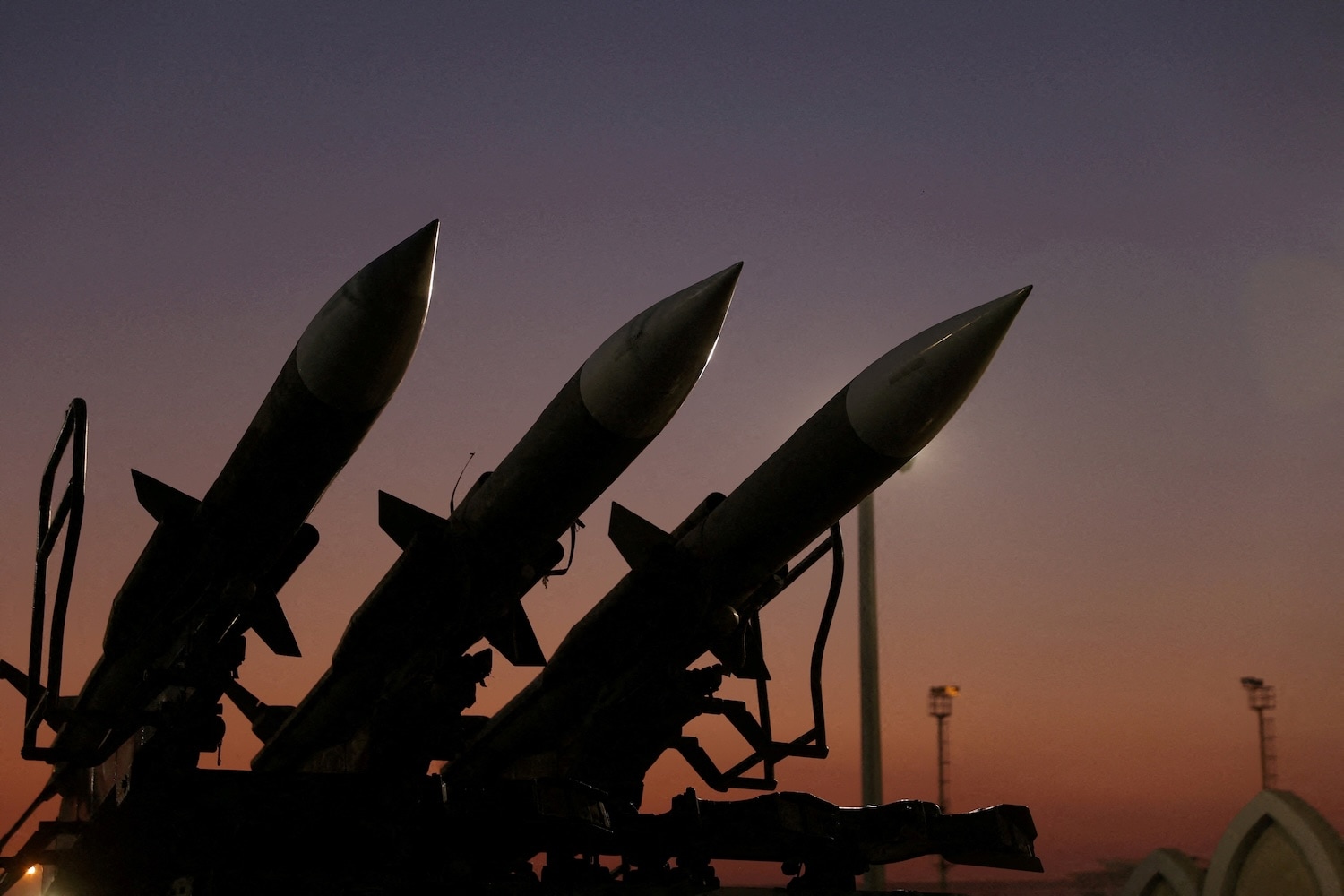
We are entering an era where the physics of war are outpacing the ethics of the men who wage it. The New York Times report on the Iranian school strike isn't just a story about a botched military operation or a "tragic intelligence failure." It is a glimpse into a terrifying transition in global ballistics. The United States military, in its relentless pursuit of a "zero-collateral" kill, has begun field-testing kinetic energy interceptors and low-yield R9X variants—"ninja bombs"—in the most densely populated environments imaginable.
They are treating the world’s most vulnerable hallways as a laboratory.
The Anatomy of a Secret
Imagine a projectile the size of a person, traveling at several times the speed of sound, which carries no explosive warhead. In the traditional logic of the 20th century, such a device would be useless. But in the 21st century, mass multiplied by velocity is more than enough to liquify anything in its path.
This is the "untested weapon" the reports whisper about. By stripping away the gunpowder, the military believes it has found a way to kill with "moral" precision. They call it a surgical strike. But surgery requires a sterile environment and a willing patient. When you drop a hundred pounds of high-velocity cold steel into a school building, the "precision" is an academic fantasy. The shockwave alone, traveling through the rigid structure of a concrete floor, can shatter the bones in a child’s legs without a single piece of shrapnel ever touching them.
The Pentagon's shift toward these untested kinetic systems is driven by a desperate need to avoid the PR nightmare of scorched-earth footage. If there is no fire, if there is no massive crater, the logic goes, then the "damage" is contained. It is war for the era of the curated feed—a way to eliminate a target while leaving the curtains in the next room over still hanging on their rods.
But the curtains are covered in blood.
The Human Cost of High-Speed Physics
Consider a hypothetical teacher named Maryam. In the moments before the strike, she was likely correcting a geometry problem on a chalkboard. She isn't a combatant. She isn't a name on a high-value target list. She is the "background noise" that the Pentagon’s algorithms are programmed to ignore.
When the kinetic weapon pierced the roof, it didn't explode. It simply passed through the building like a hot needle through silk. But the energy had to go somewhere. It radiated outward in a "pressure spike" that turned every loose object—pencils, rulers, lunchboxes—into a lethal secondary projectile.
The Pentagon defends these tests by pointing to the "reduced footprint" of the strike. They argue that a traditional 500-pound bomb would have leveled the entire block. By using the new, untested hardware, they claim to have saved lives. It is a chilling brand of arithmetic. It asks us to be grateful that only one wing of a school was turned into a graveyard instead of the entire neighborhood.
The reality of being an "intelligence-led target" in the age of experimental warfare is that you never know you are part of a trial run until the ceiling vanishes. The Iranian government, predictably, has used the strike to fuel its own propaganda machines. But beneath the shouting of politicians and the dry press releases from Washington, there is the undeniable fact of the hardware.
The fragments recovered from the site do not match any known serial numbers. They are smooth, dark, and lack the jagged edges of traditional casing. They are prototypes.
The Ethics of the Laboratory
Why a school? Why now?
The strategic answer is cold: the target—a high-level paramilitary liaison—was believed to be using the facility as a shield. The tactical answer is darker: if a weapon can prove its precision in the most cluttered, sensitive, and high-stakes environment on earth, it is ready for mass production.
The Iranian strike was a live-fire proof of concept.
The danger of "clean" war is that it makes the decision to strike too easy. When a General knows that a bomb will level a city square, there is a heavy, somber weight to the command. There is a friction to the violence. But when the weapon is marketed as a "invisible blade" that only strikes the intended heart, the friction disappears. War becomes a series of buttons pushed in a climate-controlled room in Nevada, targeting a specific chair in a specific room, with the belief that the rest of the world will remain untouched.
This is the Great Lie of modern ballistics.
There is no such thing as a clean strike in a crowded world. Gravity and velocity do not respect the boundaries of a classroom. The "untested" nature of these weapons means we don't even know the long-term effects of the materials being used. Are the alloys toxic? Does the hyper-sonic friction create localized atmospheric changes that affect the health of survivors?
We are finding out the answers in real-time, using the children of Karaj as our control group.
The Invisible Stakes
The NYT article focuses on the "what"—the hardware, the flight path, the diplomatic fallout. But the "why" is what should keep us awake. We are witnessing the birth of a new doctrine where the battlefield is no longer a defined space. The battlefield is your commute. It is your grocery store. It is your child’s third-period history class.
If the Pentagon can justify using an experimental, unproven kinetic slug in a school because the target was "worth it," then every civilian structure on earth has been effectively de-classified as a protected zone.
The weapon worked, in the narrowest sense of the word. The target is gone. The building still stands. The satellite photos look "clean."
But walk into that classroom today. Look at the way the sunlight hits the dust. Look at the geometry books left open on the floor. You will see that the "surgical" strike has left a wound that no amount of precision can ever stitch back together. The silence in Karaj isn't the silence of peace. It is the silence of a world waiting for the next snap of the whip.
The next time a "breakthrough" in weapons technology is announced, ignore the sleek renderings and the talk of "minimized footprints."
Think of the desk split in two.
Think of the dust that won't settle.
We have traded the blunt trauma of the past for a sharp, cold future, and we are all standing in the path of the needle.