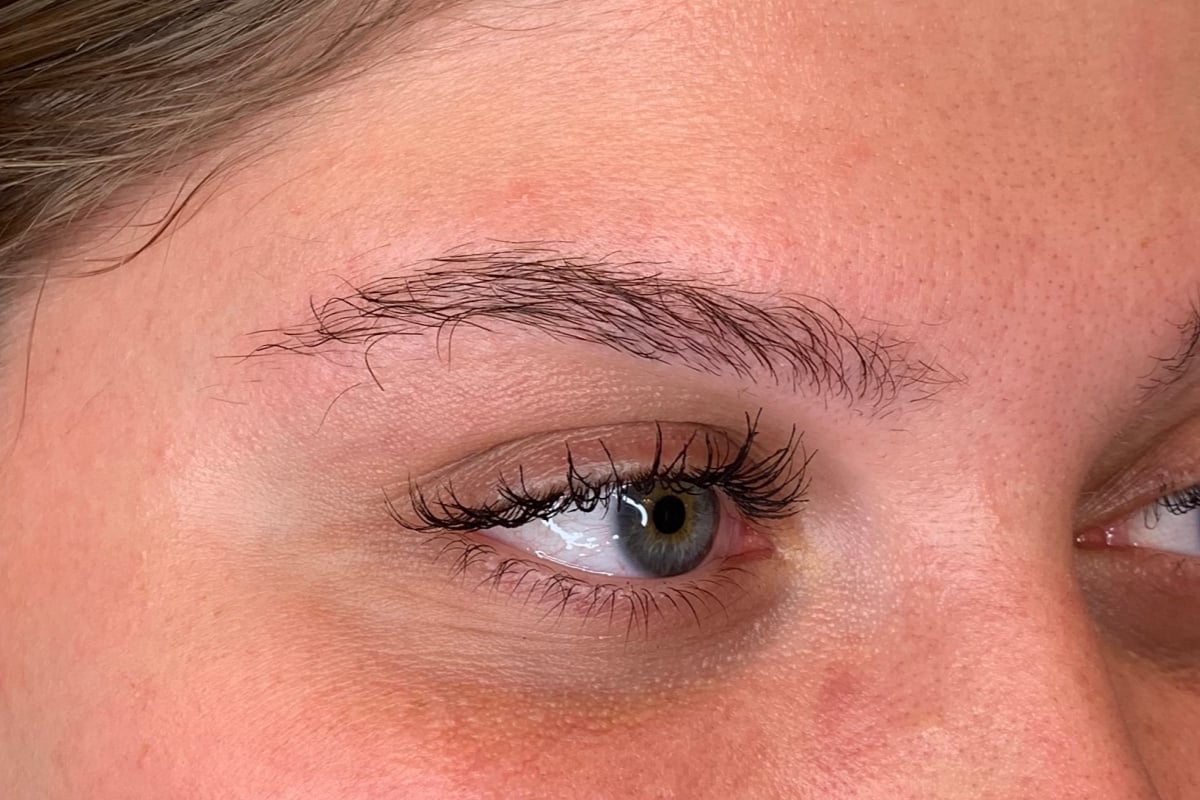
You’re staring at the mirror. One stray hair is mocking you, and suddenly, you’re considering taking a kitchen utensil to your face. Stop. We've all been there. The difference between eyebrows waxed before and after isn't just about hair removal; it’s about a literal structural change to how your eyes look to the world. It's the "non-surgical facelift" everyone talks about but rarely gets right because they treat it like a quick chore rather than a precise art form.
Most people think they just walk into a salon, get some hot goo slapped on their forehead, and walk out looking like a Hadid. It doesn't work that way. Honestly, the "before" phase starts way before you sit in that chair. If you've been hacking away with tweezers in your bathroom mirror since 2012, your follicles are probably screaming for help.
Why the Before Matters More Than the After
Preparation is everything. If you show up with skin that's been soaked in Retinol or Accutane, you’re not just getting a wax; you’re potentially getting your skin ripped off. This is a real thing called "lifting." Dermatologists like Dr. Shereene Idriss have often warned about the thinning effect of certain skincare ingredients on the stratum corneum. If you’re using Vitamin A derivatives, stop at least seven days before your appointment. No exceptions.
The hair needs to be long enough. About the length of a grain of rice. If you’ve been tweezing every single morning, there is nothing for the wax to grab onto. You’re basically paying someone to hurt you for no reason. Let it grow. It’s going to feel messy. You’re going to want to reach for the tweezers. Resist the urge.
Think about your skin type too. People with sensitive skin or those prone to histamine reactions—you know, those tiny white bumps that show up immediately after—might need a different approach. Hard wax versus soft wax. It matters. Hard wax (the kind that hardens and is pulled off without a strip) is generally much gentler on the delicate eye area because it only adheres to the hair, not the skin.
The Mapping Phase: The Secret Sauce
Before any wax touches your face, a good technician will "map" your brows. They’ll use a string or a pencil to find your start, your arch, and your tail. If they just start slathering wax on, leave. Seriously. Get up and walk out. Brows are not one-size-fits-all. A person with a round face needs a higher arch to create verticality, while someone with a long face might want a flatter, more horizontal brow to provide balance.
Navigating the Transition of Eyebrows Waxed Before and After
The moment of truth. You’ve sat through the "rip," the cooling oil, and the inevitable redness. The transformation of eyebrows waxed before and after is often jarring. You might feel "naked." This is because we get used to the clutter. When that clutter is gone, your bone structure suddenly pops.
Immediately after, your skin is a playground for bacteria. Your pores are wide open. They are vulnerable. Don’t go to the gym. Don’t jump in a pool. And for the love of everything, don't touch them with your dirty hands. You’ll end up with folliculitis, which looks like a nasty breakout exactly where your beautiful new brows are supposed to be.
Managing the Redness
Redness is normal. It’s a localized inflammatory response. For most, it fades in an hour. For some, it lingers for a day. Hydrocortisone cream can help, but a simple cold compress is often better. Some experts suggest using aloe vera, but make sure it’s pure aloe—not the bright green stuff from the drugstore that’s packed with alcohol and fragrance. That will only sting.
The "Ghost" Brow Phenomenon
Sometimes, the "after" looks a bit too thin. This usually happens when a tech over-cleans the top of the brow. Modern brow theory suggests keeping the top as natural as possible to maintain a youthful look. High, arched brows can sometimes look "surprised" or dated. You want a "lived-in" polish.
Long-Term Maintenance and Growth Cycles
Hair grows in cycles. Anagen, Catagen, Telogen. You have hairs at every stage right now. This is why you might see "stubble" just three days after a wax. It’s not that the wax didn't work; it’s that those hairs were hiding just under the surface during your appointment. To get your brows on a consistent cycle, you need to be patient. It takes about three to four sessions, spaced exactly four weeks apart, to get all your hairs growing (and being removed) at the same time.
What about the "bald spots"? We all have that one patch that won't grow back because we over-plucked in high school. While wax can't create hair where there is no follicle, it can help train the surrounding hairs to cover the gap. Serums containing peptides or prostaglandins (like RevitaBrow or Latisse) can help, but they require religious consistency.
The Role of Tinting
If your eyebrows waxed before and after results feel lackluster, it might be because your hair is light. Adding a tint during your wax appointment is a game-changer. It catches those "peach fuzz" hairs that are usually invisible, making the brow look three times thicker without adding any actual bulk. It’s the easiest way to get that "full" look without having to draw them on every morning.
The Mistakes You're Probably Making
- Waxing too often: Doing it every two weeks is overkill and can lead to skin thickening or "leathery" patches over years.
- Ignoring your natural shape: Trying to force a straight brow into a high arch is a recipe for disaster.
- Not speaking up: If it's too hot, say so. Burns on the eyelids are painful and can lead to permanent scarring or hyperpigmentation.
- Sun exposure: Freshly waxed skin is hyper-sensitive to UV. If you get a wax and then go lay out at the beach, you’re asking for "sun mustache" or dark patches around your brows.
Actionable Steps for Your Next Appointment
Stop all chemical exfoliants (AHAs, BHAs, Retinols) five to seven days before you go. This is the most critical safety step. Arrive with a clean face, but if you have a specific way you like to fill them in, wear your brow makeup to the appointment. This shows the technician the "vibe" you prefer. If you like a bold, blocky brow, they’ll know not to go too thin.
Check the sanitation. Does the tech "double-dip" the wooden stick? They shouldn't. Once a stick touches your face, it should never go back into the wax pot. That’s how infections spread. A clean shop is a safe shop.
Once you’re home, treat the area like a fresh wound for 24 hours. No heavy oils, no heavy makeup, no sweat. If you’re prone to ingrowns, start a very gentle physical exfoliation (like a soft washcloth) about three days after the wax, once the skin has calmed down.
Keep your appointments consistent. If you jump between different technicians every month, you’ll never get a consistent shape. Find someone whose "brow style" matches yours and stick with them. They need to learn your hair growth patterns just as much as you do.
The transition of eyebrows waxed before and after is more than a grooming habit—it's a maintenance of your facial identity. Treat it with the same respect you'd give a haircut or a skincare routine. Your face will thank you.