Dinosaurs are back. Again. Honestly, it feels like they never really left, but with the franchise constantly evolving, keeping the Jurassic Park series order straight in your head is becoming a bit of a chore. You’d think it’s just a straight line from 1 to 6, but between the soft reboots, the shifting tones, and the upcoming Jurassic World Rebirth starring Scarlett Johansson, the timeline is getting crowded.
It started with a goat. Or rather, a goat that didn't get eaten until the T-Rex finally decided to show up. Since 1993, Steven Spielberg’s adaptation of Michael Crichton’s techno-thriller has ballooned into a multi-billion dollar behemoth. If you’re planning a marathon, you have to decide if you’re watching by release date or trying to piece together the internal logic of a world where prehistoric clones keep escaping their pens despite millions of dollars in security tech.
Most people just want to see the raptors. I get it. But there’s a real narrative arc here that goes from "scientific wonder" to "capitalist nightmare" and eventually "ecological catastrophe."
The Original Trilogy: Where It All Began
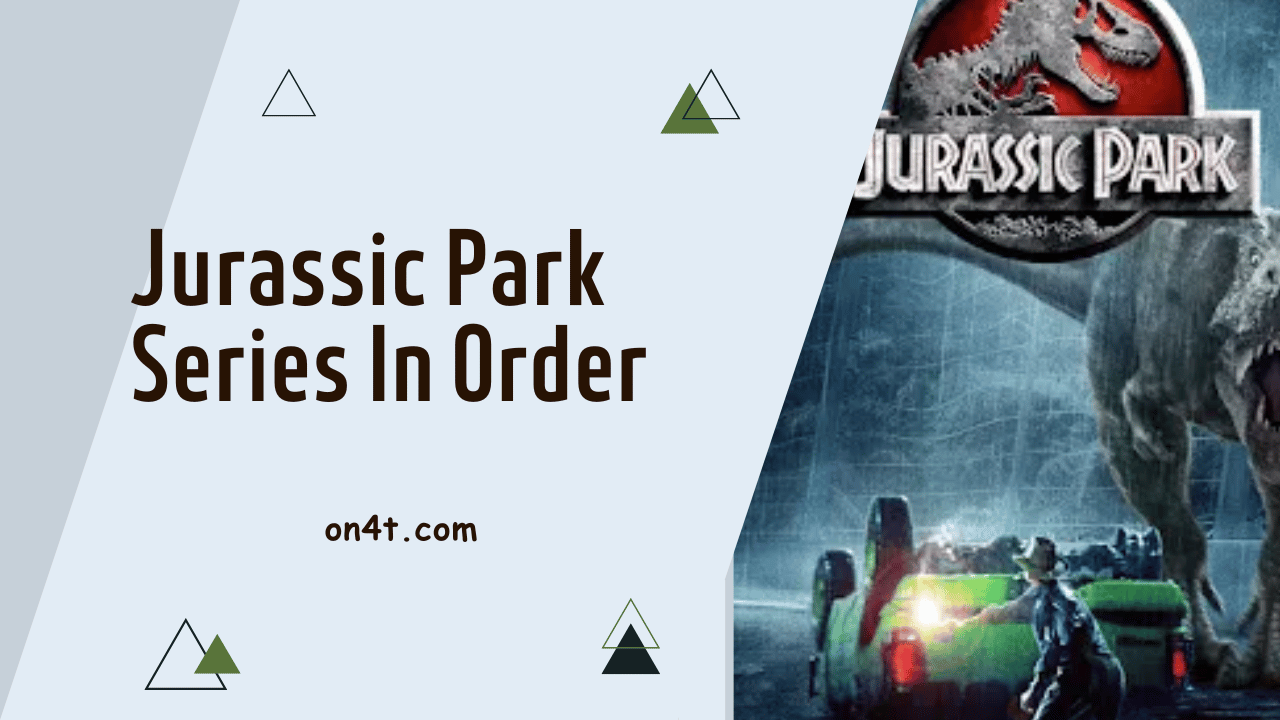
The 1993 Jurassic Park is perfect. There, I said it. It’s the foundational block. If you skip this, nothing else makes sense. It introduces John Hammond’s dream and the chaos theory warnings of Ian Malcolm (Jeff Goldblum). The movie isn't just about monsters; it’s about the hubris of man.
Then things get a little messy.
The Lost World: Jurassic Park (1997) takes us to Isla Sorna, Site B. This is where the dinosaurs were actually "manufactured" before being shipped to the main park on Isla Nublar. It’s darker, rainier, and features a T-Rex loose in San Diego. It’s often the black sheep of the Spielberg era, but its importance to the Jurassic Park series order is massive because it establishes that these animals exist outside of a theme park setting.
Jurassic Park III (2001) is... short. It’s barely 90 minutes. Joe Johnston took over the director’s chair from Spielberg, and the stakes got much smaller. It’s a rescue mission. No grand philosophy, just a Spinosaurus trying to eat Alan Grant. While it’s the weakest of the original three, it introduces the idea that the dinosaurs are breeding and evolving in ways the scientists never intended, specifically the highly intelligent, quill-covered raptors.
Transitioning to the World Era
Fourteen years of silence followed. Then, the gates opened again.
When Jurassic World arrived in 2015, it didn't ignore the previous films, but it definitely wanted you to focus on the new shiny toys. It’s a direct sequel to the 1993 original, set twenty years later. The park is finally open. It’s successful. People are bored of "regular" dinosaurs, so the corporate suits create the Indominus Rex. This is where the Jurassic Park series order shifts from survival horror to a more action-oriented, global-scale disaster story.
The timeline then moves to Jurassic World: Fallen Kingdom (2018). This one is polarizing. Half of it is a disaster movie with a volcano, and the other half is a gothic horror movie in a basement. It ends with a choice that changes the franchise forever: the dinosaurs are released into the wild. Not just on an island. In Northern California.
The Final Chapter (For Now)
Jurassic World Dominion (2022) attempts to bridge everything. It brings back the original trio—Grant, Sattler, and Malcolm—to team up with the new guard. By this point in the Jurassic Park series order, the world has had to adapt to Pteranodons nesting on skyscrapers and Parasaurolophus running with wild horses in the snowy mountains. It’s big, it’s loud, and it focuses heavily on ecological balance and genetic engineering beyond just the lizards.
Does Camp Cretaceous Actually Count?
If you really want to be a completionist, you have to talk about the Netflix animated series, Camp Cretaceous.
Is it for kids? Yeah, mostly. But it’s officially canon. It takes place during and after the events of the first Jurassic World film. It actually fills in some pretty major plot holes, like what happened to the Indominus Rex’s remains and how certain characters survived the fall of the park. If you’re watching the Jurassic Park series order for the deep lore, you can’t really skip it, even if the tone is a bit lighter than the movies.
Making Sense of the Chaos
There are two ways to do this. You can watch them as they came out, which is usually the best way to see the CGI evolve from "how did they do that?" to "okay, that's a lot of green screen."
- Jurassic Park (1993)
- The Lost World: Jurassic Park (1997)
- Jurassic Park III (2001)
- Jurassic World (2015)
- Jurassic World: Fallen Kingdom (2018)
- Jurassic World Dominion (2022)
If you want the chronological deep dive, you insert Camp Cretaceous between 4 and 5, and its sequel series, Chaos Theory, between 5 and 6.
The fascinating thing about the Jurassic Park series order is how the "villain" changes. In the beginning, it was Nature. Nature was reclaiming what was stolen. By the time you get to Dominion, the villain is purely corporate greed—specifically the BioSyn corporation, which was actually a minor plot point in the original Crichton book that took decades to finally show up on screen in a big way.
Why the Order Still Matters Today
We’re heading toward a new era. With Jurassic World Rebirth on the horizon, directed by Gareth Edwards (who did Godzilla and Rogue One), the franchise is looking to strip things back. Edwards is known for "scale"—making monsters feel huge and terrifying again.
Knowing the Jurassic Park series order helps you appreciate the recurring themes. You see the evolution of the Raptor from a mindless killer to a semi-domesticated ally in Blue. You see the downfall of the Hammond legacy and the rise of a world that simply has to live with its mistakes. It’s not just about the jump scares; it’s about a world that lost control of its own biology.
Your Next Steps for a Jurassic Marathon
If you’re ready to dive back in, don't just put them on in the background. Pay attention to the recurring motifs. Look for the "Barbasol" can. Watch how the lighting changes from the warm, tropical sun of the 90s to the cold, blue, digital hues of the modern films.
Start by grabbing the 4K transfers of the original trilogy. The 1993 film, in particular, looks staggering in high definition—better than many movies coming out today. Once you've finished the six core films, check out the "Battle at Big Rock" short film on YouTube. It’s only eight minutes long, directed by Colin Trevorrow, and it takes place right after Fallen Kingdom. It’s arguably one of the best pieces of Jurassic media in the last decade, showing a family at a campsite encountering an Allosaurus.
After that, you'll be fully caught up for the 2025/2026 theatrical slate. The dinosaurs aren't going anywhere, so you might as well get the history right.