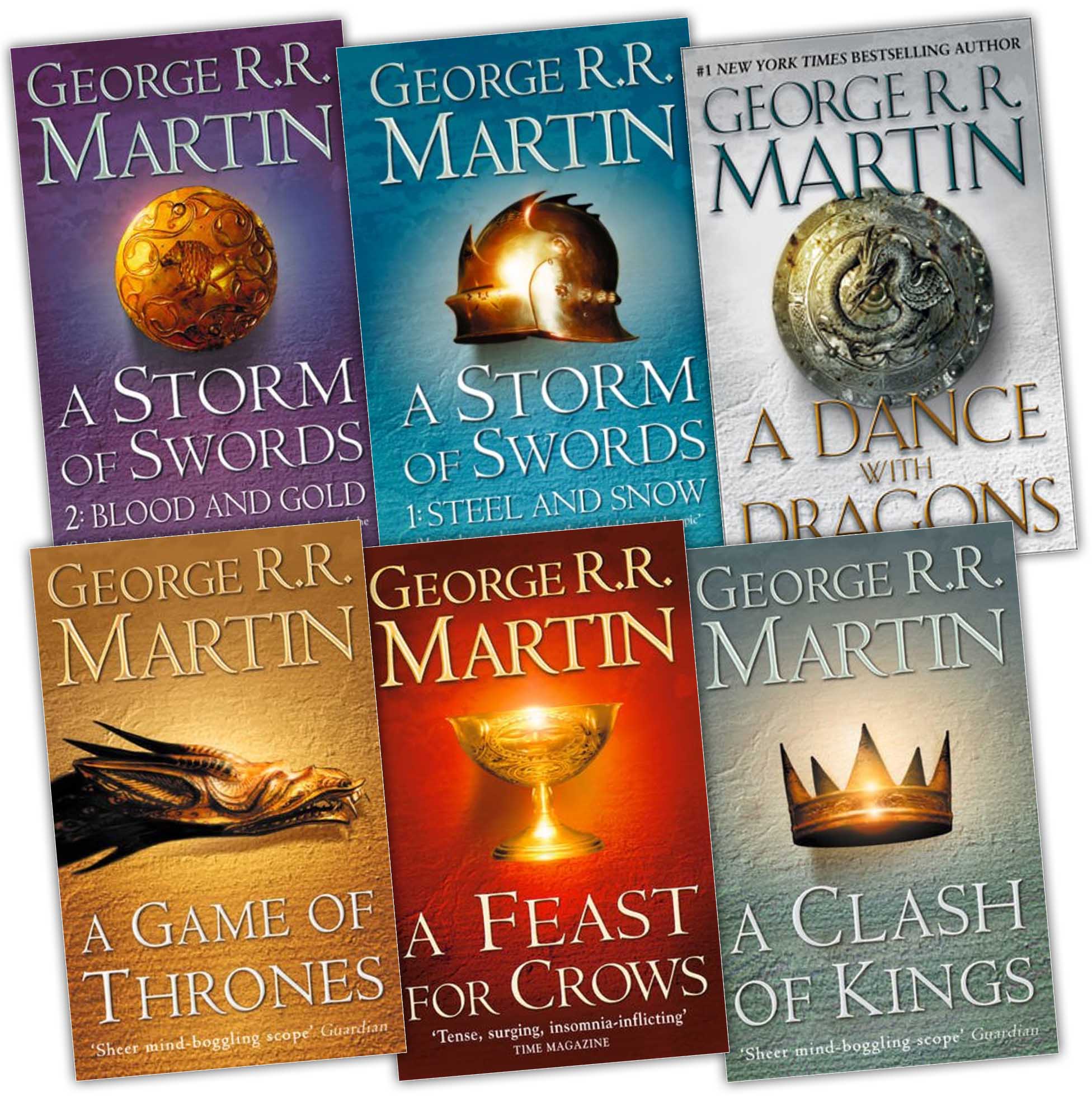
George R.R. Martin is still writing. We know. It’s been over a decade since A Dance with Dragons hit shelves, and while the internet loves to meme about the delay, the actual books remain some of the most complex, rewarding pieces of fantasy literature ever put to paper. If you’re just coming off the HBO show or House of the Dragon and want to dive into the source material, the game of thrones reading order isn't as straightforward as just picking up book one and stopping at book five. There are prequels, "fake" history books, and weirdly specific novellas that fill in the gaps of the Targaryen dynasty.
Honestly? Most people mess this up by trying to read chronologically. They start with Fire & Blood because it happens hundreds of years before Ned Stark loses his head. Don’t do that. You’ll get bogged down in a list of Aegons and Daerons and lose the thread of why this world matters. You want to feel the weight of the magic returning to the world, and that only happens if you follow the publication trail first. For another perspective, consider: this related article.
The Core Series: Start Here
You’ve gotta start with A Game of Thrones. It sounds obvious, but some people think they can skip it because they saw Season 1. Bad move. The internal monologues—especially Ned’s fever dreams in the Black Cells—set up mysteries that the show never even touched. The "A Song of Ice and Fire" series is currently five massive volumes.
First, you hit the self-titled debut. Then A Clash of Kings. Then comes A Storm of Swords, which is arguably the best fantasy novel of the last thirty years. It’s a behemoth. It’s fast. It’s brutal. After that, things get... complicated. Martin originally planned a five-year gap in the story, but he scrapped it. This resulted in A Feast for Crows and A Dance with Dragons. Related insight on this trend has been published by IGN.
Here is the kicker: these two books happen at the same time. Feast follows the characters in the South and the Iron Islands (Cersei, Brienne, Jaime, the Greyjoys), while Dance focuses on the Wall and Essos (Jon, Tyrion, Daenerys). If you read them back-to-back, you might go 1,500 pages without hearing from your favorite character.
The "Boiled Leather" Method and Combined Reads
Since Feast and Dance are chronological twins, the hardcore fandom developed a specific game of thrones reading order called the "Boiled Leather" or "Ball of Beasts" read. Basically, you use a spreadsheet to jump between chapters of both books.
Is it worth it? For a first-time reader, maybe not. It’s a lot of flipping back and forth. But for a reread? It’s transformative. Seeing Quentyn Martell’s journey in Dance happen alongside the political decay in King’s Landing in Feast makes the world feel massive and interconnected. It fixes the pacing issues that some critics complained about when the books were first released. You see the "slow" parts of Cersei’s descent into paranoia balanced out by the high-stakes tension of the Siege of Meereen.
Don’t Sleep on Dunk and Egg
If you get burnt out on the main series—and let’s be real, A Feast for Crows can be a slog for some—you need to pivot to A Knight of the Seven Kingdoms. This is a collection of three novellas: The Hedge Knight, The Sworn Sword, and The Mystery Knight.
They take place about 90 years before the main series. No world-ending threats here. Just a really tall, honorable knight named Dunk and his bald squire, Egg. They’re shorter, punchier, and honestly, they contain some of Martin’s best character work. If you want a break from the "everyone dies and everything is miserable" vibe, this is your palette cleanser. Plus, Egg’s identity provides a massive "Aha!" moment for the history of the Targaryen line.
Fire & Blood: The Textbook Approach
Then there’s Fire & Blood. It’s not a novel. It’s written as an in-universe history book by Archmaester Gyldayn. If you go into this expecting the tight POV chapters of the main novels, you’re going to be disappointed. It’s dense. It’s dry in places. But it is the definitive source for the "Dance of the Dragons" civil war.
If you're a fan of the House of the Dragon show, this is your bible. It covers everything from Aegon the Conqueror to the regency of Aegon III. It’s best read after you’ve finished the main five books because it adds layers of "historical irony" to the things Daenerys Targaryen says and does later on. You realize she’s making the same mistakes her ancestors made 200 years ago.
The World of Ice & Fire
Finally, there’s the big coffee table book, The World of Ice & Fire. This is purely for the lore hounds. Want to know what’s on the continent of Sothoryos? Want to know about the weird oily black stone structures in Asshai? This is where you find it.
Elio M. García Jr. and Linda Antonsson, who run the Westeros.org fan site, co-authored this with Martin. It’s packed with art and deep-cut history. It’s less of a "reading order" entry and more of a reference guide for when you’re confused about why the Blackwood and Bracken families have been killing each other for ten thousand years.
Sample Reading Paths
Look, there is no one "right" way, but there are definitely wrong ways.
- The Purist Path: Read them as they were published. Game of Thrones through Dance with Dragons, then the Dunk and Egg stories, then the history books. This is how the mystery is intended to unfold. You learn about the "Tower of Joy" when Ned remembers it, not through a history book spoiler.
- The Chronological Nightmare: Starting with Fire & Blood, then A Knight of the Seven Kingdoms, then the main series. I don’t recommend this. It ruins the "legendary" status of historical figures when you meet them as mundane people before hearing the myths about them in the main books.
- The Enhanced Reread: Use the combined Feast/Dance reading order. This is for the person who has seen the show, read the books once, and wants to catch all the foreshadowing for The Winds of Winter.
The complexity of Westeros is its selling point. Martin uses a "gardening" style of writing, meaning he lets the story grow organically. This results in threads that seem minor in book one—like a passing mention of a sellsword company—becoming massive plot points in book five. If you rush the game of thrones reading order, you’ll miss the tiny details that make the fan theories so compelling.
We have to acknowledge the elephant in the room: the series isn't finished. The Winds of Winter and A Dream of Spring are still pending. Because of this, many readers choose to stop after A Storm of Swords and wait for a release date before tackling the slower back half. That’s a valid strategy, but you miss out on the "Grand Northern Conspiracy" and the Young Griff reveal, which are easily the most exciting developments in the later books.
Your Westeros Action Plan
If you're ready to start, follow these specific steps to ensure you don't burn out by the middle of the second book:
- Read the first three novels (A Game of Thrones, A Clash of Kings, A Storm of Swords) back-to-back. The momentum here is incredible and will carry you through the denser material.
- Take a "Lore Break" with A Knight of the Seven Kingdoms. It’s a lighter read and will remind you why you love the world without the political baggage of King’s Landing.
- Tackle the Combined Read for A Feast for Crows and A Dance with Dragons. Look up the "Boiled Leather" chapter list online—it keeps the narrative flow much more consistent than reading them separately.
- Save Fire & Blood for last. Treat it as a reward for finishing the main series, especially if you’re trying to compare the show’s depiction of the Targaryens to the "official" history.
- Check out the "Sample Chapters" for The Winds of Winter. Martin has released several chapters over the years (The Forsaken, Alayne, etc.) that are essentially the start of book six. They are mandatory reading for anyone who wants to be up to date on the current state of the story.
Don't overthink the "correct" order too much. The best way to read these books is with a map of Westeros open and a willingness to occasionally flip to the appendix to remember which Frey is which. It’s a marathon, not a sprint. Enjoy the journey through the Seven Kingdoms before the long winter finally arrives.