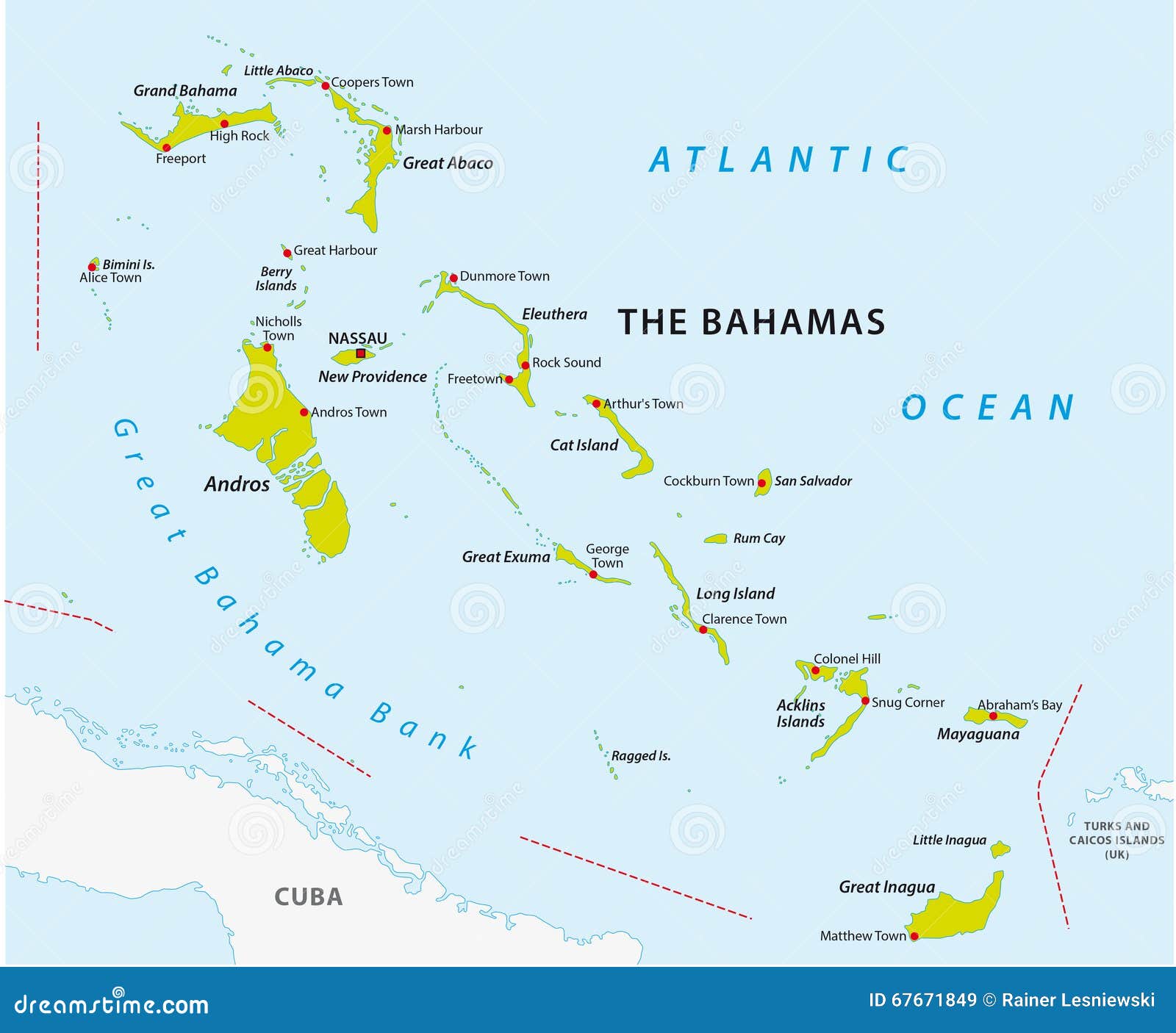
You’re looking at a map of Caribbean and Bahamas islands and thinking, "Wait, aren't they the same thing?" Honestly, most people get this wrong. It’s a mess of blue water and scattered dots that look identical until you actually try to navigate them.
The Caribbean is a massive sea. The Bahamas? They aren’t even in it. Geographically, the Bahamian archipelago sits entirely in the Atlantic Ocean. If you’re planning a boat trip or just trying to win a bar bet, knowing the difference between the Greater Antilles, the Lesser Antilles, and the Lucayan Archipelago (that's the Bahamas and Turks and Caicos) is basically essential.
Why the Map of Caribbean and Bahamas Geography Tricked You
It’s all about the "West Indies" label. Back in the day, explorers just lumped everything south of Florida into one bucket. But look closer at a high-resolution map of Caribbean and Bahamas regions. You’ll see the Bahamas starts just 50 miles off the coast of Florida. They are low-lying limestone platforms. The Caribbean islands, specifically those further south like St. Lucia or Dominica, are often jagged, volcanic peaks thrusting out of deep water.
The distinction matters for more than just geography. It dictates the weather. While the Caribbean stays pretty hot year-round, the northern Bahamas can actually get a bit chilly in January. You might need a light sweater in Nassau, but you’ll be sweating through your shirt in Grenada.
The Lucayan Archipelago vs. The Antilles
The Bahamas isn't a lonely island. It’s part of the Lucayan Archipelago. This chain includes over 700 islands and 2,000 cays. Most are uninhabited. Just tiny strips of sand where iguanas outnumber people. South of that, the Caribbean begins.
The "real" Caribbean is usually split into two main groups:
- The Greater Antilles: These are the big players. Cuba, Hispaniola (Haiti and the Dominican Republic), Jamaica, and Puerto Rico. They are huge. They have mountains. They have massive cities.
- The Lesser Antilles: This is the long, curving arc of smaller islands. Think Virgin Islands, Antigua, Barbados, and down toward Trinidad.
Navigating the Windward and Leeward Split
If you zoom in on a map of Caribbean and Bahamas shipping routes, you’ll see terms like "Windward" and "Leeward." It sounds like pirate talk. It’s actually just about how the wind blows. The Trade Winds hit the Windward Islands first (the southern part of the arc, like St. Vincent). By the time the wind reaches the Leeward Islands (the northern part, like St. Kitts), it’s "sheltered" or leeward.
Sailors care about this. You should too. The Windward side of an island is usually lush and rainy. The Leeward side is where you find the calm, postcard-perfect beaches. If you pick a hotel on the windward side of Barbados, expect waves. Pick the leeward side if you want to float in a giant bathtub.
The Deep Trenches Nobody Sees
Maps usually show you the land. They rarely show you what’s underneath. Between the Bahamas and the Caribbean lies the Puerto Rico Trench. It’s the deepest part of the Atlantic Ocean. We are talking over 27,000 feet deep.
When you look at a map of Caribbean and Bahamas waters, that dark blue color isn't just for aesthetics. It represents a massive drop-off. The "Tongue of the Ocean" in the Bahamas is a deep-water trench surrounded by shallow reefs. It’s why you can go from waist-deep turquoise water to ink-black depths in a matter of seconds.
Realities of Travel Distances
People underestimate the scale. You can’t just "hop" from the Bahamas to Jamaica for lunch.
Nassau to Kingston is about 500 miles. That’s roughly the distance from London to Zurich. Even within the Bahamas, traveling from Bimini in the north to Inagua in the south is a massive trek. If you’re looking at a map of Caribbean and Bahamas locations to plan a multi-country trip, check the flight hubs. Most regional flights actually go through Miami or Panama City first. It’s annoying, but it’s the reality of Caribbean infrastructure.
The ABC Islands: A Different World
Way down south, off the coast of Venezuela, are Aruba, Bonaire, and Curaçao. On a standard map of Caribbean and Bahamas zones, these look like afterthoughts. In reality, they are a desert. While the rest of the Caribbean is dealing with tropical rainforests and hurricanes, the ABC islands are covered in cacti and rarely see a major storm. They sit outside the "Hurricane Belt." This makes them the smartest bet for a summer vacation when the rest of the region is under a weather watch.
What Most People Miss on the Map
The "Western Caribbean" is often ignored by casual map-readers. This includes the Bay Islands of Honduras (Roatan), the Corn Islands of Nicaragua, and Cozumel in Mexico. These are culturally Caribbean but politically Central American. The vibe is different. It's less "British Colonial" and more "Mestizo-meets-Pirate."
Also, look for the tiny specks. Saba, for instance. It’s a five-square-mile island that is basically just the tip of a volcano. No beaches. Just a massive rock. It shows that a map of Caribbean and Bahamas isn't just a list of beach resorts; it's a diverse geological record of the earth's crust moving.
Mapping the Hurricane Path
If you study historical weather maps, a pattern emerges. Most storms enter through the Lesser Antilles and curve northwest. The Bahamas often acts as a buffer for Florida, taking the brunt of Atlantic swells. Navigating a map of Caribbean and Bahamas during peak season (August to October) requires keeping a constant eye on the "corridor."
Actionable Steps for Your Next Trip
Stop looking at the map as one big destination. It isn't. To actually use a map of Caribbean and Bahamas effectively, do this:
- Check the Bathymetry: Use a map that shows water depth. If you want snorkeling, you need the light-blue shallow "banks" (like the Great Bahama Bank). If you want deep-sea fishing, you need the drop-offs.
- Identify the Hubs: Don't try to fly between random islands. Use San Juan (Puerto Rico), St. Maarten, or Nassau as your "base." It will save you thousands of dollars in airfare.
- Respect the Hurricane Belt: If traveling in September, stick to the "down-island" spots like Aruba, Bonaire, Curaçao, or even Grenada, which is statistically safer than the northern islands.
- Distinguish the Terrain: Use topographic maps. If you have bad knees, avoid the volcanic islands like Dominica or St. Vincent where everything is an uphill hike. Stick to the flat limestone islands of the Bahamas or Anguilla.
- Verify Transit: Never assume a ferry exists. Despite being close on a map, many islands have zero boat connection to their neighbors. Always verify the "Inter-Island" ferry routes before booking a hotel on a "nearby" island.
The map of Caribbean and Bahamas is a puzzle. It’s a mix of independent nations, overseas territories, and various languages (English, Spanish, French, Dutch, and Creole). Treat it like a continent, not a single destination.