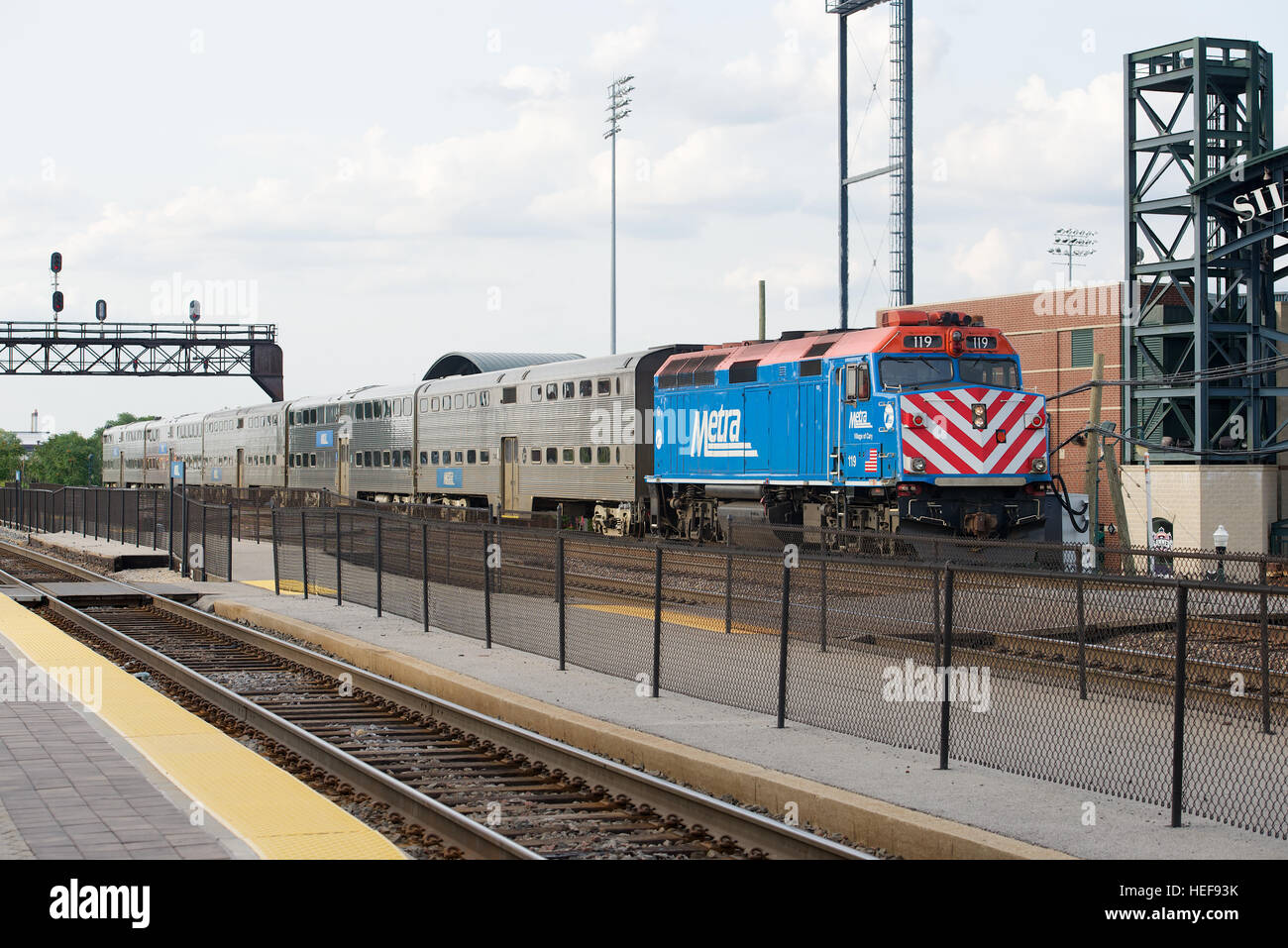
It’s five-thirty in the morning. The air in downtown Joliet is usually crisp, maybe a bit heavy with the scent of nearby industrial history and the faint, metallic tang of the rails. You’re standing at the Metra train Joliet station, looking at that massive, beautiful limestone building that’s been there since 1912. It’s the Joliet Union Station. But here’s the thing: while the building is a landmark, the way you actually catch a train there has changed a ton over the last few years. If you haven't been in a while, you might end up wandering around the wrong platform while your ride pulls away.
Commuting from Joliet isn't just about sitting on a train. It's about navigating the unique intersection where the Rock Island District and the Heritage Corridor lines meet. It's a hub. A busy one. You might also find this similar coverage insightful: Why People Are Losing It Over a Two Dollar Pickle on BC Ferries.
The Layout Shuffle at Metra Train Joliet Station
Most people think they’ll just walk into the old grand lobby and find a ticket window. Wrong. The historic Union Station building is gorgeous, sure, but it's mostly an event space and restaurant hub now. The actual "station" functions—the tickets, the waiting areas, the platforms—have shifted to the newer Gateway Center facilities nearby.
You’ve got two main lines here. The Rock Island District (RID) is the workhorse. It runs frequently, even on weekends. Then you have the Heritage Corridor (HC). That one is a bit more finicky. It basically only runs during rush hour on weekdays because it shares tracks with massive freight trains. If you miss that morning HC train, you're waiting until the afternoon or hiking over to the Rock Island side. As extensively documented in latest reports by Lonely Planet, the implications are significant.
The physical layout is a split-level situation. The tracks are elevated. To get to the Heritage Corridor or Amtrak (which also stops here, by the way), you’re looking at different boarding areas than the Rock Island. It sounds simple until you’re running late and realize the stairs you just climbed lead to a freight bypass rather than the inbound to Chicago.
Why the Heritage Corridor is Different
The Heritage Corridor follows the path of the old Illinois & Michigan Canal. It’s scenic. It’s also legendary for delays. Why? Because it’s a "host railroad" situation. Metra doesn't own those tracks; Canadian National does. When a mile-long freight train carrying grain or shipping containers needs to move, the Metra commuter train often has to sit and wait. Honestly, if you have a high-stakes meeting in the Loop, most regulars will tell you to just take the Rock Island. It’s more reliable because Metra actually owns most of that line.
Parking, Safety, and the "Secret" Spots
Parking is the bane of every commuter's existence. In Joliet, you have a few options, but they aren't all created equal. The main commuter lots are managed by the City of Joliet. You’ve got the New Street lot and the Mayor Art Schultz Drive areas.
Daily rates are usually around $1.50 or $2.00, which is a steal compared to the $15 or $20 you’ll pay in downtown Chicago. But don't try to be clever and park in the restaurant lots or the short-term spots near the bus terminal. They will tow you. Fast.
Safety is a common question. Is the Metra train Joliet station safe? Generally, yeah. It’s a high-traffic area. There’s a heavy presence from both Joliet Police and Metra’s own police force. However, like any downtown transit hub in a major metro area, you want to keep your wits about you after dark. The lighting around the new Gateway Center is much better than it used to be under the old viaducts.
The Ticket Situation
Don’t bother with the paper tickets unless you just like the souvenir feel. Download the Ventra app. It’s basically mandatory for anyone trying to survive the suburban commute in 2026. You buy your ticket on your phone, "activate" it once you see the conductor walking down the aisle, and show them the screen.
If you do buy a physical ticket from the vending machines, keep it away from your phone's magnet. Those things de-magnetize if you look at them wrong. Then you’re stuck explaining to a grumpy conductor why your ticket won't scan while a hundred people stare at the back of your head.
The Amtrak Connection
One thing that catches people off guard is that Joliet isn't just a Metra stop. It’s a major Amtrak station for the Lincoln Service and the Texas Eagle.
- Lincoln Service: High-speed-ish rail to Springfield and St. Louis.
- Texas Eagle: All the way to San Antonio and eventually Los Angeles.
Because of this, the station has a bit more "energy" than your typical suburban stop. You’ll see people with massive suitcases mixed in with the guys in suits carrying thin laptops. It gives the place a real "travel" vibe rather than just a "commute" vibe.
Realities of the Rock Island Line
The Rock Island is the backbone of Joliet transit. It has two branches once it hits the city—the Suburban Branch and the Main Line. From Joliet, you’re on the Main Line. It’s an express dream for some trips, skipping most of the small Beverly stops once it hits a certain point.
The ride takes about 60 to 80 minutes depending on if you catch an express or a local. That sounds like a lot. It is. But if you compare it to driving I-55 during a snowstorm or when there's construction near the I-294 merge? The train wins every single time. You can actually sleep. Or work. Or stare out the window at the backyards of Mokena and New Lenox.
Comfort Levels on the Train
Metra is currently in the middle of a massive fleet overhaul. You’ll see a mix of the old "gallery" cars—the ones with the two levels and the open middle—and some newer, refurbished cars with outlets and better seats.
If you’re on an old car, the heat is either "surface of the sun" or "absolute zero." There is no middle ground. Dress in layers. Always. Even in July, the AC can be aggressive enough to make you wish you had a parka.
Navigating the Local Area
If you have a layover or you’re arriving in Joliet for the day, you aren't just stuck in a wasteland. The area around the station has seen a lot of investment.
The Rialto Square Theatre is just a few blocks away. It’s one of the most beautiful theaters in the country. Seriously. If you have an hour to kill, just walking past it is worth it. There are also a handful of breweries and diners within a five-minute walk. My Friends Place is a classic for a quick bite, or you can hit up the Joliet Route 66 Diner for that retro experience.
Hidden Costs and Savings
Metra introduced the "Super Saver" monthly pass a while back, and it’s been a game changer. For a flat rate (it fluctuates, but usually stays around $75-$100), you get unlimited rides across the entire system. If you are coming from Joliet, which is in the furthest fare zone, this pass pays for itself in about a week.
Also, remember that kids often ride for free or at a deep discount on weekends. It makes the Metra train Joliet station a starting point for family trips to the museums in the city without having to deal with the $40 parking at Millennium Park.
Technical Glitches to Expect
The "Real-Time Tracker" on the Metra website or the Ventra app is... optimistic. It uses GPS, but sometimes the signals drop out in the "dead zones" between stations. If it says the train is 5 minutes away and hasn't moved for 10 minutes, it’s probably stuck behind a freight train near Blue Island. Don't panic. It’s just part of the rhythm.
Actionable Steps for Your Next Trip
If you’re planning to use the Joliet station, do these things to avoid a headache:
- Check the Heritage vs. Rock Island Schedule: They use different tracks. Ensure you are looking at the right timetable. Heritage Corridor does not run on weekends.
- Arrive 15 Minutes Early: The walk from the parking lots to the actual elevated platform is longer than you think, especially if you have to use the elevators.
- Use the Gateway Center: Use the indoor waiting area in the Gateway Center during winter. The platforms are wind-whipped and brutal in January.
- Validate the Platform: Look at the digital signs. Occasionally, due to track work, an inbound train will arrive on the outbound platform (cross-platform boarding). If you see a crowd of regulars suddenly sprinting across the bridge, follow them.
- Download Ventra: Buy your ticket before you board. There is a surcharge for buying on the train if the station agent or a functional vending machine was available where you started.
The Metra train Joliet station is more than a transit stop; it’s a massive piece of Illinois infrastructure that connects the quietude of the outer suburbs to the chaos of the city. Once you learn the quirks of the platforms and the timing of the freight trains, it’s the most efficient way to navigate the region. Just remember to check the schedule one last time before you leave the house—the trains wait for no one, and the freight trains wait for everyone.