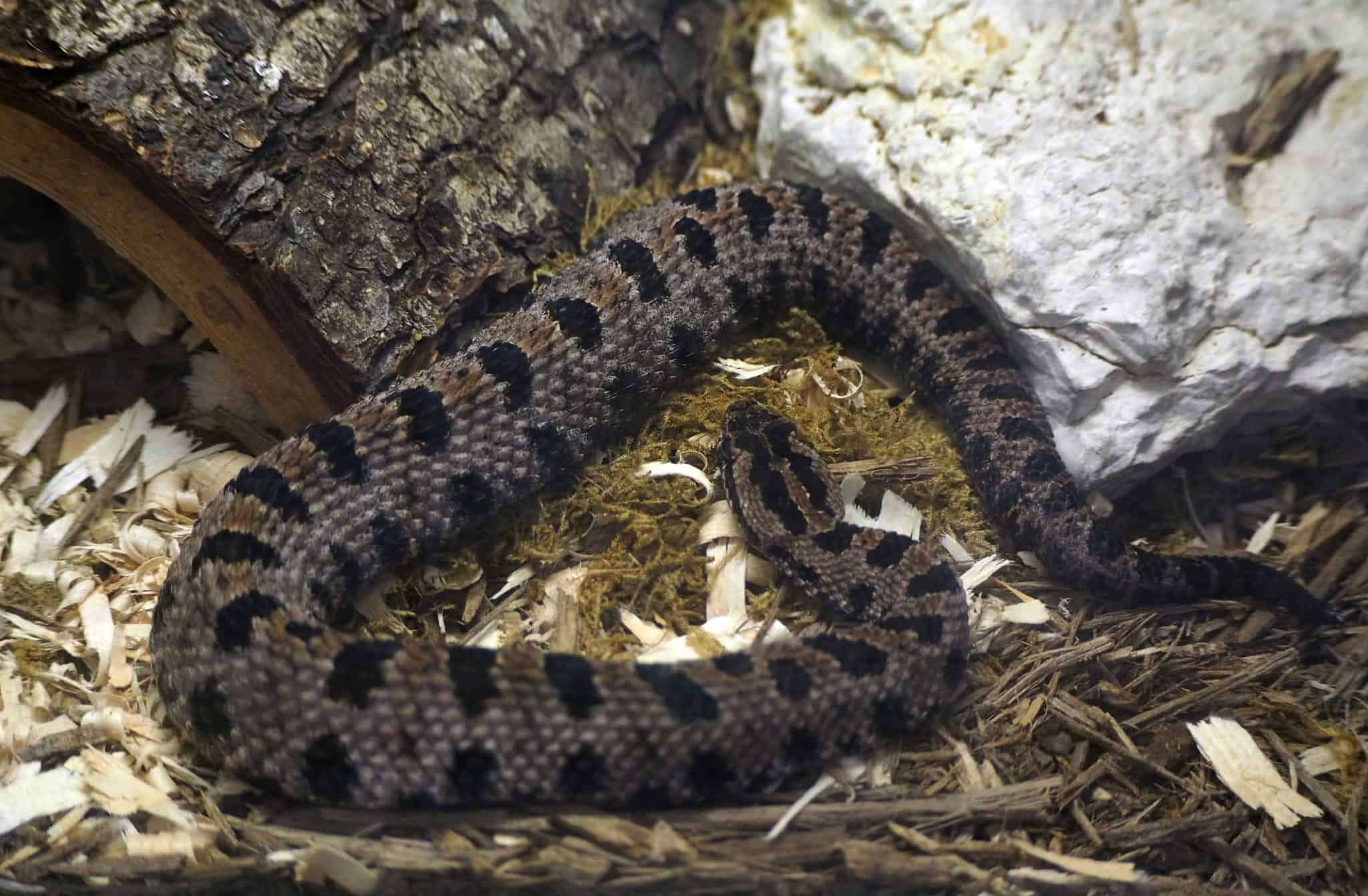
You’re walking through your backyard in Alpharetta or maybe hiking near Blood Mountain, and there it is. A coil of scales in the pine straw. Your heart does a little jump. Most people immediately think "Copperhead." Honestly, usually, it’s just a harmless brown snake or a thick-bodied water snake. But Georgia is home to about 46 species of snakes, and while only six are venomous, knowing the difference matters. Not just for your safety, but for the snake's life too. People kill thousands of beneficial rat snakes every year because they can't tell them apart from something dangerous.
It’s about more than just "pointy heads." That old advice is actually pretty dangerous and often wrong. Let's look at snakes georgia pictures identification through a lens of what actually works when you're standing five feet away from a reptile in the grass.
The Copperhead Confusion
If you live in Georgia, you have seen a Copperhead. Or at least, you think you have. The Eastern Copperhead (Agkistrodon contortrix) is the most common venomous snake in the state. They are masters of camouflage. Their pattern looks exactly like fallen oak leaves.
Look for the "Hershey Kisses." That’s the gold standard for identification. From the side, a Copperhead has dark brown shapes that look like those little chocolates. From the top, it looks like an hourglass. If the shapes are splotchy or don’t quite meet in the middle, you might be looking at a northern water snake.
Water snakes are grumpy. They bite if you touch them, but they aren't venomous. One big giveaway? Check the eyes if you’re close enough (though maybe don't get that close). Copperheads have vertical, cat-like pupils. Water snakes have round ones. Also, Copperheads have a pit—a heat-sensing hole—between the eye and the nostril. If you see that, back away.
Why the "Triangle Head" Rule Fails
Everyone tells you that venomous snakes have triangular heads. Forget that. Many non-venomous snakes, like the Eastern Hognose or the common Rat Snake, will flatten their heads when they feel threatened. They do it to look scary. It works. It makes them look exactly like a pit viper.
Instead of the head shape, look at the tail. If it’s rattling, it’s a rattlesnake. If it’s thick and blunt, be cautious. But really, the pattern is your best bet.
The Heavy Hitters: Rattlesnakes and Cottonmouths
Georgia has three types of rattlesnakes: the Timber (sometimes called the Canebrake), the Eastern Diamondback, and the tiny Pygmy Rattlesnake.
The Timber Rattlesnake is the one you’ll find in the woods. They have chevron-shaped bands. They are generally pretty chill unless you step on them. The Eastern Diamondback is the big one. It’s the largest venomous snake in North America. You’ll mostly find them in the southern part of the state, in the coastal plains and sandhills. They have those iconic yellow-bordered diamonds.
Then there’s the Cottonmouth, or Water Moccasin.
People swear every snake in a Georgia pond is a Cottonmouth. They aren't. Cottonmouths are actually fairly heavy-bodied and swim with their entire bodies on top of the water, like a pool noodle. Harmless water snakes usually swim with just their heads up. If the snake opens its mouth and it looks like a white cotton ball, well, the name fits. That’s a Cottonmouth.
The Coral Snake Myth
"Red touch yellow, kill a fellow; red touch black, friend of Jack."
It’s a catchy rhyme. In Georgia, it’s actually mostly accurate for the Harlequin Coral Snake. They are rare, shy, and found in the southern coastal plain. They have beautiful, bright rings. But honestly? Just don't pick up colorful snakes. There’s no reason to test the rhyme out.
The Good Guys You Want Around
You want snakes in your yard. Seriously.
The Eastern Rat Snake is the MVP of Georgia backyards. They eat rodents like it’s their job. They are also incredibly weird. If you see a snake climbing a brick wall or hanging out in a birdhouse, it’s a rat snake. They are the acrobats of the reptile world. They’re usually black with some faint patterning, but they can be "rusty" or "yellow" depending on where you are in the state.
Then there’s the Black Racer. They are fast. Like, incredibly fast. They’re solid black with a white chin. If you see a black blur disappear into the bushes, that was a Racer. They are harmless to humans but hell on lizards and frogs.
Identification at a Glance: A Quick Reference
- Copperhead: Hourglass/Hershey Kiss patterns, tan/copper body.
- Timber Rattlesnake: Chevron bands, rattle on tail, found in forests.
- Black Rat Snake: Solid black or faint blotches, "kinked" body when resting, great climbers.
- Eastern Garter Snake: Three longitudinal yellow stripes. Very common in gardens.
- Eastern Hognose: Upturned nose, plays dead (flips on its back and sticks out its tongue).
Dealing with "Garden Variety" Snakes
Most snakes you find while pulling weeds are tiny. The DeKay’s Brown Snake is a classic. They rarely get longer than a foot. They eat slugs. If you have a garden, the Brown Snake is your best friend. They are often mistaken for baby Copperheads, but they don't have the hourglasses. They just have two rows of dark spots.
Another one is the Ring-necked Snake. These are gorgeous. Dark gray on top, bright orange or yellow on the belly, with a little ring around the neck. They are completely harmless and honestly quite cute.
What to Do if You Get Bitten
First, breathe.
Most snake bites in Georgia are "dry bites" where no venom is injected, or they come from non-venomous species. Even if it is a venomous bite, we have excellent antivenom in hospitals across the state.
- Do not use a tourniquet.
- Do not try to suck out the venom. (This isn't a western movie).
- Do not ice the wound.
- Do take off any rings or watches. Swelling happens fast.
- Do get to an ER.
Don't worry about killing the snake to bring it with you for identification. It’s dangerous and unnecessary. Doctors can usually tell what bit you based on your symptoms and blood work.
The Ethics of Coexisting
Killing a snake doesn't make your yard safer. It just opens up a spot for a new snake to move in. Usually, that new snake might be less "convenient" than the one you just got rid of. Snakes are territorial. If you have a big King Snake living under your shed, keep him. King Snakes actually eat Copperheads and Rattlesnakes. They are immune to the venom. Having a King Snake is like having a private security guard.
If you really want snakes to stay away, stop giving them a reason to be there.
Clean up the woodpiles. Mow your grass. If you have a bird feeder, you have mice. If you have mice, you will have snakes. It’s just the circle of life in the South.
Useful Resources for Georgia Residents
The University of Georgia (UGA) has an incredible herpetology department. The Savannah River Ecology Lab (SREL) website is the gold standard for snakes georgia pictures identification. If you’re ever unsure, there are several "Georgia Snake Identification" groups on Facebook where experts will ID a photo for you in minutes. Just take the photo from a safe distance.
Actionable Next Steps
- Download a Guide: Save a PDF of Georgia's venomous snakes to your phone. It’s helpful for when you lose cell service on a hike.
- Check Your Foundations: Walk around your house and look for gaps. A snake can fit through a hole the size of a quarter.
- Get a Good Pair of Boots: If you're clearing brush or walking in tall grass, skip the flip-flops. Most bites happen on the hands or ankles because someone wasn't looking where they were stepping.
- Educate the Kids: Teach children to "stop and back away" rather than "scream and run." Curiosity is usually what leads to bites.
- Join a Group: Follow the Georgia Herpetological Society. You'll learn that these animals are far more complex and less "evil" than folklore suggests.
Snake identification isn't about memorizing every single scale. It's about recognizing the big players and respecting the space of the small ones. Georgia's ecosystem thrives because of these predators. Next time you see a scaly neighbor, take a breath, look for the Hershey Kisses, and then let it go about its day.