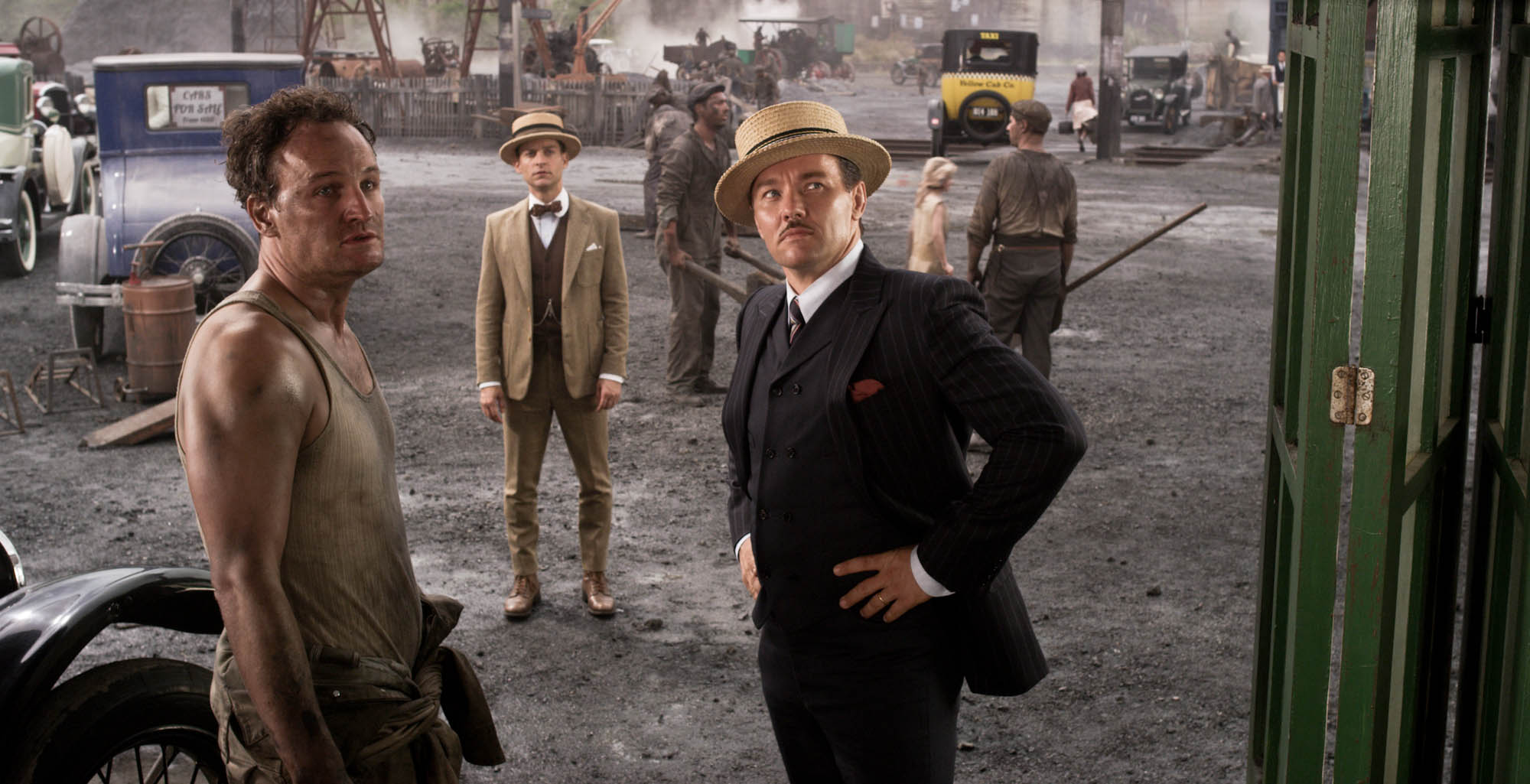
He’s the guy covered in ash. Honestly, most people reading The Great Gatsby for the first time barely notice George Wilson until he pulls the trigger. He’s just a background character in a dusty garage. He's "anaemic" and "spiritless." F. Scott Fitzgerald describes him as if he’s barely there, a ghost haunting his own life in the Valley of Ashes.
But here’s the thing. George Wilson Great Gatsby is actually the most honest character in the entire book. While everyone else is busy lying, cheating, or hiding behind piles of money, George is just trying to fix cars and keep his marriage from falling apart. He’s the only one who actually believes in something—even if that belief eventually turns into a nightmare. If you found value in this post, you should read: this related article.
You’ve got Gatsby, who is a literal fraud. You’ve got Tom and Daisy, who are "careless people" that smash things up and run away. Then you have George. He stays. He works. He gets stepped on.
The Ghost in the Garage
George Wilson isn't just a mechanic. He’s a symbol of the American Dream when it goes totally sour. For another angle on this story, see the latest update from Variety.
Think about where he lives. The Valley of Ashes. It’s a literal dumping ground for the waste produced by the rich people in West Egg and New York City. George lives in the middle of that trash. He breathes it. It’s on his clothes. When Nick Carraway first meets him, George is described as having a "white ashen dust" on his dark suit. He’s literally becoming part of the landscape.
He's a "blonde, spiritless man." That's how Nick sees him. It's kinda brutal, right? But it shows how the upper class views the working man. To them, George isn't a person; he's just a convenience—or an inconvenience. Tom Buchanan treats him like a servant, dangling the promise of selling him a car just so he has an excuse to see George's wife, Myrtle.
It’s easy to call George "weak." Myrtle certainly does. She says he "wasn't fit to lick [her] shoe." She even tells a story about how she found out he borrowed a suit for their wedding, and she lay down and cried for three days. She wanted a "gentleman" with money, and she got a guy who works with his hands.
Why George Wilson Still Matters Today
Why are we still talking about a fictional mechanic from 1925? Because the divide between the "haves" and "have-nots" hasn't exactly gone away.
George Wilson Great Gatsby represents the people who play by the rules and still lose. He’s the anti-Gatsby. Jay Gatsby reinvented himself, made a fortune through bootlegging, and bought a mansion. George stayed George. He stayed in the same garage for twelve years. He worked hard, stayed faithful, and trusted the wrong people.
In a world of "new money" and "old money," George has "no money."
Fitzgerald uses George to show us that the American Dream isn't available to everyone. No matter how much grease George gets under his fingernails, he's never going to own a mansion in West Egg. He's trapped. The only way he thinks he can escape is by moving West—a classic American trope—but even that requires money he doesn't have. He’s waiting on Tom’s car. He’s waiting on a break that is never coming.
The Eyes of God
One of the weirdest and most famous parts of the book involves George and a billboard. You know the one—Dr. T.J. Eckleburg. Those giant, fading blue eyes looking out over the Valley of Ashes.
After Myrtle is killed by the yellow car, George loses it. He’s standing in his garage, looking at those eyes, and he says, "God sees everything."
Basically, George is the only character who holds onto a sense of moral accountability. Tom and Daisy don't care about God. Gatsby thinks he is God sometimes, or at least that he can control time. But George believes there is a higher power watching the mess they've made.
It’s tragic. He looks at a piece of advertising and sees the face of the Creator. That tells you everything you need to know about his desperation. He's so alone and so broken that he’s seeking divine justice from a billboard for an eye doctor.
What Really Happened With the Murder?
Let's clear up a common misconception: George didn't just "snap" for no reason.
He was manipulated.
After Myrtle's death, George is a shell of a person. He goes on a "voyage" on foot, looking for the owner of the yellow car. He ends up at Tom Buchanan’s house. Tom, being the absolute worst, tells George that the car belongs to Gatsby.
Tom knows Gatsby wasn't driving. He knows Daisy was the one who hit Myrtle. But he points the finger at Gatsby anyway. He uses George as a weapon.
When George Wilson Great Gatsby walks into Gatsby’s backyard and shoots him in the pool, he thinks he’s getting justice. He thinks he’s killing the man who killed his wife and the man his wife was having an affair with. He’s wrong on both counts. Gatsby was innocent of the hit-and-run, and Tom was the one Myrtle actually loved.
George kills Gatsby and then kills himself. It’s the ultimate "clean up" for the rich characters. The "no money" guy eliminates the "new money" guy, and the "old money" people (Tom and Daisy) just pack their bags and move away.
Actionable Takeaways for Readers
If you're studying the book or just curious about the character, here are a few things to keep in mind:
- Look at the physical descriptions: Notice how George is always "grey" or "ashen." He is physically fading away because his environment is literally consuming him.
- Compare him to Gatsby: Both men are destroyed by their love for a woman who doesn't really want them. Gatsby dies for Daisy; George dies for Myrtle. They are two sides of the same tragic coin.
- Watch the power dynamics: Pay attention to how Tom speaks to George. It’s a masterclass in condescension. George’s tragedy isn't just that his wife died; it's that he was never seen as an equal by anyone in the story.
- The "God" element: Reflect on why George is the only one who mentions God. In a novel about decadence and "careless" living, George is the only one who feels the weight of sin and consequence.
George Wilson isn't the hero. He isn't the villain. He’s just a man who worked twelve years in a garage and died because he believed the lies of people who were "better" than him. Next time you read the book, don't just skip over the parts in the Valley of Ashes. That's where the real story is happening.
To truly understand the ending, re-read Chapter 8. Look closely at the dialogue between George and Michaelis. You'll see a man who isn't just angry, but fundamentally confused by a world that has no place for him.