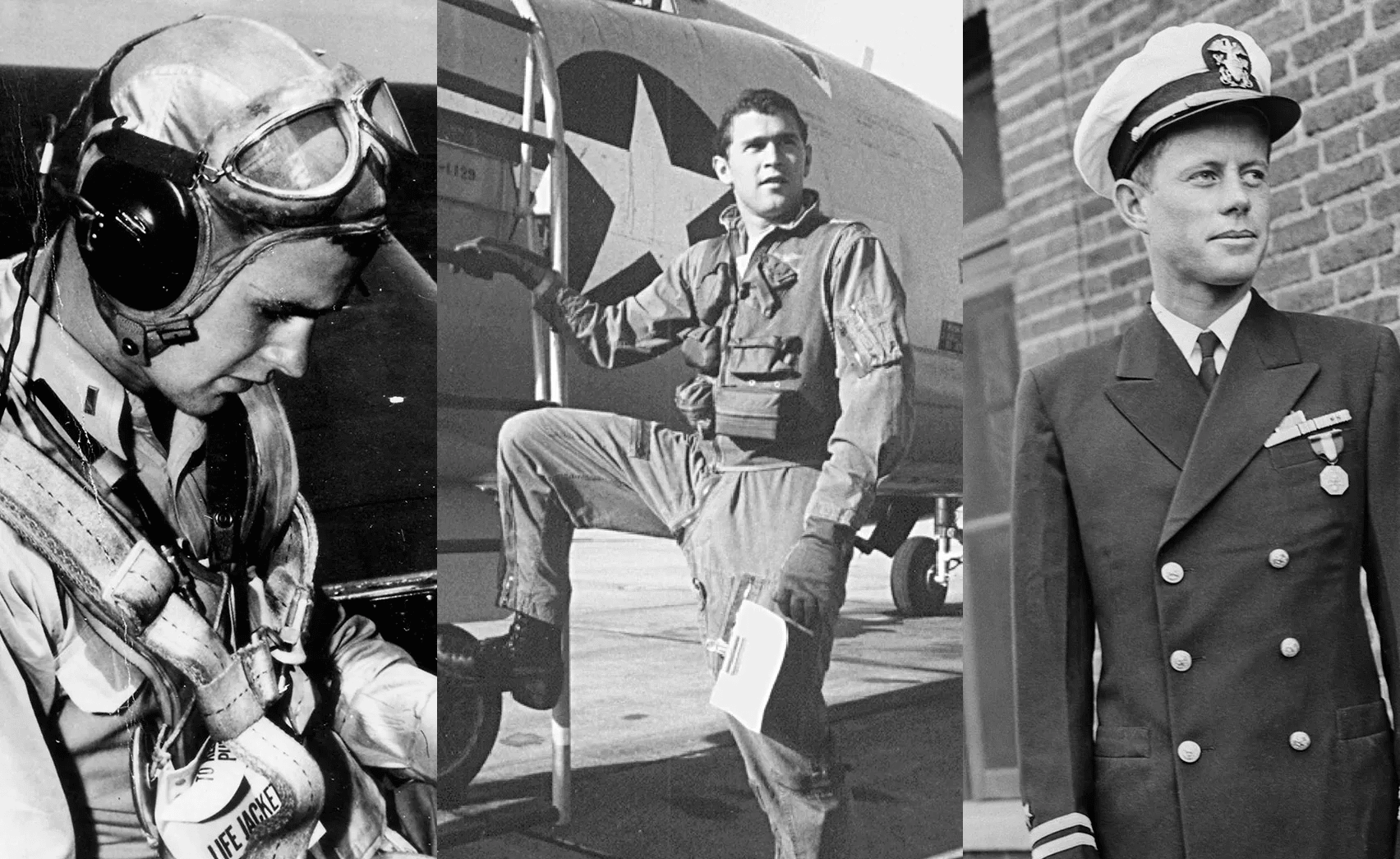
You’d think being the "Commander in Chief" of the most powerful military on the planet would basically require a resume that includes, well, actually being in the military. For a huge chunk of American history, that was the unspoken rule. If you wanted the keys to the White House, you usually had to earn some stripes first. But things have changed.
The last president that served in the military was George W. Bush.
He flew F-102 Delta Daggers for the Texas Air National Guard during the Vietnam era. Since he left office in 2009, we’ve had a string of presidents—Barack Obama, Donald Trump, and Joe Biden—who never wore the uniform. It’s a massive shift in how we pick our leaders, and honestly, it’s kinda weird when you look at how dominant the "warrior-statesman" vibe used to be.
The Air National Guard Years: Breaking Down Bush's Service
George W. Bush is technically the only U.S. President to have served in the modern-day Air Force (via the Air National Guard). He joined up in 1968. This was right in the middle of the Vietnam War, which made his service a lightning rod for political drama later on.
His critics spent years arguing he used family connections to get a "cushy" spot in the Guard to avoid being shipped off to the jungle. His supporters, on the other hand, pointed out that flying supersonic interceptors like the F-102 wasn't exactly a walk in the park. It was dangerous work. People died in training accidents all the time.
Bush was honorably discharged as a First Lieutenant in 1974. Whether you think his service was "enough" or not, he remains the final link in a chain of veterans that stretched back for decades.
The "Greatest Generation" Monopoly on the Oval Office
Before the current "dry spell" of non-veteran presidents, there was a period where you basically couldn't get elected unless you had served.
From 1953 to 1993, every single president was a veteran. Every. Single. One.
- Dwight D. Eisenhower: A five-star general who basically ran the Allied invasion of Europe.
- John F. Kennedy: PT-109 commander and Purple Heart recipient.
- Lyndon B. Johnson: Silver Star recipient (though that one’s always been a bit controversial).
- Richard Nixon, Gerald Ford, Jimmy Carter: All Navy men. Carter actually served on submarines!
- Ronald Reagan: Served in the Army Air Forces during WWII, though he stayed stateside making training films.
- George H.W. Bush: A genuine war hero who was shot down over the Pacific.
When George H.W. Bush lost to Bill Clinton in 1992, it was a total vibe shift. Clinton was the first Boomer president, and he famously didn't serve. Then came George W. Bush, who brought back the veteran title for eight years, but since then? Silence on the military front.
Why the Streak Ended (And Why It Matters)
So, why did the last president that served in the military happen so long ago?
Basically, the draft ended in 1973.
Before that, service was a common experience for almost every able-bodied man in America. If you were of age during WWII or Korea, you were probably in the service. Today, the military is an all-volunteer force. Less than 1% of the population serves. This means the "pipeline" of veterans moving into high-level politics has naturally thinned out.
The Impact of Not Serving
Does it actually matter if the President has served? It’s a polarizing question.
The Pro-Service Argument: Veterans often argue that having a Commander in Chief who understands the "ground truth" of military life is vital. They know what it’s like to receive an order that might get them killed. There's a level of empathy for the troops and a healthy skepticism of "mission creep" that supposedly comes from wearing the boots.
The Counter-Argument: Some historians argue that civilian leaders are actually better at keeping the military in check. They aren't "beholden" to the Pentagon's culture and can look at geopolitical strategy without the bias of their old branch. Plus, being a great general doesn't always make you a great politician (just ask Ulysses S. Grant).
Modern Candidates and the "Avoidance" Narrative
Every time an election rolls around, the military records of the candidates get poked and prodded.
Donald Trump's "bone spurs" deferment during Vietnam was a major talking point in 2016 and 2020. Joe Biden also had asthma deferments that kept him out of the draft. It’s become a bit of a pattern: candidates who grew up during the Vietnam era often have a "it’s complicated" relationship with their lack of service.
Interestingly, we are seeing a rise in veterans in Congress—people like JD Vance or Pete Buttigieg—which suggests the "veteran president" might make a comeback eventually. But for now, George W. Bush holds the title as the last one to have a service number.
Quick Stats: Presidents and the Military
- 31 out of 46 presidents had some form of military service.
- 12 were Generals.
- 0 Marines have ever been President (sorry, Jarheads).
- 0 Coast Guard members have ever been President.
What This Means for the Future
The gap since the last president that served in the military is the longest we've seen since the period between the Civil War and the Spanish-American War. It represents a fundamental shift in American leadership. We’ve moved away from the "soldier-statesman" ideal and toward the "professional politician" or "celebrity businessman" model.
If you’re looking for a leader with a military background, you have to look at the lower levels of government right now. The trend suggests that while military service is no longer a requirement for the White House, it still carries a lot of weight with voters who want to see "skin in the game."
Actionable Insights for History and Politics Enthusiasts:
- Check the "Line of Succession": If you’re curious about who might be the next veteran president, look at the current Governors and Senators who are OEF/OIF (Operation Enduring Freedom/Operation Iraqi Freedom) veterans.
- Research the "Chickenhawk" Debate: It’s a fascinating (and heated) rabbit hole about leaders who advocate for war but never served themselves.
- Visit the Presidential Libraries: If you want to see the actual flight gear or uniforms, the George W. Bush Presidential Center in Dallas has a great deep dive into his Guard years.
The era of the "General-President" might be over, but the shadow of military service still hangs heavy over every election. Whether we'll see another veteran in the Oval Office soon is anyone's guess, but for now, the F-102 pilot from Texas remains the final entry in that specific chapter of American history.