Ever noticed how some people just look "presidential"? It’s a thing. For decades, we’ve been told the taller candidate always wins. It’s a weirdly persistent myth. People obsessed over the height of George Bush—both 41 and 43—because, let’s be honest, we like our leaders to look the part. But if you actually dig into the medical records and the White House physician reports, the numbers tell a slightly more nuanced story than just "he's a tall guy."
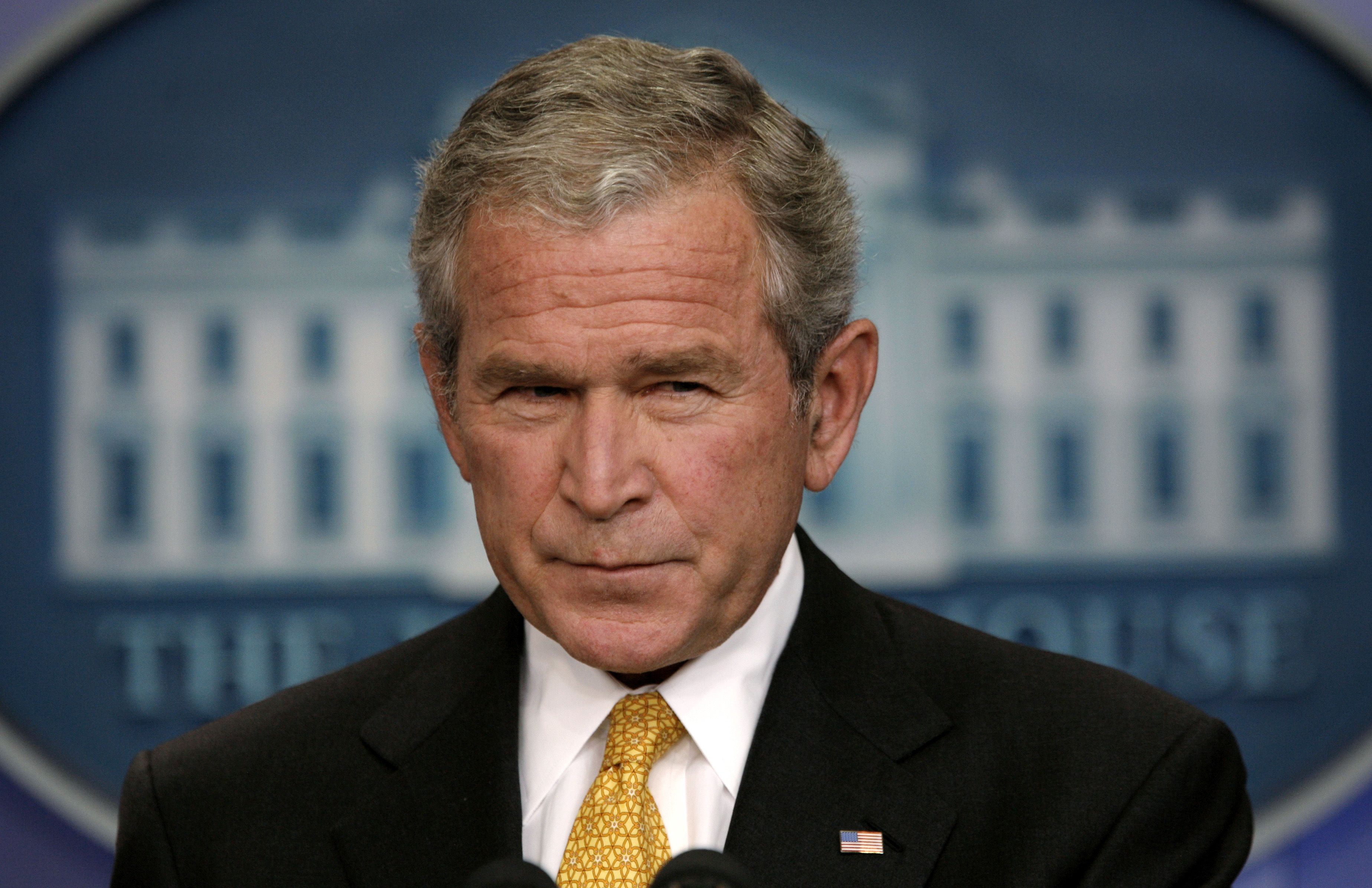
George W. Bush, the 43rd President, isn't a giant. He isn't short either. He’s basically the definition of "average plus." During his 2001 physical, his height was recorded at 5 feet, 11 and 3/4 inches. By the time he left office, he was closer to 5 feet, 11 inches. He basically hovered right at that 6-foot mark without ever quite hitting it. It’s funny how that works. In politics, 5'11" usually gets rounded up to 6'0" on the campaign trail because "six feet" just sounds more authoritative to a voter in Iowa.
Why the Height of George Bush Actually Mattered in 2000
The 2000 election was a mess. Florida. Hanging chads. The Supreme Court. But before all that, there was the "eye test." Al Gore stood at about 6 feet, 1 inch. He was technically taller. If the "taller man always wins" rule was 100% accurate, Gore should have swept. He didn't.
Bush had this way of carrying himself that made him seem bigger. It was the Texas swagger. Or maybe just the well-tailored suits. When you look at the height of George Bush compared to his father, George H.W. Bush, there’s a noticeable gap. "41" was a legitimate 6 feet, 2 inches. He was lanky, a former baseball player at Yale. "43" was more compact, more athletic in a rugged way. He was a runner. He logged miles on the South Lawn until his knees gave out, eventually switching to a mountain bike.
Being 5'11" put him right in the sweet spot. He was taller than the average American male (who sits around 5'9"), but not so tall that he looked gangly or unapproachable. He looked like a guy you could have a beer with—a narrative the GOP leaned into heavily.
The Shrinking President? The Reality of Aging
It happens to everyone. You hit 60, and gravity starts winning. By the time George W. Bush was doing his annual physicals toward the end of his second term, the doctors at National Naval Medical Center in Bethesda were noting the change. In 2006, his physical results showed him at 71.5 inches. That’s 5'11.5".
A lot of people think celebrities and politicians lie about their height. They do. All the time. But the height of George Bush is one of the few we have official, verified government data on because of the transparency required for the leader of the free world. We know he weighed about 189 to 192 pounds most of his presidency. We know his body fat percentage was remarkably low—around 14% to 16%—which is impressive for a man in his late 50s.
Standing Among Giants and World Leaders
When you’re the President, you spend a lot of time in "family photos" with other world leaders. This is where the height of George Bush gets interesting. Compare him to Vladimir Putin. Putin is famously sensitive about his height, which is estimated to be around 5 feet, 7 inches. In photos from the G8 summits, Bush clearly towers over him.
Then you have someone like Tony Blair. Blair is about 6 feet tall. In those famous photos of the two at Camp David, they look almost identical in height. It’s a game of posture. Bush always stood with his chest out, shoulders back. It’s the "Command Presence" they teach.
The Evolution of the Presidential Stature
Let's look at the broader context.
- Abraham Lincoln: 6'4"
- Lyndon B. Johnson: 6'3.5"
- George H.W. Bush: 6'2"
- Barack Obama: 6'1"
- George W. Bush: 5'11.75"
Bush was actually on the shorter end of the modern presidential spectrum. But he was still taller than most people he met. Does it matter? Some psychologists argue that we subconsciously associate height with leadership capability. It’s called the "Height Premium." For Bush, being nearly 6 feet tall likely helped him maintain an aura of authority during the high-stress years following 9/11. When he stood on the rubble at Ground Zero with a megaphone, he didn't look small. He looked solid.
The Texas Influence and the Cowboy Boot Factor
You can't talk about the height of George Bush without mentioning the boots. Bush is a Texan. Texans wear cowboy boots. A standard pair of Western boots adds anywhere from 1 to 2 inches of height depending on the heel.
When Bush was at the ranch in Crawford, he was almost always in boots. This easily pushed him over the 6-foot mark. If you see a photo of him and he looks surprisingly tall, look at his feet. Those heels provide a literal lift. It’s not about being "fake"; it’s just the culture. But for a guy who is 5'11.75" on paper, a 1.5-inch heel makes him 6'1.25" in person. That’s a significant difference in how a person is perceived in a room.
Health, Fitness, and the "Bush Physique"
Bush was arguably one of the most athletic presidents we’ve ever had. He took his fitness seriously. This focus on health kept his posture upright. Unlike some politicians who slouch behind a podium, Bush was always "up."
Dr. Richard Tubb, who was the long-time White House physician, often praised Bush’s cardiovascular health. Being "fit" makes you look taller. If you carry extra weight around the middle, it pulls your frame down. Because Bush stayed lean, he maintained his maximum skeletal height longer than most men his age.
Comparing 41 and 43: A Tale of Two Bushes
The height difference between the two Bush presidents often led to some funny visual dynamics. George H.W. Bush was a "big" man in the traditional sense—broad shoulders, long limbs. George W. Bush was more of a "fireplug."
When they stood together, you could see the genetics at work, but the younger Bush definitely took after his mother’s side (the Walkers) in terms of build. Barbara Bush wasn't particularly tall, and that slightly more compact frame was passed down to "W."
Does it change the legacy?
Honestly, no. But it changes the perception. We live in a visual age. Every time George W. Bush walked into a room, his physical presence was part of the negotiation. Whether he was meeting with the Dalai Lama (5'7") or standing next to his successor, Barack Obama (6'1"), his stature was a constant, subtle factor in the optics of the presidency.
People still search for the height of George Bush because we want to know if the people we see on TV are "real." We want to know if they’re smaller than us or bigger than life. Bush was right in the middle—a man of slightly above-average height who occupied a massively outsized role in history.
Actionable Takeaways: What We Can Learn from Bush's Stature
While you can't change your genetics, there are things you can take away from how George W. Bush handled his physical presence:
- Posture is Power: Bush’s "Presidential" look came more from his upright, athletic stance than his actual inches. If you want to look more authoritative, stop slouching.
- The "Boot" Strategy: If you're on the edge of a height milestone (like 5'11" trying to be 6'0"), footwear choice matters. High-quality dress shoes or boots can add that extra bit of confidence.
- Fitness Prevents Shrinking: Stay active. Resistance training and core work help maintain spinal alignment as you age, preventing that "collapsing" look that happens in your 60s and 70s.
- Perception vs. Reality: Don't sweat the stats. Bush was shorter than his opponent in 2000 and shorter than his father, yet he commanded the same, if not more, attention. Confidence is the ultimate height-booster.
The height of George Bush is a settled matter of public record: 5'11.75" at his peak, settled into a solid 5'11" in his later years. He wasn't a skyscraper, but in the world of global politics, he stood tall enough to make his mark.