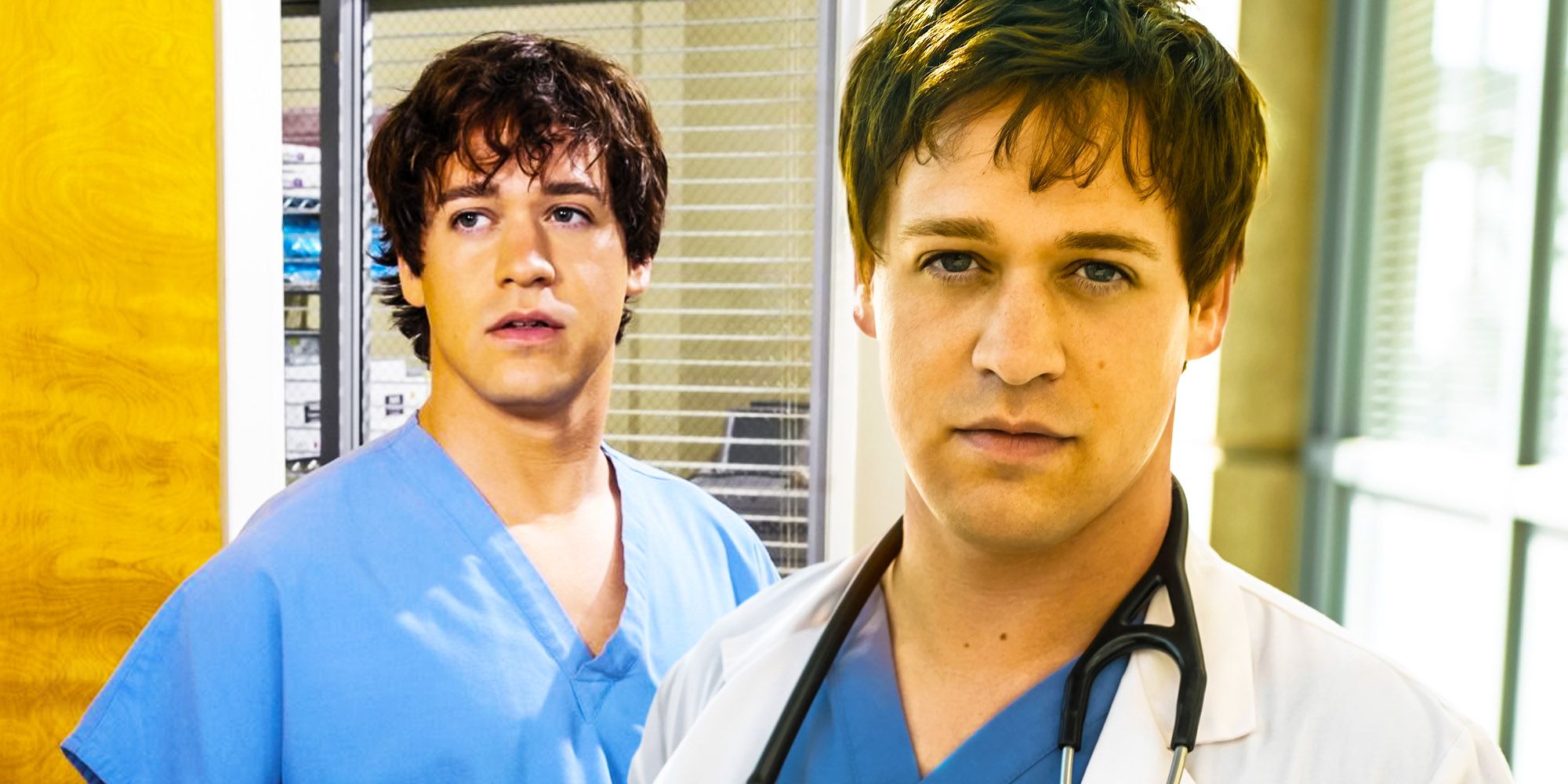
Honestly, if you watched Grey’s Anatomy in the early 2000s, you remember where you were when that John Doe traced "007" into Meredith’s palm. It was one of those rare, visceral moments in television history that actually felt like a gut punch. George O'Malley wasn't just a character; he was the audience's surrogate in a world of "McDreamys" and "twisted sisters." He was the underdog. The guy who failed his intern exam by one point but could perform a heart surgery in a stuck elevator with nothing but a pocketknife and sheer terror.
Thinking back on George O'Malley now, it’s wild how much his arc defines the DNA of what the show eventually became. He wasn't the shark. He wasn't Karev, clawing his way out of a traumatic past with aggression, or Cristina, who was basically a surgical robot in sensible shoes. George was the heart. Sometimes he was a frustrating, "nice guy" trope heart, but he was the heart nonetheless.
The 007 Tag and the Elevator Moment
People forget that "007" started as a cruel joke. Alex Karev gave him that nickname because George "killed" his first patient—or at least, he froze during an appendectomy. It stood for "license to kill." It’s poetic, in a dark, Shonda Rhimes sort of way, that the nickname born from his greatest failure became the very thing that identified him in his final heroic act. When he jumped in front of that bus to save a woman he didn't even know, he finally moved past the insecurity that defined his first few seasons.
He wasn't the bumbling intern anymore. By the time season five rolled around, George was a trauma prodigy. Owen Hunt saw something in him that the others didn't. While everyone else was distracted by their messy divorces and ghost sex (looking at you, Izzie), George was finding his footing in the chaos of the ER.
Why George O'Malley’s Death Still stings
It’s been over fifteen years since T.R. Knight left the show, yet fans still argue about his exit. Why? Because it felt unfinished. One minute he’s joining the Army to be a frontline medic, and the next, he’s unrecognizable on a trauma table. The showrunners didn't just kill him; they erased his face before they did it.
The "Elevator Scene"—where a tuxedo-clad George sees Izzie in her prom dress as the doors open—remains one of the most-watched clips on YouTube for a reason. It signaled the end of the "MAGIC" era (Meredith, Alex, George, Izzie, Cristina). Once George was gone, the show’s innocence sort of died with him. He was the one who kept them grounded, the one who lived in Meredith’s house and just wanted to belong.
The Problematic "Nice Guy" Narrative
If we’re being real, looking at George O'Malley through a 2026 lens is... complicated. He wasn't always the saint fans remember him as. His "crush" on Meredith Grey led to one of the most uncomfortable storylines in the series. You know the one. Season two, episode 19, "What Have I Done to Deserve This?"
He slept with a grieving, vulnerable Meredith, and then he spent weeks acting like he was the victim because she cried during the act. It’s a classic example of the "Nice Guy" syndrome that was rampant in 2000s television. He felt entitled to her affection because he was loyal and kind, which doesn't really hold up well in modern discourse.
Then there was the Callie Torres situation. George treated Callie pretty poorly, let’s be honest. He was embarrassed by her, he cheated on her with Izzie Stevens, and he never really stood up for her when his friends mocked her. He was a great doctor, but a pretty disastrous partner.
- The Meredith Situation: George projected his fantasies onto her and couldn't handle the reality.
- The Callie Marriage: A rebound fueled by grief after his father died.
- The Izzie Affair: A plot point that many fans felt ruined two of the best friendships on the show.
Despite these flaws—or maybe because of them—he felt human. He made mistakes that weren't "cool" mistakes. He was messy in a way that felt uncomfortably relatable to anyone who has ever felt like the backup friend.
T.R. Knight’s Departure: The Behind-the-Scenes Drama
You can't talk about George O'Malley without mentioning the real-world friction. T.R. Knight’s exit wasn't just a creative choice. It was sparked by a massive "breakdown in communication" with Shonda Rhimes and a highly publicized on-set incident involving Isaiah Washington.
Knight eventually decided to leave because he felt his screen time was dwindling and the character’s journey had stalled. He told Entertainment Weekly at the time that his "five-year experience" proved to him that he couldn't trust any answer he was given about the character. He chose to walk away from a $14 million contract because he valued his integrity and his craft more than the paycheck. That’s a George O'Malley move if I ever saw one.
The 2020 Return
When George appeared on Meredith’s "COVID Beach" in season 17, the internet collectively lost its mind. Seeing a graying, older George O'Malley talking to Meredith about grief and his own death offered a sense of closure that the season five finale never did. He told her that he stays at the beach because it’s where she is. It reaffirmed that, despite the cheating and the whining and the 007 of it all, George was her family.
Lessons from the O'Malley Era
So, what do we actually take away from the life and death of George O'Malley?
First, the "underdog" can often be the most dangerous person in the room—not because they’re malicious, but because they have the most to prove. George’s transition from "007" to a confident trauma surgeon is a masterclass in character development. He taught us that your beginning doesn't define your end. You can fail the most important test of your life and still become a hero.
Second, George reminds us that being "nice" isn't the same as being "kind." His struggles with Meredith and Callie showed that even the most well-intentioned people can be selfish and hurtful when they don't have a strong sense of self.
How to revisit the George O'Malley era effectively:
If you’re planning a rewatch, pay attention to the subtext of season four. You’ll see the seeds of his departure being sown. He becomes more isolated from the core group, spending more time with Lexie Grey. It’s a fascinating look at how a show begins to phase out a lead character.
For those looking to understand the technical side of his surgical career, focus on the "Elevator Heart" episode (Season 2, Episode 5). It remains one of the most medically accurate-ish portrayals of high-stakes trauma in the series' history.
George O'Malley remains a titan of TV history not because he was perfect, but because he was the most fragile member of the original Grey Sloan (then Seattle Grace) crew. He reminded us that in a hospital full of gods, it’s the humans that matter.
Actionable Insights for Fans and Writers:
- Analyze Character Archetypes: Use George as a case study for the "beta male" lead and how that trope has evolved into more nuanced portrayals in modern streaming.
- Study the "Shock Twist": Writers can look at the "007" reveal as the gold standard for a plot twist that is earned through subtle foreshadowing rather than pure shock value.
- Revisit the Classics: If you're a new fan, don't skip the first five seasons. The "MAGIC" era provides the emotional weight that sustains the show's later, more spectacle-driven seasons.
George's legacy is the reminder that even if you start as the guy who fumbles the tray in the cafeteria, you have the capacity to be the one who saves the day when the bus comes hurtling down the street.