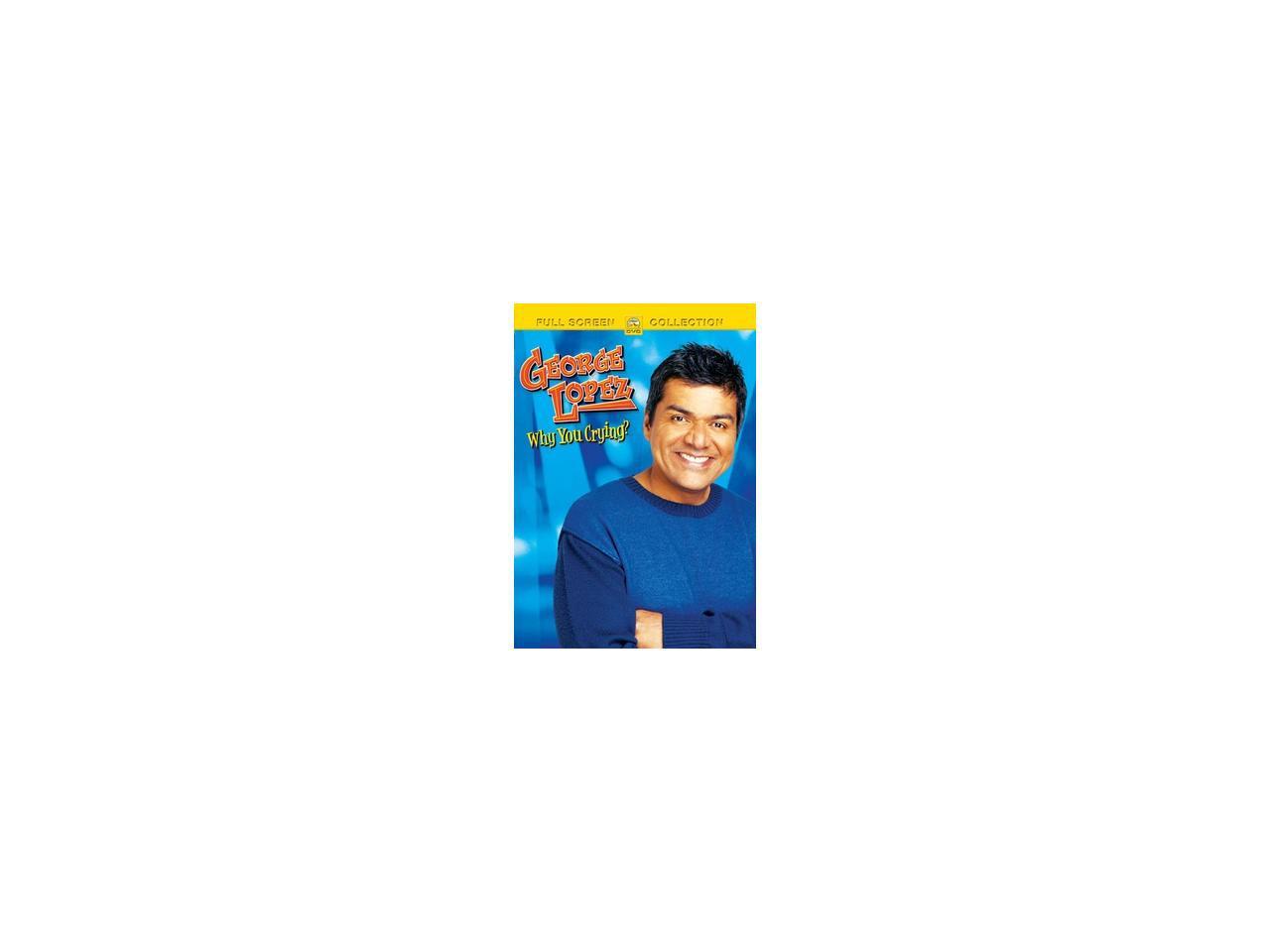
It was February 21, 2004. The Terrace Theater in Long Beach, California, was packed to the gills. People weren't just there for a show; they were there to see a man who had finally cracked the code of the American sitcom and was now returning to the raw, unfiltered stage. When the lights dimmed and that funky intro music kicked in, we weren't just getting a comedy set. We were getting george lopez stand up why you crying, a performance that basically redefined how Latino families saw themselves on a television screen.
Honestly, if you grew up in a Mexican-American household, this special wasn't just "funny." It was a documentary.
What Most People Get Wrong About the "Why You Crying?" Era
A lot of folks look back at the early 2000s and think George Lopez was just riding the wave of his ABC sitcom. But they’ve got the timeline backwards. The sitcom, George Lopez, was actually a "cleaner" version of the world he’d been building in comedy clubs for twenty years. Why You Crying? was the moment he took the gloves back off.
Recorded in early 2004 and premiered on Showtime over Memorial Day weekend, this special captured Lopez at his peak physical and comedic energy. He wasn't just telling jokes; he was exorcising demons. He tackled the weird, specific trauma of being raised by grandparents who thought "I love you" was a sign of weakness.
The "Churros" and the "Espíritu"
One of the most legendary bits in the special involves the "churro man" and the way Mexican parents handle illness. You remember the line. You probably quote it. He riffed on how a Latino kid couldn't just have a "stomach ache"—it was always sustos or something that required a Vicks VapoRub bath.
He contrasted this with "white families" (or "gringos," as he often put it), who seemed to live in a world of soft pillows and emotional validation. To Lopez, the phrase "Why you crying?" wasn't just a question. It was a challenge. It was what your grandmother said right before she gave you something to actually cry about.
The Deep Connection to the Autobiography
Interestingly, this wasn't just a stand-up title. In May 2004, right around the special's debut, Lopez released his autobiography: Why You Crying?: My Long, Hard Look at Life, Love, and Laughter. Co-written with Armen Keteyian, the book hit The New York Times Bestseller list almost immediately.
The book and the special are two sides of the same coin. While the stand-up makes you howl at the absurdity of his grandmother "Benny" (the real-life inspiration for the character played by Belita Moreno), the book reveals the actual darkness behind it. He was abandoned by his father at two months old. His mother left him at ten. He was raised by people who viewed affection as a luxury they couldn't afford.
"Hard as I try, I can't conjure up a single happy memory of my mom." — George Lopez, Why You Crying? (2004)
That’s heavy stuff for a guy who makes people laugh for a living. But that’s why the stand-up works. It’s "tragicomedy" in its purest form.
Why the Special Ranks as a Cultural Landmark
Before george lopez stand up why you crying, Latino representation in mainstream stand-up was often relegated to broad caricatures or specific "niche" programming. Lopez pushed it into the center of the room. He made the "Mexican experience" feel universal. You didn't have to be Chicano to understand the fear of a parent holding a chancla.
Breaking Records in LA
By December 2004, Lopez was a juggernaut. He set an attendance record at the Universal Amphitheater in Los Angeles, selling out seven consecutive shows to over 42,000 people. This era was the foundation for everything that followed:
- His HBO specials like America's Mexican (2007) and Tall, Dark & Chicano (2009).
- His late-night stint with Lopez Tonight.
- His status as one of Time magazine’s "25 Most Influential Hispanics in America" in 2005.
The Raw Stats of the 2004 Special
If you’re looking for the technical details, the DVD release (which came out in 2005 via Paramount) actually includes about 20 minutes of footage that didn't make the initial Showtime broadcast.
- Director: Paul Miller (who also did Saturday Night Live and various MTV specials).
- Run Time: Approximately 1 hour and 19 minutes (DVD version).
- Rating: Unrated/R (mostly for language—George doesn't hold back).
- Key Themes: Intergenerational trauma, the "Old Mexican" vs. "New Mexican" divide, and the absurdity of 1970s parenting.
How to Revisit the Special Today
If you want to understand why George Lopez is still selling out arenas in 2026, you have to go back to this specific hour. It’s currently floating around various streaming platforms, and clips are all over YouTube, but the full experience is best caught on the original DVD if you can find a copy—mainly for those extra 20 minutes of "Chicano" logic that didn't pass the TV censors.
Honestly, the humor has aged surprisingly well. While some of the 2004-specific pop culture references might feel a bit dusty, the core of the material—family, struggle, and the refusal to let life break you—is timeless.
Actionable Next Steps
- Watch the "Extra" Footage: If you’ve only seen the TV version, hunt down the DVD or the "Full Length" digital versions. The riffs on "Old Mexicans" sitting in the front yard are significantly longer and punchier.
- Read the Autobiography: Pair the stand-up with the book. It changes how you hear the jokes. Suddenly, the "mean" things his grandmother said aren't just punchlines; they're survival mechanisms he survived.
- Compare with "The Wall": Watch this special back-to-back with his 2017 HBO special The Wall. You’ll see a fascinating evolution from personal/family humor to sharp, biting political commentary.
The legacy of "Why You Crying?" isn't just about the laughs. It's about the moment a whole generation of kids saw their "crazy" families reflected back at them with love, grit, and a whole lot of Vicks VapoRub.