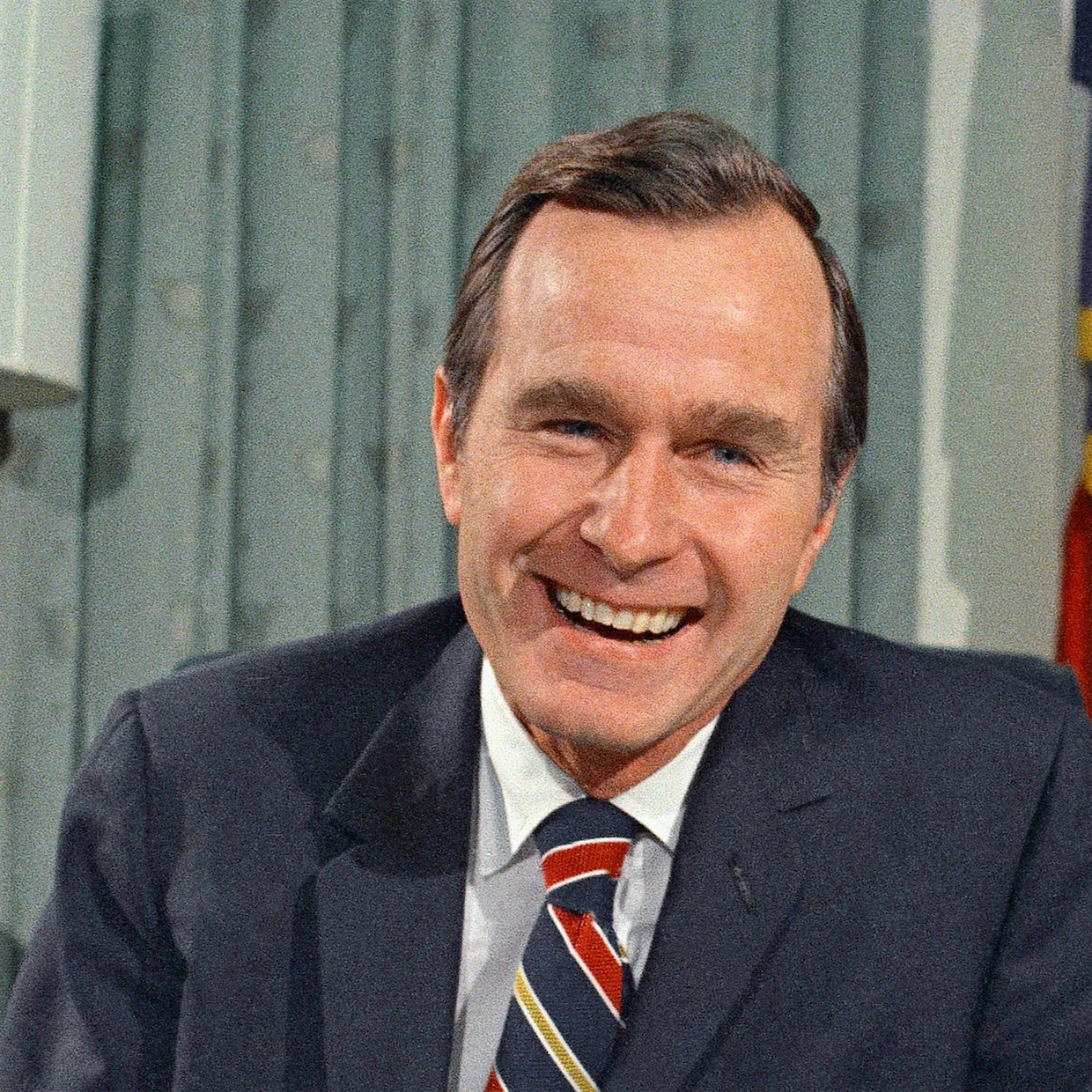
George H.W. Bush died on November 30, 2018. It was a Friday night. He was at his home in Houston, Texas. He was 94.
Honestly, it felt like the end of an era because he was the last veteran of World War II to serve as President. He lived a massive life. But when you look at when did George HW Bush die, the date itself is only half the story. The atmosphere in the country at that moment was tense, and his passing forced a brief, rare pause in the political noise.
He’d been dealing with a form of Parkinson’s disease for years. It was vascular parkinsonism. It kept him in a wheelchair. It made it hard to speak. Yet, he kept showing up to things, which was classic "41."
The Final Hours in Houston
The timeline of his last day is actually pretty moving. His health had been on a steady decline since his wife, Barbara, passed away just seven months earlier in April. Most people who knew them well weren't surprised. They’d been married for 73 years. That kind of bond is heavy. When one goes, the other often follows. It’s a real phenomenon.
By the morning of November 30, it was clear things were wrapping up. James Baker, his former Secretary of State and longtime best friend, was there. Baker later told the New York Times that Bush hadn't eaten in days. He was fading.
But he wasn't agitated.
There’s this specific detail that always sticks out: Baker started rubbing the President’s feet to comfort him. Bush looked at him and asked, "Where are we going, Bake?"
Baker told him, "We’re going to heaven."
Bush replied, "That’s where I want to go."
That was the vibe of the room. It wasn't a sterile hospital setting. It was a home filled with people who had known him for half a century. Later that evening, his son, George W. Bush, called in from Dallas. They put him on speakerphone. "W" told him he’d been a "wonderful father" and that he loved him.
The last words George H.W. Bush ever spoke were: "I love you, too."
He died shortly after, at 10:10 PM.
Why the Timing of His Death Was Significant
History has a funny way of framing things. When George HW Bush died, the U.S. was in the middle of a very different political climate. The grace and "kinder, gentler" approach he championed felt like a relic to some, or a goal to others.
His funeral became a week-long masterclass in state protocol. It started in Houston, moved to Washington D.C. to lie in state at the U.S. Capitol Rotunda, and then back to Texas. If you remember the images of Sully, his service dog, lying down in front of the casket—that’s what went viral. It broke everyone’s heart. Sully stayed with the coffin all the way to the end.
The National Day of Mourning
Because he was a former head of state, the government basically shut down on December 5, 2018. It was an official National Day of Mourning. The New York Stock Exchange closed. The post office stopped delivering mail.
It gave people a second to breathe.
In the Rotunda, thousands of regular citizens stood in line for hours just to walk past the casket. I think people forget how much respect he commanded, even from folks who didn't vote for him. He was the guy who oversaw the end of the Cold War and the reunification of Germany. He was a foreign policy heavyweight who knew how to write a thank-you note by hand.
The Health Struggles Leading Up to November 2018
You can't really talk about his death without talking about the years leading up to it. Vascular parkinsonism isn't exactly the same as "shaking" Parkinson's. It's caused by small strokes that damage the part of the brain controlling movement.
It’s frustrating.
For a guy who used to jump out of airplanes on his birthday and play "speed golf," being confined to a wheelchair was a trial. But he handled it with a weird amount of humor. He started wearing those bright, colorful socks. It became his "thing." He wore socks with planes on them, socks with books, socks with cactus. Even at his funeral, he was buried in socks that honored his service as a naval aviator.
He was also dealing with recurring bouts of pneumonia. In early 2017, he ended up in the ICU right around the time of the inauguration. He actually sent a letter to the incoming president saying he couldn't make it because his doctor said he'd be "six feet under" if he sat outside in the cold. He was always blunt like that.
The Legacy of the "Last Gentleman"
When news broke that he had died, the tributes weren't just about his presidency. They were about his character. He was the last of the Greatest Generation to sit in the Oval Office.
He had this obsession with civility.
Think about the letter he left for Bill Clinton in 1993. Most people know it by now, but it’s worth revisiting. After a brutal campaign where he lost his job to Clinton, he left a handwritten note on the desk in the Oval Office. He told Clinton, "Your success now is our country's success. I am rooting hard for you."
That’s essentially extinct now.
When he died in 2018, that letter started circulating again. It wasn't just nostalgia; it was a realization of what we’d lost in the intervening 25 years. His death served as a period at the end of a very long sentence about American leadership.
The Funeral Train: A Final Texas Goodbye
After the big D.C. service, his body was flown back to Texas. This is where it got personal. They used a special Union Pacific locomotive, Engine 4141. It was painted the same colors as Air Force One.
The train traveled about 70 miles from Houston to College Station.
Thousands of people lined the tracks. They weren't there for a political rally. They were there to wave at a train. People held up flags. Farmers stood on their tractors. It was a very old-school, Americana way to go out.
He was eventually laid to rest at the George H.W. Bush Presidential Library and Museum at Texas A&M University. He’s buried right next to Barbara and their daughter, Robin, who died of leukemia in 1953 when she was only three years old. He’d talked about seeing Robin again for decades.
Key Facts About George H.W. Bush’s Passing
- Date of Death: November 30, 2018
- Location: Houston, Texas
- Age: 94 years, 171 days (He was the longest-lived U.S. president until Jimmy Carter broke the record)
- Cause of Death: Complications from vascular parkinsonism
- Final Words: "I love you, too" (spoken to his son, George W. Bush)
- Burial Site: College Station, Texas
What We Can Learn From His Timeline
Looking back at the end of his life, there are a few things that stand out for anyone interested in history or leadership.
First, the power of a "good death." He died at home, surrounded by friends, after a final conversation with his children. He wasn't in a sterile ICU hooked up to machines. He had made his peace.
Second, the importance of the "long game." By the time he died, his approval ratings were significantly higher than when he left office in 1993. History softened on him. People started to appreciate the stability he provided during the collapse of the Soviet Union. It’s a reminder that a leader’s legacy isn't written on Election Day; it’s written over the decades that follow.
Third, his death highlighted the value of bipartisan friendship. The fact that Bill Clinton—the man who unseated him—became like a "surrogate son" to him in his later years is one of the most unlikely and beautiful stories in American politics. They traveled the world together for disaster relief. They genuinely liked each other.
If you want to dive deeper into his life, the best thing you can do is read his collected letters. He didn't keep a traditional diary, but he was a prolific letter writer. All the Best, George Bush is a great starting point. It gives you a sense of the man's voice—humble, funny, and occasionally a bit defensive, but always human.
You should also check out the documentary 41, which was filmed toward the end of his life. He narrates much of it himself, sitting on the porch at Kennebunkport. It’s probably the closest we’ll get to an autobiography.
Finally, if you’re ever in College Station, visit the gravesite. It’s remarkably simple. There’s a gated area behind the library with a small pond. It’s quiet. It’s exactly the kind of place a man who spent his life in the noise of global politics would want to end up.
Next Steps for Researching Presidential History:
- Visit the George H.W. Bush Presidential Library website to view the digital archives of his private letters and memos from the end of the Cold War.
- Read "The Man I Knew" by Jean Becker, his longtime chief of staff, which provides a detailed, behind-the-scenes look at his life post-presidency and his final days.
- Compare the state funeral protocols of Bush 41 with those of Reagan and Ford to see how the "National Day of Mourning" tradition has evolved over time.