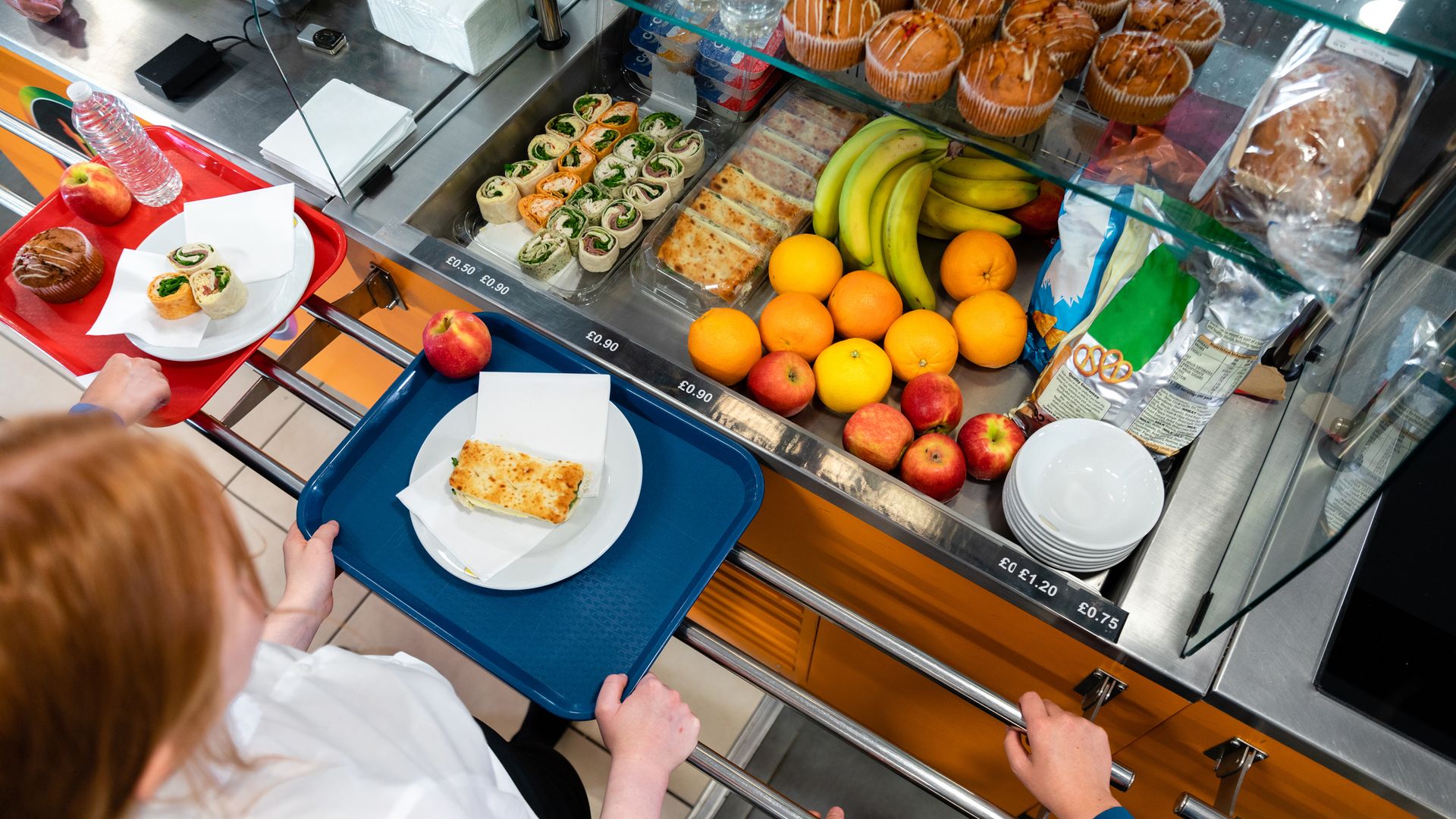
The Department for Education is patting itself on the back for banishing fried nuggets and steamed sponges from the lunch tray. It is a classic bureaucratic victory: high on optics, low on biological reality. By focusing on the cooking method rather than the metabolic impact of the ingredients, England's latest school food overhaul is rearranging deck chairs on a ship sinking in a sea of insulin resistance.
Banning a deep-fat fryer is easy. It makes for a great headline. It suggests a "tough on junk" stance that appeals to middle-class sensibilities. But if you replace a processed chicken nugget with a "healthy" pasta bake loaded with refined wheat and sugar-heavy tomato sauce, you haven't improved the child's health. You have simply swapped one metabolic nightmare for another. For an alternative view, consider: this related article.
The Calorie Myth and the Macro Failure
The lazy consensus in public health policy assumes that "fried equals bad" and "steamed equals good." This is 1990s-era nutritional science masquerading as modern progress. The problem with the British school diet isn't just the presence of oil; it is the overwhelming dominance of ultra-processed carbohydrates that spike blood glucose and leave children in a state of constant brain fog by 2:00 PM.
I have spent years looking at institutional meal planning. The pressure to keep costs at pennies per plate leads to a reliance on "filler" foods. When the government mandates a reduction in fried foods, schools don't magically start serving grass-fed beef and organic kale. They turn to cheap, shelf-stable starches. Related insight on this matter has been provided by CDC.
A chicken nugget, for all its sins, contains protein. Protein is satiating. It provides the amino acids necessary for growth and neurotransmitter production. A "steamed sponge" or a low-fat pudding, even if it meets the new sugar reduction targets, is still an empty carbohydrate hit. We are teaching children that as long as it isn't "fried," it is fuel. That is a lie that fuels the obesity crisis.
The Cost of the "Healthy" Label
Let’s talk about the economics of the canteen. A deep-fat fryer is an efficient way to deliver hot calories to hundreds of children in a short window. Removing them requires more labor-intensive cooking methods and, often, more expensive ingredients to maintain palatability.
When budgets are squeezed, the quality of the "fresh" ingredients drops. We see "gray meat" hidden under gravy and vegetables boiled until every micronutrient has evaporated into the kitchen extractor fan.
- The Protein Gap: Modern school standards often prioritize "variety" over nutrient density.
- The Satiety Problem: Low-fat, high-carb meals lead to "hangry" students who seek out high-calorie snacks the moment they leave the school gates.
- The Palatability Trap: If the "healthy" food tastes like wet cardboard, it ends up in the bin. Waste is the hidden cost of every failed government food mandate.
Why We Are Asking the Wrong Questions
People often ask: "How do we get kids to eat more vegetables?" or "What is the safest oil for school kitchens?"
These are the wrong questions. We should be asking: "Why is the school day structured around a glucose-rollercoaster?"
If you want to fix school food, you don't start with the fryer. You start with the source. You eliminate the seed oils—which are often used even in "baked" alternatives—and you slash the total carbohydrate load. But that is expensive. It requires local sourcing. It requires actual chefs, not just "food heat-up technicians."
Imagine a scenario where a school serves a high-fat, moderate-protein meal with zero refined grains. The pearl-clutching would be audible from Westminster. Yet, that child would have stable energy, better focus, and no mid-afternoon crash. Instead, we give them a jacket potato—a giant ball of starch—and tell them they’re doing great because it wasn’t fried.
The Hidden Danger of Reformulation
When the government demands "less sugar" and "less fat," the food industry responds with "reformulation." This is a polite word for chemical wizardry. They replace natural fats with thickeners and stabilizers. They replace sugar with sugar alcohols or artificial sweeteners that we are only beginning to understand in terms of gut microbiome health.
The "overhaul" in England isn't moving us toward real food. It is moving us toward engineered food that fits a specific spreadsheet of macros. A child's body does not recognize a spreadsheet; it recognizes nutrients.
The Real Hierarchy of Food Quality
- Whole, Unprocessed Proteins: Eggs, meat, fish (largely absent due to cost).
- Fibrous Vegetables: Not corn, not potatoes, but actual greens.
- Natural Fats: Butter, olive oil, tallow.
- The Danger Zone: Anything with a "heart healthy" sticker that comes in a plastic bag.
The current policy lives entirely in the Danger Zone. It prioritizes the reduction of "visible" junk while ignoring the systemic reliance on cheap grains and industrial vegetable oils.
The Institutionalized Palate
By the time a child reaches secondary school, their palate has been colonized by the hyper-palatability of ultra-processed foods (UPFs). Taking away the nugget doesn't reset the palate; it just creates a black market for Peri-Peri chicken shops down the street.
True reform would involve a radical shift in how we value food in the education system. It would mean treating the canteen as a classroom, not a cost center. It would mean acknowledging that the "steamed sponge"—even a low-sugar version—is a nutritional void that has no place in a developing body.
We are obsessed with "steaming" as a virtue signal. We think if we remove the crispiness, we remove the guilt. It is a puritanical approach to nutrition that ignores the biological reality of how humans thrive.
Stop focusing on the fryer. Start focusing on the ingredient list. If the list is ten items long and contains words you can't pronounce, it doesn't matter if it was steamed, baked, or air-fried. It is still garbage.
Feed children real meat. Feed them real fat. Stop fearing the calorie and start fearing the spike. Until we stop treating school lunch as a logistics problem to be solved with the cheapest possible starch, we aren't "overhauling" anything. We are just rebranding failure.
The government isn't saving the children; it's just cleaning up the menu's aesthetics. If you want health, look at what they aren't talking about: the relentless, subsidized flow of cheap carbohydrates that constitutes the real backbone of the British school diet.
Throw the sponge in the bin. Keep the chicken—but lose the breading and the industrial seed oil. Anything less is just administrative theater.