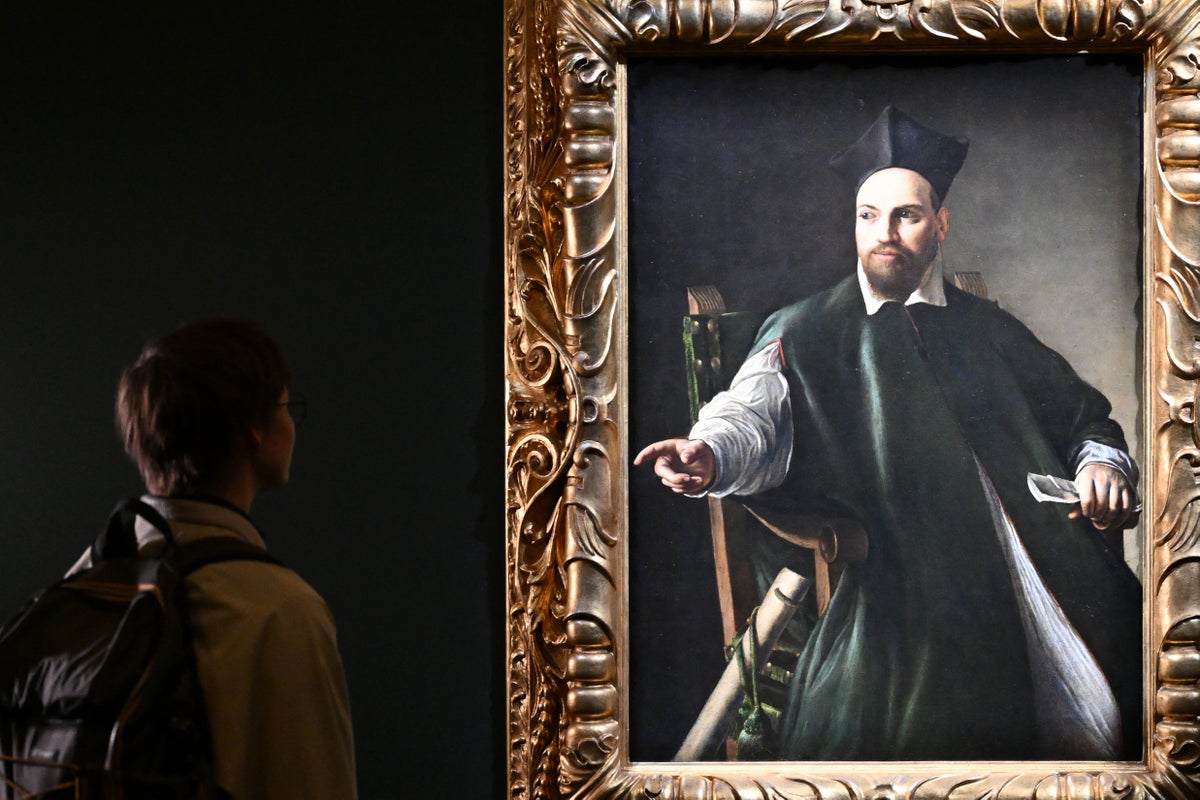
The Italian State’s €30 million acquisition of a newly rediscovered Caravaggio—identified as Ecce Homo—represents more than a cultural recovery; it is a calculated deployment of "Right of Pre-emption" to anchor a high-velocity asset within a strictly regulated national ecosystem. When a government intervenes in the private art market at this scale, it disrupts the standard valuation models of the global auction houses. This transaction provides a blueprint for how sovereign entities weaponize heritage laws to suppress market volatility and secure illiquid assets that function as permanent soft-power infrastructure.
The Valuation Disparity and the Pre-emption Mechanism
The €30 million price tag is an anomaly when viewed through the lens of a free-market auction. In a globalized secondary market, a verified Caravaggio—given the scarcity of the artist’s oeuvre (fewer than 90 known works)—would likely command a nine-figure sum. The delta between the "market-clearing price" and the "sovereign acquisition price" is a direct result of Italy’s Code of Cultural Heritage and Landscape.
This legal framework creates a tiered valuation system:
- The Private Market Valuation: Based on global demand, historical inflation of Old Master assets, and the speculative interest of ultra-high-net-worth individuals.
- The Notified Valuation: Once a work is "notified" (declared of exceptional cultural interest), it cannot leave Italian territory. This export ban effectively severs the asset from global liquidity.
- The Strike Price: Under Italian law, the State holds the right of first refusal. If a private sale is agreed upon, the State can step in and match the price, effectively seizing the title.
By exercising this right, the Italian Ministry of Culture isn't merely buying art; it is enforcing a "geographic discount." The seller accepts €30 million because the alternative—an international auction—is legally blocked. The State effectively captures the "export premium" that would have otherwise gone to the seller or an auction house.
Technical Attribution and the Risk-Adjustment Factor
The logic of this acquisition rests on the transition of the painting from "attributed to the school of" to "autograph work." In 2021, this specific canvas appeared at the Ansorena auction house in Madrid with a starting price of just €1,500, misidentified as a work from the circle of José de Ribera.
The value explosion from €1,500 to €30 million is a function of Attribution Certainty. In the Old Master market, value is a derivative of consensus. The Italian State’s decision to commit eight figures of taxpayer capital indicates that the "Attribution Risk" has been mitigated through three specific forensic layers:
- Non-Invasive Diagnostic Imaging: X-ray and infrared reflectography (IRR) revealing pentimenti (underdrawings). In Caravaggio’s work, the presence of spontaneous corrections is a primary indicator of an original composition rather than a copy.
- Pigment Stratigraphy: Analysis of the lead-tin yellow and the specific ground layers (imprimatura) typical of Caravaggio’s Roman and Neapolitan periods.
- Provenance Reconstruction: Closing the "dark years" in the painting’s history, tracing it from the Spanish Viceroys in Naples to the private collection in Madrid.
The State’s intervention serves as the ultimate "seal of authenticity." Once the work enters the national collection (the Galleria Borghese or the Palazzo Barberini), the attribution becomes institutional fact, permanently de-risking the asset.
The Sovereign ROI: Cultural Tourism vs. Asset Appreciation
Governments do not purchase Caravaggios for capital gains in the traditional sense; they do not intend to flip the asset. Instead, the ROI is calculated through Indirect Revenue Streams and Asset Density.
The Multiplier Effect
The acquisition of a "super-asset" like Ecce Homo increases the "gravity" of a museum’s permanent collection. In economic terms, this is a play for Long-Tail Tourism Revenue. A single masterpiece can increase annual foot traffic by a measurable percentage, impacting local hospitality, transport, and auxiliary service sectors. The €30 million expenditure is amortized over decades of increased ticket sales and city-brand equity.
Concentration of Value
Italy already holds the highest concentration of Caravaggios globally. By acquiring this piece, the Ministry of Culture reinforces a "Monopoly of Experience." To see the definitive collection of the artist, a scholar or tourist must visit Rome or Naples. This geographic concentration creates a defensive moat around Italy’s tourism industry, making it resilient to digital disruption or competing cultural hubs.
Structural Bottlenecks in the Old Master Market
The Ecce Homo transaction highlights a growing friction between private property rights and national interest. The "Cost of Compliance" for owners of high-value heritage items is rising.
The primary bottleneck is Liquidity Trapped by Regulation. When a work is declared "of exceptional importance," the owner loses the ability to access the global pool of capital (Sotheby’s New York, Christie’s Hong Kong). They are restricted to a domestic pool of buyers who, knowing the State can intervene, often bid conservatively. This creates a "Frozen Asset" scenario where the owner holds immense theoretical wealth but lacks the mechanism to realize it without State approval.
Furthermore, the maintenance and insurance of such an asset are prohibitive. The State, by stepping in as a buyer of last resort, provides an exit strategy for the owner, albeit at a price point dictated by the regulatory environment rather than the open market.
Strategic Recommendation: The Institutional Playbook
For institutional collectors and sovereign funds, the Italian model demonstrates that the most effective way to manage cultural assets is through Pre-emptive Market Stabilization.
- Identify Under-Valued Assets in Peripheral Markets: The Madrid auction error proves that significant alpha exists in smaller, less-scrutinized auction houses.
- Execute Rapid Forensic Verification: The speed at which the Prado and the Italian Ministry moved to block the Madrid sale prevented the price from escalating beyond the reach of public funds.
- Leverage Legal Constraints to Suppress Bidding: By declaring the work a national treasure early in the process, the State signaled to private collectors that any purchase would be legally fraught and geographically restricted, effectively scaring off competition.
The acquisition of the Ecce Homo is not a sentimental act of "bringing art home." It is a sophisticated exercise in market manipulation designed to preserve national wealth and secure a high-yield cultural asset at a massive discount to its global market potential. The strategic move for other heritage-rich nations is to update their "Right of Pre-emption" statutes to ensure they can compete with private equity in the race for the world’s dwindling supply of uncatalogued masterpieces.