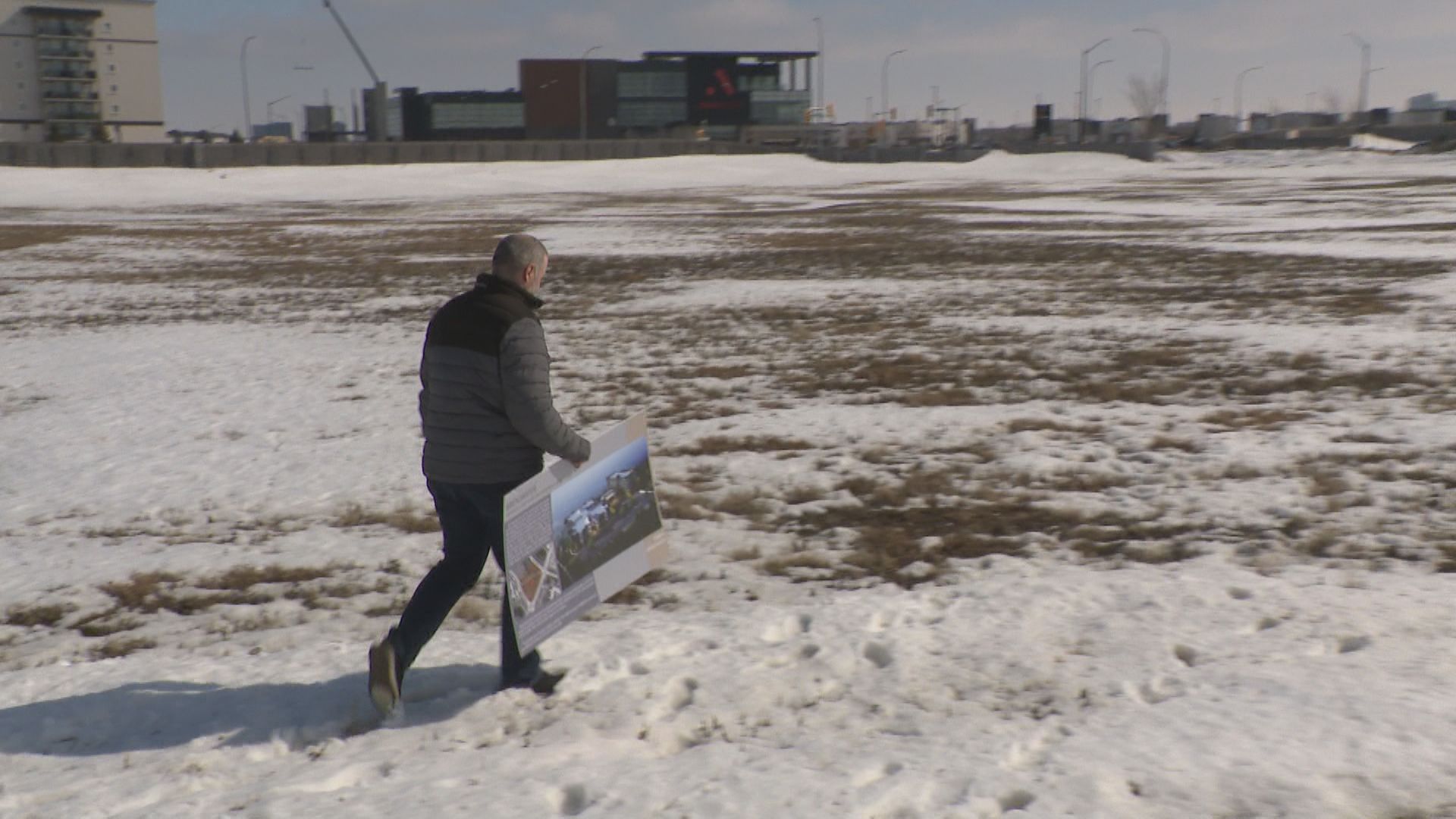
The wind in Bridgwater doesn’t just blow. It scours. In the winter, it whips across the open prairies of south Winnipeg, whistling through the gaps of brand-new stucco and glass, reminding everyone that despite the rising property values and the pristine suburban sprawl, nature is still very much in charge. For ten years, that wind has whistled across a specific, empty plot of land. While families moved in, schools opened, and coffee shops began to steam, this patch of earth remained silent.
It was a hole in the neighborhood. Not a physical one, but a systemic one. Read more on a similar topic: this related article.
Consider a man we will call Arthur. Arthur is eighty-four. He helped build the city. He spent forty years ensuring the plumbing in the North End didn't fail, and now, his own internal plumbing is a source of daily anxiety. He lives in a beautiful, multi-story home in Bridgwater, the kind of place people move to when they’ve "made it." But the stairs have become a mountain range. The bathtub is a deathtrap. His wife, Martha, is seventy-nine and has a bad hip, yet she spends her nights listening for the thud of Arthur falling in the hallway.
They want to stay in the community where their grandkids live. They want to see the same trees they watched being planted a decade ago. But until recently, the choice for people like Arthur and Martha was simple and brutal: stay at home until a crisis occurs, or move to a facility miles away, severed from every familiar face and street corner they know. Further reporting by NPR highlights similar perspectives on the subject.
This is the invisible tax of aging in a developing suburb. We build for the young. We build for the commuters. We forget that every vibrant young family eventually becomes a quiet, older one.
The Long Game of Concrete and Care
The announcement of a new 144-bed personal care home in Bridgwater isn't just a construction project. It is a surrender to reality. For over ten years, the province and health authorities have traded memos, debated budgets, and looked at blueprints while the waitlist for long-term care beds in Manitoba grew long enough to wrap around the city's perimeter highway.
Building a personal care home is far more complex than throwing up a condo. You aren’t just building walls; you are building a specialized medical environment that has to feel like a living room. You are installing industrial kitchens that must cater to 144 different dietary restrictions. You are designing hallways wide enough for two wheelchairs to pass without a collision, and lighting systems that don't trigger the agitation of dementia.
In the time it took to move this project from a "possibility" to a "certainty," a child could have started and finished elementary school. That delay has a human cost. When there are no beds in the community, seniors end up in "transition" beds. That is a polite, clinical term for a hospital hallway or a ward where they don't belong. They occupy acute care spaces meant for heart attacks and car accidents because there is simply nowhere else for them to go.
The system becomes a clogged pipe. The water backs up. Everyone suffers.
More Than a Bed
If you walk through a standard hospital, the air smells of antiseptic and suppressed fear. The goal is to get out. But a personal care home is different. The goal is to live.
The Bridgwater project is designed around the "Small House" model, a shift in philosophy that has been slowly gaining ground. Instead of one massive, institutional cafeteria where hundreds of residents sit under buzzing fluorescent lights, the facility is broken down into smaller, more intimate clusters.
Think of it like an apartment building where every floor is its own little village.
- Private Rooms: No more sharing a curtained-off space with a stranger’s snoring or their late-night television.
- Shared Kitchens: The smell of baking bread or brewing coffee—sensory anchors that keep the mind connected to the present.
- Accessible Outdoors: Gardens that are secure, allowing a resident with Alzheimer’s to feel the sun on their face without a nurse worrying they’ll wander into traffic.
These aren't luxuries. They are the baseline requirements for dignity. When we treat the elderly like inventory to be stored, they wither. When we treat them like neighbors who just happen to need a little help, they linger.
The Workforce Behind the Walls
There is a shadow over this ten-year victory.
You can build the most beautiful, sun-drenched facility in North America, but if you don't have the people to staff it, it’s just a very expensive museum. Manitoba, like much of the world, is currently bleeding healthcare workers. The nurses and aides who will work in Bridgwater haven't just been waiting for a building; they’ve been waiting for a reason to stay in the profession.
Working in long-term care is an exercise in emotional endurance. You aren't just changing bandages. You are the person who hears the stories that children have heard a thousand times and no longer want to listen to. You are the one who holds a hand when a spouse of sixty years passes away in the room next door.
The Bridgwater home will require hundreds of staff members. Finding them—and keeping them—is the next decade-long battle. If we don't value the labor of care as much as we value the bricks of the building, the cycle of crisis will simply repeat itself under a newer roof.
The Geography of Belonging
Why does it matter if the home is in Bridgwater specifically?
Suburbs are often criticized for being soulless, but to the people who live there, they are the map of their lives. If Martha has to drive forty minutes across the city to see Arthur, she will go. She will go every day. But that forty-minute drive is a tax on her own health. It’s time she isn't resting, eating well, or seeing her friends.
When the care home is in the neighborhood, the grandkids can stop by after school. The daughter can pop in on her way home from work. The resident remains a part of the social fabric. They aren't "gone"; they’ve just moved down the street.
The struggle to get this project off the ground wasn't just about money. It was about a fundamental misunderstanding of what a city is. A city isn't just a collection of houses for workers. It is a cradle-to-grave ecosystem. If you provide a place for people to start their lives but no place for them to finish them, you aren't building a community. You’re building a waiting room.
The ground has finally been broken. The machines are moving earth. In a couple of years, the first residents will move in. They will look out the windows at the same prairie sky they’ve known for years, but they will do it from a place where the bathtub isn't a threat and the stairs are no longer a mountain.
But the real test isn't the ribbon cutting. The test is whether we remember the lessons of the last ten years. The population is aging faster than the concrete can cure.
Somewhere in Winnipeg tonight, another "Arthur" is sitting in a darkened living room, looking at the stairs and wondering if tonight is the night his luck runs out. He isn't thinking about provincial budgets or zoning bylaws. He is thinking about how much he wants to stay right where he is.
We owe him more than a decade of silence.
The wind will keep scouring the plains of south Winnipeg. It will rattle the windows of the new Bridgwater home just as it did the empty lot. But soon, there will be someone inside to hear it—someone who is safe, someone who is home, and someone who is no longer waiting for a place to exist.
The crane stands tall against the horizon, a skeletal promise that the wait is almost over, even as the shadow it casts grows longer in the fading afternoon light.