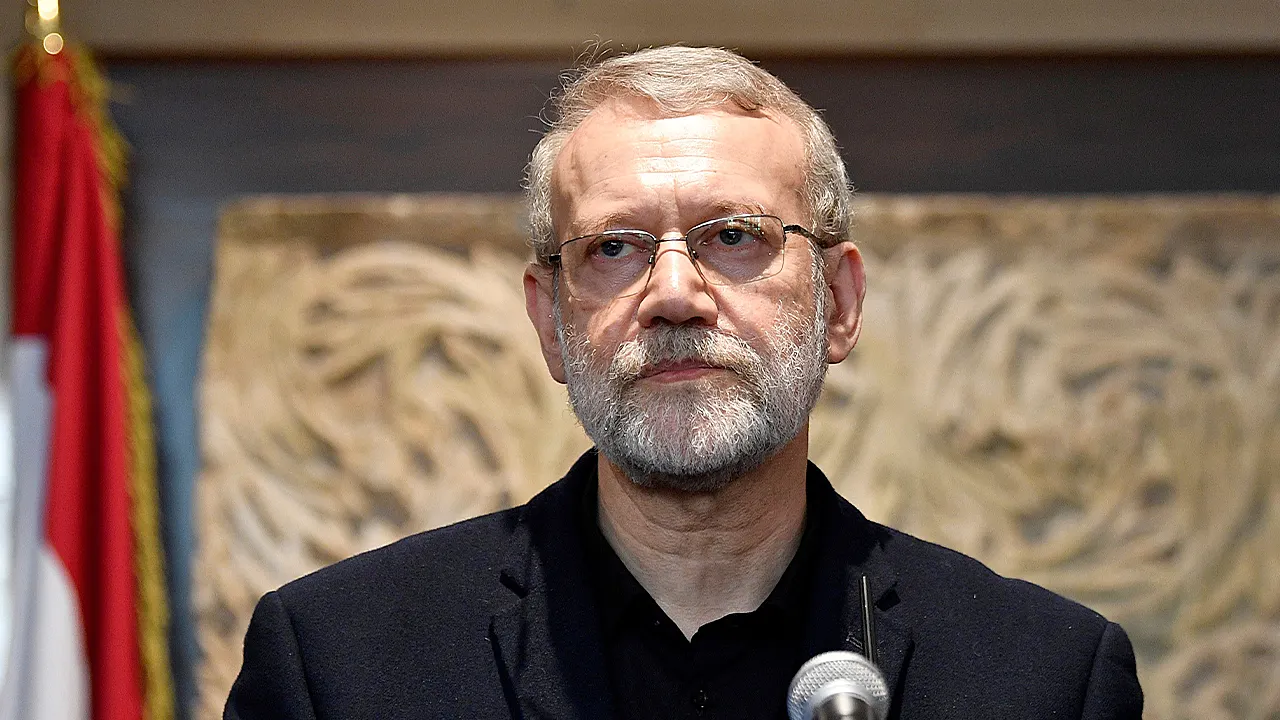
The confirmation from Tehran on Tuesday evening that Ali Larijani, the Secretary of the Supreme National Security Council, was killed in an Israeli airstrike marks the final collapse of the Islamic Republic’s political "gray zone." By eliminating the man who functioned as the regime’s last remaining bridge between the hardline military establishment and the possibility of a negotiated exit, Israel and its allies have signaled that the era of containment is over. Larijani was not just a bureaucrat; he was the primary architect of Iranian survival for three decades, a philosopher-general who understood that for the revolution to endure, it had to occasionally speak the language of the West.
His death, alongside his son and senior aides in a targeted strike in Tehran, leaves the new Supreme Leader, Mojtaba Khamenei, isolated and reliant almost entirely on the Praetorian Guard of the Islamic Revolutionary Guard Corps (IRGC). In similar news, we also covered: The Sabotage of the Sultans.
The Architect of the Double Game
Larijani was the rare Iranian official who could hold a PhD in Western philosophy while simultaneously commanding the trust of the IRGC’s most radical elements. This duality made him indispensable. When the war began in late February 2026 with the assassination of the elder Ali Khamenei, it was Larijani who stepped into the vacuum, effectively serving as the regime’s wartime manager. He was the one who could travel to Muscat and Doha, attempting to convince Gulf monarchs that Iran’s collapse would set the entire region on fire, while back in Tehran, he was signing off on the brutal suppression of the January uprisings.
Western intelligence had long debated whether Larijani was a "pragmatist" or merely a more sophisticated executioner. That debate is now moot. By including him on a kill list that has already claimed 10 of the regime’s top leaders, including the head of the Basij, Gholamreza Soleimani, Israel has made its objective clear: total decapitation. Al Jazeera has provided coverage on this fascinating issue in great detail.
The targeting of Larijani suggests a massive intelligence breach within the inner sanctum of the Iranian security apparatus. He was killed at a "safe house" in Tehran, a location that should have been known only to a handful of people. This points to a systemic rot or a high-level defection that the regime will likely meet with a paranoid purge.
Why Larijani Was More Important Than a Supreme Leader
In many ways, the loss of Larijani is more damaging to the state's functional capacity than the loss of the Supreme Leader himself. While the Ayatollah provides the ideological North Star, Larijani provided the mechanical means to keep the state running.
- The Diplomatic Backchannel: Larijani was the only figure with the "old guard" credentials to talk to Moscow and Beijing as an equal. He was the primary driver behind the 25-year cooperation agreement with China.
- The Nuclear File: Having served as the chief nuclear negotiator in the mid-2000s, he understood the technical and political leverage of the program better than any living official.
- The Internal Balancer: He was a member of one of Iran’s most powerful "clerical nobility" families. His presence on the National Security Council provided a veneer of traditional legitimacy to a government that is increasingly looking like a military junta.
Without him, the friction between the civilian administration of President Masoud Pezeshkian and the IRGC will likely ignite. Pezeshkian, who offered a "bitter and upsetting" tribute to Larijani, has lost his most effective shield against the hardliners who view any mention of diplomacy as treason.
The Strategy of Forced Radicalization
The timing of the strike—occurring just as Larijani was reportedly trying to reopen channels with Washington via Oman—indicates a deliberate choice by the Israeli cabinet to shut the door on a "Rodríguez-style" transition. In revolutionary history, such a transition involves a moderate insider leading the country out of a crisis to prevent a total collapse. Larijani was the only candidate for that role.
With him gone, the regime is forced into a corner where its only options are total surrender or total escalation. The IRGC, now led by figures like Mohsen Rezaee in an advisory capacity, will almost certainly push for the latter. We are seeing the death of the "calculated risk." When Larijani was in charge, Iran’s responses were often measured—intended to sting without triggering a terminal war. Without his steady hand, the risk of a massive, uncoordinated miscalculation grows.
A Ghost State in the Heart of Tehran
The streets of Tehran are currently a theater of two conflicting realities. While the government prepares for high-state funerals on Wednesday, reports have emerged of residents in districts like Chitgar celebrating the news. To the Iranian public, Larijani was the face of the "January Massacre," the man who orchestrated the crackdown that left thousands dead. This internal disconnect is the regime’s greatest vulnerability.
The Islamic Republic is now a ghost of its former self. It has lost its ideological father, its primary security coordinator, and its most capable diplomat in less than a month. What remains is a hollowed-out command structure that possesses enough weaponry to cause global chaos but lacks the political intelligence to navigate its own survival.
The question is no longer if the regime will change, but who will be left to sign the terms of its transformation. By killing Ali Larijani, the attackers have ensured that there will be no one left in Tehran who knows how to say "yes" to a deal. The war has moved past the point of negotiation.