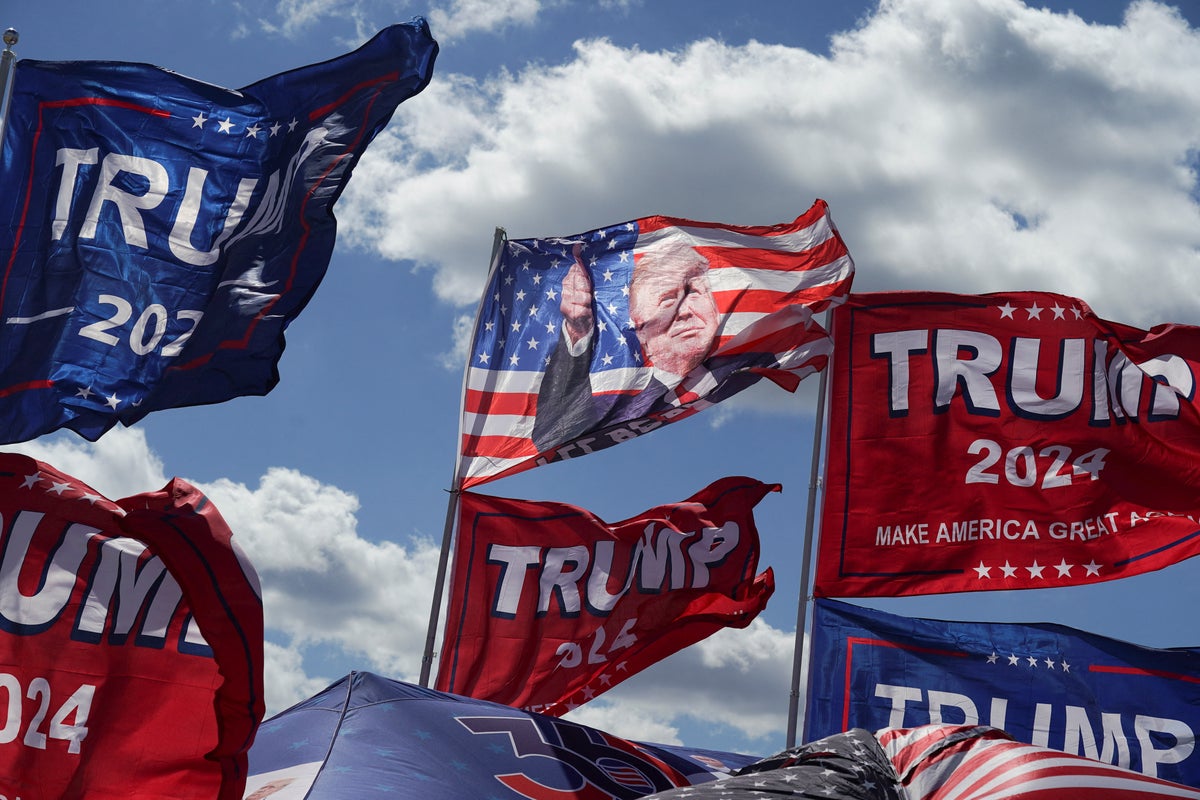
The neon "Open" sign has gone dark at the Trump Truth Store in New Port Richey, Florida. While the owner points toward the looming specter of a regional conflict with Iran as the primary culprit for his shuttered windows, the reality of the business failure is far more grounded in the brutal mechanics of retail fatigue and shifting political cycles. This isn't just about one shop closing its doors in a strip mall. It is a signal flare for an entire industry that banked on perpetual outrage to move polyester flags and plastic hats.
Retailers who tethered their entire livelihood to a single political personality are now hitting a wall of diminishing returns. The storefront, once a local hub for supporters, became a ghost town long before the first headlines about Middle Eastern escalations hit the wire. To understand why this venture failed, we have to look past the owner's geopolitical excuses and examine the saturation of a market that has nowhere left to go.
The Mirage of Constant Crisis
Running a niche retail operation requires a steady stream of new customers or a loyal base with endless reasons to buy more. For the Trump Truth Store, that engine stalled. Owner Mike Vitolo described the business as "dead as a doornail," a stark admission for an entrepreneur who once saw lines out the door. His claim that the threat of war with Iran scared his customers into tightening their wallets is a convenient narrative, but it ignores the fundamental law of the "super-fan" economy.
Political merchandise thrives on momentum. In 2016 and 2020, the novelty of the movement drove massive sales. People weren't just buying a hat; they were buying an identity. By 2026, that identity has become a permanent fixture for most of the base. If you wanted a flag, you already bought three. If you wanted a t-shirt, your drawer is full. When a brand fails to innovate or provide a new reason for the transaction, the business dies. Vitolo's customers didn't stop buying because they were afraid of a war; they stopped buying because they already had the gear.
The High Cost of the Brick and Mortar Gamble
One of the most significant oversights in the "MAGA-retail" boom was the reliance on physical storefronts in an era where political sentiment moves at the speed of a social media algorithm. The Trump Truth Store faced overhead costs that online vendors simply don't have to worry about. Rent, utilities, and insurance don't care about the news cycle.
The Inventory Trap
In a typical retail environment, you rotate stock based on seasons. In political retail, you rotate stock based on the latest controversy. This creates a logistical nightmare:
- Dead Stock: Merchandise tied to a specific event or legal filing becomes worthless the moment the news cycle moves on.
- Fragile Supply Chains: Much of the low-cost apparel sold in these shops is sourced from overseas, making it difficult to pivot when a new slogan goes viral.
- Price Sensitivity: Despite the passion of the supporters, there is a ceiling on what someone will pay for a screen-printed shirt. When inflation hits the grocery bill, the "Trump 2024" bumper sticker is the first thing cut from the budget.
A Saturated Ecosystem
The Trump Truth Store didn't just compete with the shop three towns over. It competed with a massive, sophisticated online apparatus. When the official campaign and giant e-commerce platforms can deliver a "Save America" mug to your doorstep in 24 hours, the local strip-mall outlet loses its competitive edge.
The "outrage economy" has moved toward digital assets and direct-to-consumer models. Local shops like Vitolo’s are left holding the bag—literally—filled with physical goods that nobody wants to drive across town to purchase. The owner's lament about "nobody coming in" is a reflection of a consumer base that has moved its engagement to the screen. The community aspect of these stores, which served as a clubhouse for like-minded individuals during peak election seasons, has evaporated as the rhetoric moved into more fractured, private digital spaces.
The Geopolitical Excuse vs. Economic Reality
Let’s address the Iran factor. In investigative business journalism, we often see "externalities" used as a shield for internal mismanagement or market shifts. While global instability can certainly affect consumer confidence, it rarely kills a niche hobbyist or political shop overnight. If anything, heightened tensions usually drive more engagement in political circles.
The real economic pressure wasn't a potential war 7,000 miles away. It was the cooling of the "Trump Brand" as a retail powerhouse. We are seeing a correction. The frenzy of 2020 created an artificial bubble in the political merchandise space. Dozens of these stores popped up across the Sun Belt, assuming the gold rush would last forever. They failed to account for the fact that political passion does not always translate into a sustainable quarterly revenue model.
Comparative Failure Rates
To put this in perspective, look at the survival rate of other personality-driven retail:
- Celebrity Pop-ups: Usually last 3-6 months.
- Influencer Merch: High peak, rapid decline.
- Political Shops: Dependent entirely on the 4-year election cycle.
Vitolo was trying to run a 365-day business on a 60-day hype cycle. It was a mathematical impossibility from the start.
The Fatigue of the Perpetual Campaign
There is a psychological element to this business failure that goes beyond the ledger. After years of high-intensity political messaging, a portion of the electorate is simply tired. This "donor fatigue" or "supporter burnout" manifests as lower foot traffic. The act of going to a store to buy a physical item of political defiance feels less urgent when the battle has moved into the courts and onto the airwaves.
The Trump Truth Store was a monument to a specific moment in time. As that moment evolves, the monument crumbles. The owner's frustration is understandable, but his diagnosis is wrong. The market didn't leave because of a war; the market left because it was full.
Navigating the Post-Merch Landscape
For those still trying to operate in this space, the lesson is clear. You cannot build a long-term business on a short-term emotion. The political apparel industry is currently undergoing a massive consolidation. Only the leanest, most agile online players will survive. The era of the dedicated, permanent "Trump Store" is likely over, replaced by temporary pop-ups and high-margin digital collectibles.
Business owners who fail to diversify their offerings or understand the shelf life of their "brand" are doomed to repeat Vitolo's experience. If your entire inventory relies on the popularity of one man, you aren't an entrepreneur; you're a spectator with a lease. When the spectacle changes, you're left with a room full of yesterday's news.
Inventory liquidation is now the only strategy left for the New Port Richey location. The "Dead as a doornail" quote will likely be the final piece of marketing the store ever produces. It serves as a stark reminder that in the world of business, your "truth" doesn't matter if you can't make the rent. The closing of this store isn't a political statement; it is a cold, hard market correction that was years in the making.
Stop looking at the headlines in the Middle East and start looking at the dusty shelves in the Florida suburbs. That is where the real story of this collapse is written.