The coffee in your mug is lukewarm. Outside, the sun is just beginning to catch the chrome of the morning commute. You scroll through a social media feed, and there it is—all caps, jagged edges, and the kind of language that usually stays in a bar fight. Donald Trump has taken to Truth Social to warn Iran that they will face "HELL" if they so much as blink at the Strait of Hormuz.
It is easy to read the profanity and the threats as just another tremor in the tectonic plates of modern politics. We have become numb to the shouting matches of giants. But there is a silent, terrifying reality behind those words that has nothing to do with campaign rhetoric and everything to do with the gas in your tank and the heat in your home.
To understand the stakes, we have to look at a narrow strip of water that most people couldn't find on a map without a struggle.
Twenty One Miles of Vulnerability
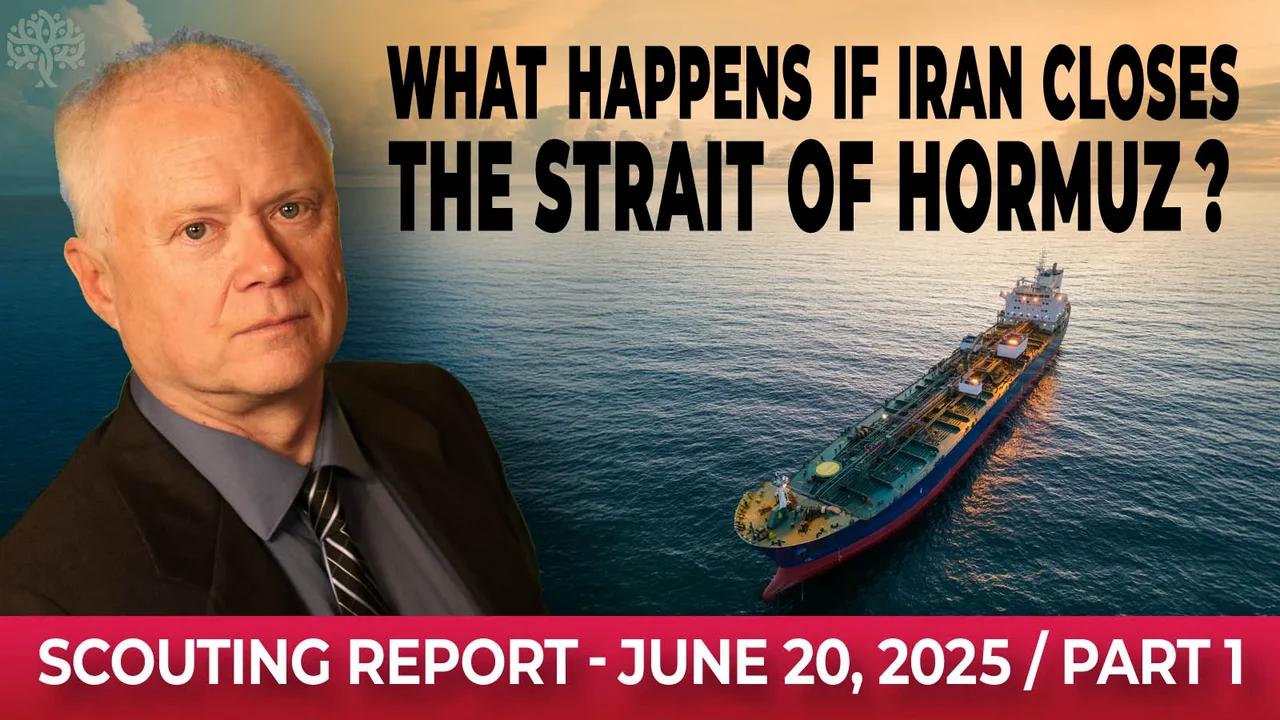
Picture a merchant sailor named Elias. He is standing on the bridge of a Very Large Crude Carrier (VLCC). The ship is a steel behemoth, longer than three football fields, carrying two million barrels of oil. As Elias nears the Strait of Hormuz, the world shrinks. At its narrowest point, the shipping lanes are only two miles wide. On one side, the rugged coast of Oman; on the other, the jagged, watchful cliffs of Iran.
Elias knows that nearly a fifth of the world’s total oil consumption passes through this tiny throat of water every single day. If that throat closes, the world chokes.
When a former and perhaps future President of the United States uses "the F-word" to describe the consequences of Iranian interference here, he isn't just venting. He is acknowledging a historical anxiety that has haunted every administration since the 1970s. The Strait of Hormuz is the jugular vein of the global economy.
The threat is simple: Iran has long hinted that it could mine the strait or use its swarms of fast-attack boats to halt traffic. In response, Trump’s latest outburst serves as a digital "Keep Out" sign, painted in the most aggressive colors possible.
The Math of a Global Cardiac Arrest
The numbers are staggering, but they don't tell the whole story. We talk about twenty million barrels of oil a day. We talk about massive quantities of Liquefied Natural Gas (LNG) from Qatar. But what does that look like when the flow stops?
It starts at the gas pump. Within hours of a confirmed closure or a significant kinetic clash in the Strait, oil prices wouldn't just rise; they would teleport. We are talking about a jump from eighty dollars a barrel to well over a hundred and fifty in a single trading session.
For a family in Ohio already stretched thin by the cost of eggs and milk, that isn't a "market fluctuation." It is a catastrophe. It is the moment they have to choose between driving to work and keeping the lights on.
This is the "Hell" that Trump is referencing. It is the economic inferno that follows a supply chain collapse. The rhetoric is profane because the consequences are vulgar.
A History of Shadows and Steel
This isn't a new drama. The "Tanker War" of the 1980s saw Iraq and Iran targeting each other’s commercial vessels, forcing the U.S. Navy to escort tankers in an operation known as Earnest Will. Back then, the world learned that even the threat of violence in these waters could send insurance premiums for ships through the roof.
Today, the technology has changed, but the geography remains the same. Iran’s Islamic Revolutionary Guard Corps (IRGC) operates in these waters like a guerrilla force at sea. They don't need a massive navy to cause chaos. They only need the ability to make the passage too risky for commercial insurers to touch.
Trump’s post was a reaction to reports of increased Iranian aggression and the looming shadow of regional conflict. By using scorched-earth language, he is attempting to re-establish a "red line" that he feels has become blurred.
Critics argue that such language is a match in a powder keg. Supporters say it is the only language that prevents the match from being lit.
The Ghost in the Machine
Consider the invisible people. Not the politicians, but the analysts in windowless rooms in London and Singapore who decide the "War Risk" surcharges for shipping. When a post like Trump’s goes live, their screens light up.
Every word of a threat adds a few cents to the cost of a gallon of gasoline in London, Tokyo, and Los Angeles. We live in a world where a social media post can act as a physical force, pushing the cost of living higher before a single shot is even fired.
The Strait of Hormuz is a psychological chokepoint as much as a physical one. It relies on the "freedom of navigation"—the collective agreement that the world's common waters belong to everyone. When that agreement breaks down, we revert to a state of nature where might makes right, and the loudest voice wins.
Beyond the Profanity
If you strip away the vulgarity and the bravado, the core of the message is a desperate plea for stability through intimidation. The U.S. has spent decades trying to pivot away from Middle Eastern oil, seeking "energy independence" through fracking and renewables. Yet, we are still tethered to that twenty-one-mile stretch of water.
Why? Because oil is a global fungible commodity. Even if the U.S. didn't buy a single drop from the Persian Gulf, a price spike there is a price spike everywhere. We are all passengers on Elias’s tanker, whether we like it or not.
The tension is a constant, low-frequency hum in the background of modern life. We only notice it when someone turns the volume up to ten.
Trump’s "Hell" is a reminder of how thin the ice really is. It reminds us that our entire way of life—the ease of travel, the availability of goods, the very warmth of our homes—hangs on the temperament of a few leaders and the security of a tiny, salty strip of sea.
Elias looks out from his bridge. The water is calm, a deep, deceptive blue. He can see the Iranian patrol boats in the distance, small specks against the horizon. He knows that his ship is a prize, a target, and a lifeline all at once. He keeps his eyes on the horizon, waiting for the next signal, the next post, the next shift in the wind that could change everything.
The world waits with him. We are all bound by the gravity of that narrow passage, watching as the giants shout across the water, hoping that the "Hell" they promise remains a word on a screen rather than a fire on the waves.
The silence that follows a scream is often the loudest sound of all.