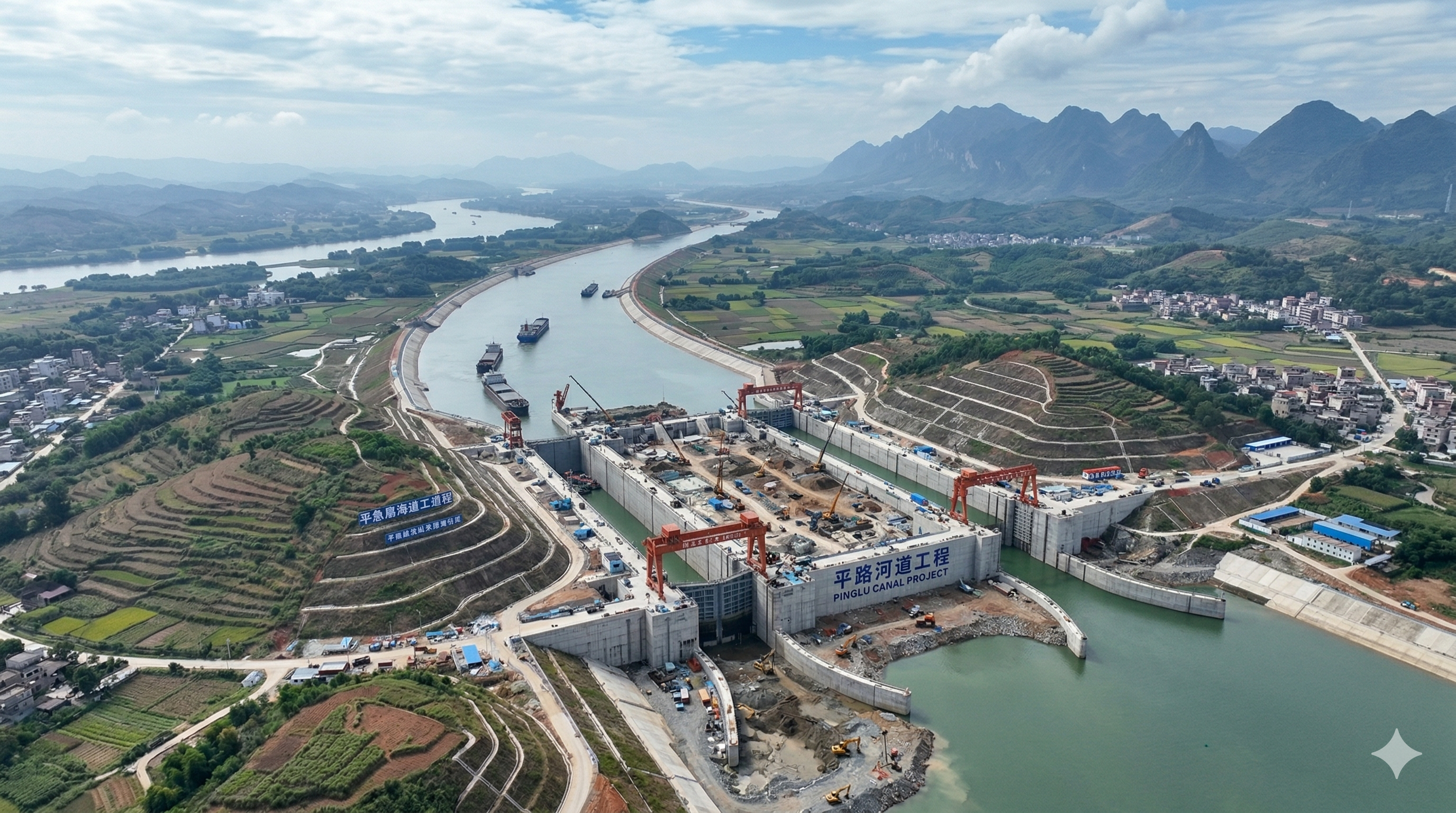
A 134-kilometer scar is being carved through the red earth of southern China, and it’s about to change how you get your electronics, clothes, and raw materials. It’s called the Pinglu Canal. While the world focuses on trade wars and tariffs, this $10 billion ditch is quietly solving a logistical nightmare that’s plagued China’s southwest for decades.
Right now, if a factory in Nanning wants to ship goods to Southeast Asia, it’s a mess. The cargo has to travel over 500 kilometers east, all the way to Guangzhou or Hong Kong, just to find a port. It's expensive. It’s slow. And it makes inland China far less competitive than the coastal giants. The Pinglu Canal fixes this by cutting a direct path from the inland river systems straight to the Beibu Gulf. We're talking about a shortcut that shaves 560 kilometers off the trip.
The Brutal Math of Logistics
Let’s be real. Logistics is a game of pennies, and the Pinglu Canal is a massive cheat code. By linking the Xijin Reservoir on the Yu River to the Qin River, China is creating a Class I inland waterway. This isn't for little fishing boats. It’s designed for 5,000-ton vessels.
The project is moving at a terrifying speed. Construction started in August 2022, and as of early 2026, it’s nearly 90% funded and largely excavated. They’re on track to open it by the end of this year. Here is why the numbers actually matter for the global economy:
- Annual Savings: Over 5.2 billion yuan (about $730 million) in freight costs.
- Time: A 10-day reduction in average travel time for inland goods.
- Volume: The canal can handle over 100 million tons of cargo per year.
Think about the impact on ASEAN trade. Southeast Asia is now China’s largest trading partner. By connecting the heart of Guangxi directly to Vietnam, Malaysia, and Indonesia, China isn't just building a canal; it's building a permanent, high-speed trade bridge that bypasses the congested Pearl River Delta.
Engineering That Actually Defies Logic
Building a 134-kilometer canal in four years is insane. To put it in perspective, they’re excavating three times the amount of earth moved for the Three Gorges Dam. The project includes three massive ship locks—Madao, Qishi, and Qingnian—that manage a 65-meter drop in water level.
The Madao lock is the real standout. It uses a water-saving system that recycles over 60% of the water used during the locking process. This is critical because the region needs that water for irrigation and power generation. Without this tech, the canal would essentially drain the surrounding farmland dry every time a ship passed through.
Why Nobody is Talking About the Geopolitics
There’s a deeper reason for this project that goes beyond just saving money. China is obsessed with "internal circulation" and reducing its reliance on the Malacca Strait. If the coastal ports in the east ever face a blockade or major disruption, the Southwest needs its own way out.
The Pinglu Canal is the southern anchor of the New International Land-Sea Trade Corridor. It’s a backup plan. It’s a way to ensure that even if the South China Sea gets messy, trade with Southeast Asia can keep flowing through a controlled, inland-to-sea network. It also sets the stage for the even more ambitious Xianggui Canal, which would eventually link the Yangtze River to the southern coast. If that happens, you could theoretically take a boat from Shanghai to the Gulf of Tonkin without ever hitting the open ocean.
The Ecological Cost We Cant Ignore
I won't pretend this is a purely "green" miracle. Carving a 100-meter-wide canyon through the countryside has consequences. Environmentalists have pointed out the risks to local biodiversity and the potential for saltwater intrusion into freshwater systems. China claims they’re using "ecological restoration" strategies and building wildlife corridors, but the scale of the disruption is permanent.
You also have to consider the "white elephant" risk. Will 5,000-ton ships actually fill this canal every day? For the project to pay off, the industrial zones currently being built along the banks—like the new pulp and paper mills and electronics hubs—need to succeed. It’s a "build it and they will come" gamble on a ten-billion-dollar scale.
What This Means for Your Business
If you’re involved in manufacturing or sourcing from Asia, keep an eye on the Beibu Gulf ports like Qinzhou. As the canal nears completion, you’re going to see a shift in where goods are processed.
- Watch for new hubs: Cities like Nanning are transforming from sleepy inland capitals into maritime gateways.
- Audit your supply chain: If you’re still shipping everything through Shenzhen or Guangzhou, you might soon be overpaying for a route that's 500 kilometers longer than it needs to be.
- Monitor RCEP benefits: The combination of this canal and the Regional Comprehensive Economic Partnership (RCEP) makes the China-ASEAN trade route the most efficient in the world.
The Pinglu Canal isn't just a local construction project. It's the physical manifestation of China’s pivot toward its neighbors and a direct challenge to the traditional dominance of coastal trade hubs. When the first 5,000-ton freighter slips through the Madao lock later this year, the economic map of Asia will officially be rewritten. You'd better be ready for it.