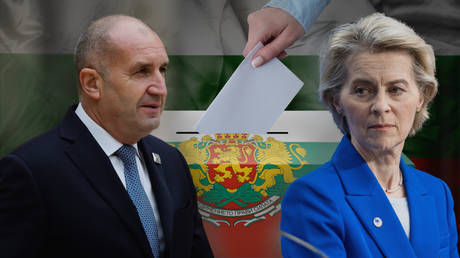
Bulgaria is heading to the polls again on April 19, 2026, for its seventh snap election in five years. If you've lost count, you're not alone. The country is stuck in a loop of political instability that has basically become its new normal. This time, however, the stakes aren't just about who sits in the parliament in Sofia. The European Union has waded directly into the fray, treating this vote as a frontline battle against Russian interference and internal democratic decay.
Brussels isn't just watching from the sidelines anymore. The EU has activated a "rapid response system" under the Digital Services Act to hunt down disinformation campaigns in real-time. Sofia even hired Christo Grozev, the famous investigative journalist, to help steer a new unit against foreign meddling. They're scared, and they have every reason to be. Despite Bulgaria officially joining the Eurozone on January 1, 2026, the country's heart is still being pulled in two very different directions.
The Euro Is Here But the Lev Mentality Remains
Walking through Sofia today, you'll see prices in both euros and the old Bulgarian lev. It was supposed to be a moment of triumph—the 21st member of the Eurozone, a "shield" against Moscow, and a final step into the Western inner circle. Instead, it's fueled a massive wave of populism.
Pro-Russian parties like Revival (Vazrazhdane) have spent the last year screaming about "euro-colonialism." They didn't just talk; they stormed the Speaker's podium in parliament to stop the transition. Even though the currency changed, the resentment didn't. About 49% of the public still feels skeptical, worried that Brussels is just stripping away their sovereignty while inflation eats their savings. This gap between institutional integration and public sentiment is exactly where the Kremlin is digging in.
Radev and the Rise of the New Third Way
The biggest wildcard in this election isn't a career politician, but former President Rumen Radev. He resigned early in January 2026, a move that 64% of Bulgarians actually cheered for. Why? Because he's positioning his new "Patriotic Bulgaria" alliance as the only thing that can break the deadlock between the old guard (Boyko Borisov’s GERB) and the liberal reformers (Kiril Petkov’s PP-DB).
Radev is a complicated figure for the EU. He’s a former NATO general, but he’s also "soft" on Russia. He openly opposes military aid to Ukraine and thinks sanctions on Moscow are a mistake. If his alliance wins big on April 19, the EU's "new front" might find itself facing a government that is technically in the Eurozone but ideologically aligned with a more "neutral" (read: Moscow-friendly) stance. It's a nightmare scenario for Brussels: a member state that is fully integrated into the financial system but acts as a Trojan horse for Russian interests.
A Generation Fed Up With the Same Old Faces
The "Gen Z protests" that rocked the country in late 2025 and early 2026 were the final nail in the coffin for the last government. It started over a budget that wanted to hike taxes for pensions and social security, but it turned into something much bigger. Young Bulgarians are tired of seeing the same names—Borisov and Petkov—fighting the same personal vendettas while the healthcare system collapses and doctors flee the country at a rate of 400 a year.
The trial of Kiril Petkov over the 2022 arrest of Boyko Borisov is still dragging on. It’s a perfect symbol of the Bulgarian political crisis: a never-ending cycle of "revenge politics" that leaves no room for actual governance. While they sue each other, the Russian-linked disinformation mills are running 24/7, telling Bulgarians that democracy is a sham and the West is to blame for their poverty.
Breaking the Cycle
The EU's intervention with the Digital Services Act is a bold move, but it’s a technical solution to a deep-seated cultural problem. You can't just delete disinformation and expect a stable democracy to pop up in its place.
If you're watching this election, don't just look at who gets the most seats. Look at the coalition math. If Radev’s new alliance becomes the kingmaker, Bulgaria's trajectory changes. The country might have the euro in its pockets, but its foreign policy could drift back toward the East.
For those wanting to stay informed or support democratic resilience in the region, keep an eye on independent monitoring groups like the Center for the Study of Democracy (CSD) in Sofia. They track the actual flow of Russian capital and influence that powers these political shifts. April 19 isn't just an election day; it's a stress test for the entire European project.
Stop waiting for a "stable" Bulgaria to emerge. The chaos is the point. The real work starts the day after the vote, when the EU has to figure out how to handle a member state that is moving closer to the center of Europe while its leaders look over their shoulders at Moscow.
Pay attention to the turnout. If the Gen Z protesters actually show up at the booths, we might see a shift. If they stay home, expect the same fragmented mess that has paralyzed the country since 2021. Either way, the "Battle for Bulgaria" is far from over.