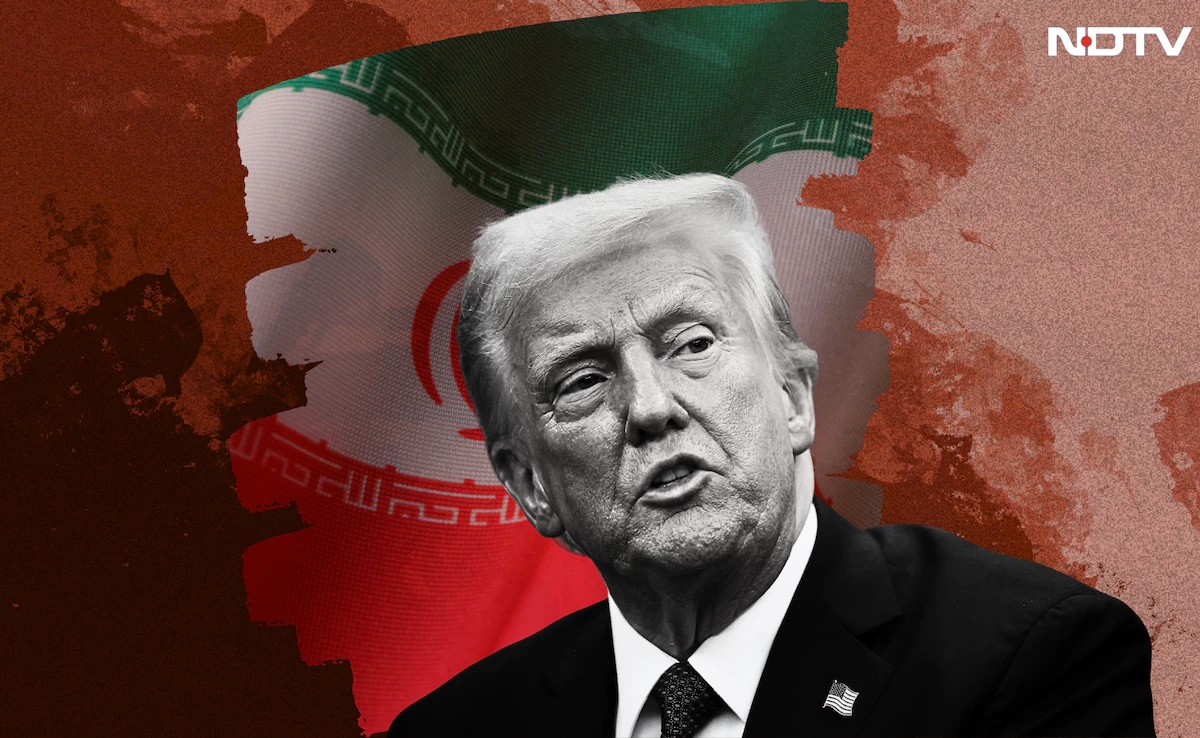
Donald Trump has staked the remainder of his second term on a high-stakes aerial campaign meant to finally break the Islamic Republic. One month into the air war dubbed Operation Epic Fury, the White House claims to be on the verge of total victory. However, a look behind the Pentagon’s sanitized briefings reveals a more complex reality where tactical destruction has not yet triggered the strategic collapse the administration needs.
While the Trump administration initially listed four goals, that number has since grown to five as the conflict expanded into the Strait of Hormuz. The core mission is to render Iran militarily impotent and economically subservient without committing a single American boot to the ground.
The Missile Mirage
The administration’s primary objective was the "complete degradation" of Iran’s ballistic missile capability. On paper, the numbers are staggering. U.S. and Israeli intelligence officials report that Iran’s missile launches have plummeted by 90 percent since the initial 400-missile barrage on February 28, 2026.
By targeting manufacturing centers and mobile TEL (transporter erector launcher) units, the coalition has theoretically destroyed two-thirds of Iran's arms production. But "degrading" is not "destroying." Estimates suggest that even after a month of heavy bombardment, Iran retains a stockpile of several thousand missiles hidden in "missile cities"—hardened underground bunkers carved into the Zagros Mountains. These sites are notoriously difficult to neutralize from the air. While the frequency of attacks has slowed, the lethality of what remains still keeps regional air defenses on high alert.
The Vanishing Navy
The most definitive success of the war so far has been the "annihilation" of the Iranian Navy. The U.S. Navy claims to have sunk or disabled approximately 92 percent of the Islamic Republic of Iran Navy (IRIN) and the IRGC’s "mosquito fleet" of fast-attack craft.
With more than 140 vessels destroyed, Iran’s ability to project power into the deep waters of the Arabian Sea has been effectively deleted. This was a classic demonstration of overmatch. However, the victory at sea has been tempered by a shift in Iranian tactics. Deprived of a formal fleet, the IRGC has doubled down on coastal defense, using shore-based anti-ship missiles and "smart" naval mines to harass shipping. The navy is gone, but the threat to the water remains.
The Nuclear Deadlock
Preventing a nuclear-armed Iran has been the centerpiece of Trump’s foreign policy since 2017. Operation Epic Fury targeted the crown jewels of the Iranian nuclear program: Natanz, Isfahan, and Fordow.
Satellite imagery confirms significant damage to surface structures, but the most sensitive centrifuge halls are buried deep beneath layers of reinforced concrete and rock. While the U.S. has likely set the program back by several years, the "knowledge" remains. Physicists and engineers cannot be bombed out of existence. The administration's demand for a "permanent" end to all enrichment remains the steepest hill to climb, as Tehran views its nuclear infrastructure as the only remaining leverage against total regime collapse.
The Proxy Persistence
Perhaps the most glaring failure of the five goals is the "rollback" of Iran’s regional proxy network. While the IRGC’s central command in Tehran has been battered, its subsidiaries—Hezbollah in Lebanon and the Houthis in Yemen—have shown remarkable resilience.
Instead of retreating, Hezbollah has intensified its strikes on northern Israel, and the Houthis have successfully struck commercial vessels in the Red Sea. The assumption that cutting off the "head of the snake" would paralyze the limbs has proven false. These groups have decades of experience operating autonomously. They don't need a daily check-in from Tehran to continue a war of attrition that drains American and Israeli resources.
The Hormuz Tax and the Fifth Goal
The final, and perhaps most urgent, goal added to the list is the reopening of the Strait of Hormuz. By mining the world’s most critical energy artery, Iran has effectively imposed a "war tax" on the global economy.
Oil prices have spiked, and the Trump administration’s credibility is tied to keeping the pumps running. The U.S. has issued an ultimatum: reopen the Strait by April 6 or face a "total destruction" of Iranian energy infrastructure. This is a dangerous game of chicken. If the U.S. follows through and flattens Iran’s oil refineries, it may win the military battle but lose the global economic war as supply chains buckle under record fuel costs.
Trump is very close to achieving his military objectives, but military victory is not political peace. The regime in Tehran has survived the first month of the most intense bombing campaign in modern history. They are betting they can outlast the American public's appetite for $8-per-gallon gasoline.
The strategy of "regime change from the skies" is being tested in real-time. If the Iranian government refuses to buckle despite its navy being at the bottom of the sea and its missile silos smoldering, the U.S. faces a grim choice: declare victory and leave a wounded, vengeful enemy behind, or prepare for an escalation that no one—not even the most hawkish in Washington—is truly ready for.