Low-cost aviation is currently running on a borrowed timeline. While EasyJet CEO Kenton Jarvis spent Monday morning at Newcastle Airport touting a new three-aircraft base and the creation of 1,200 jobs, the subtext of his briefing was far more ominous for the British holidaymaker. The airline is effectively admitting that the era of the £30 flash sale is being strangled by a new conflict in Iran that has sent Brent crude screaming past $100 a barrel.
If you are looking for a summer getaway, the window to avoid a fiscal hit is closing in weeks, not months. EasyJet’s current price stability is a mathematical mirage sustained by aggressive fuel hedging. The carrier is 84% hedged for the first half of 2026 at approximately $715 per metric ton. However, the spot price has already touched $1,800. When those hedges start to roll off late this summer, the protection vanishes. Jarvis was blunt: the costs will be passed directly to the passenger.
The Geography of Anxiety
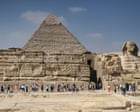
War does more than raise the price of kerosene; it redraws the map of European tourism. We are seeing a massive, uncoordinated migration of booking intent. Demand for the Eastern Mediterranean—specifically Turkey, Cyprus, and Egypt—has "softened" significantly. This isn't just a general fear of proximity. In early March, an Iranian-style drone struck a British military base in Cyprus, turning a theoretical geopolitical risk into a concrete reason to cancel a family holiday.
Travelers are now piling into "safe" Western corridors. Spain, Portugal, and the Canary Islands are seeing a surge in volume as tourists flee the uncertainty of the Levant. This creates a secondary pricing pressure. When an entire continent tries to squeeze into the same three Spanish archipelagos, hotel rates and seat prices climb regardless of what oil is doing. EasyJet is currently "repositioning" its network to follow this panic, but a plane can only be in one place at a time.
Thin Margins and the $1800 Ton
The financial reality of budget flying is unforgivingly precise. EasyJet operates on a net profit of roughly £6 to £7 per seat. It is a volume game played on a razor's edge. When the primary variable cost—fuel—nearly triples in the spot market, those margins don't just shrink; they evaporate.
Airlines like Finnair are already warning of potential fuel shortages due to the effective closure of the Strait of Hormuz. While Jarvis maintains that EasyJet has no immediate supply issues, the volatility is unprecedented. The industry is watching a "double-black swan" event. On one side, you have the immediate loss of lucrative routes to Tel Aviv and Jordan. On the other, you have a global energy spike that makes even a flight to Alicante twice as expensive to operate.
The Six Week Rule
Industry veterans often cite a "six-week recovery" pattern following geopolitical shocks. We saw it after the invasion of Ukraine and again after the October 7 attacks. Usually, there is a sharp drop in bookings for forty days, followed by a resigned return to normalcy as the public habituates to the news cycle.
This time feels different. The conflict in Iran is directly impacting the Strait of Hormuz, the world's most important oil artery. This isn't just a localized tragedy; it is a structural tax on global movement. If the "softening" in Turkey and Cyprus doesn't rebound by May, EasyJet will be forced to make "capacity adjustments." In plain English, that means canceling flights to the East to ensure the planes they do fly are 95% full.
The Hedging Trap
There is a common misconception that hedging "fixes" the price of fuel. It doesn't. It only delays the inevitable. EasyJet’s coverage drops to 62% for the second half of 2026 and a mere 43% for early 2027. If the war in Iran drags into the autumn, the airline will be forced to buy more than half its fuel at the "terrible" spot prices Jarvis lamented.
The advice to "book early" isn't a marketing ploy to juice quarterly numbers. It is a genuine warning that the ticket you see today is subsidized by a contract signed a year ago. By August, that subsidy will be gone. The budget airline model was built for a world of open borders and stable energy. Neither of those exists in the spring of 2026.
Would you like me to break down the specific fuel hedging percentages of EasyJet's main competitors to see who will be forced to raise prices first?


/cloudfront-us-east-2.images.arcpublishing.com/reuters/U2NINRXSAFOJVLPJ73DUVKGDUQ.jpg)