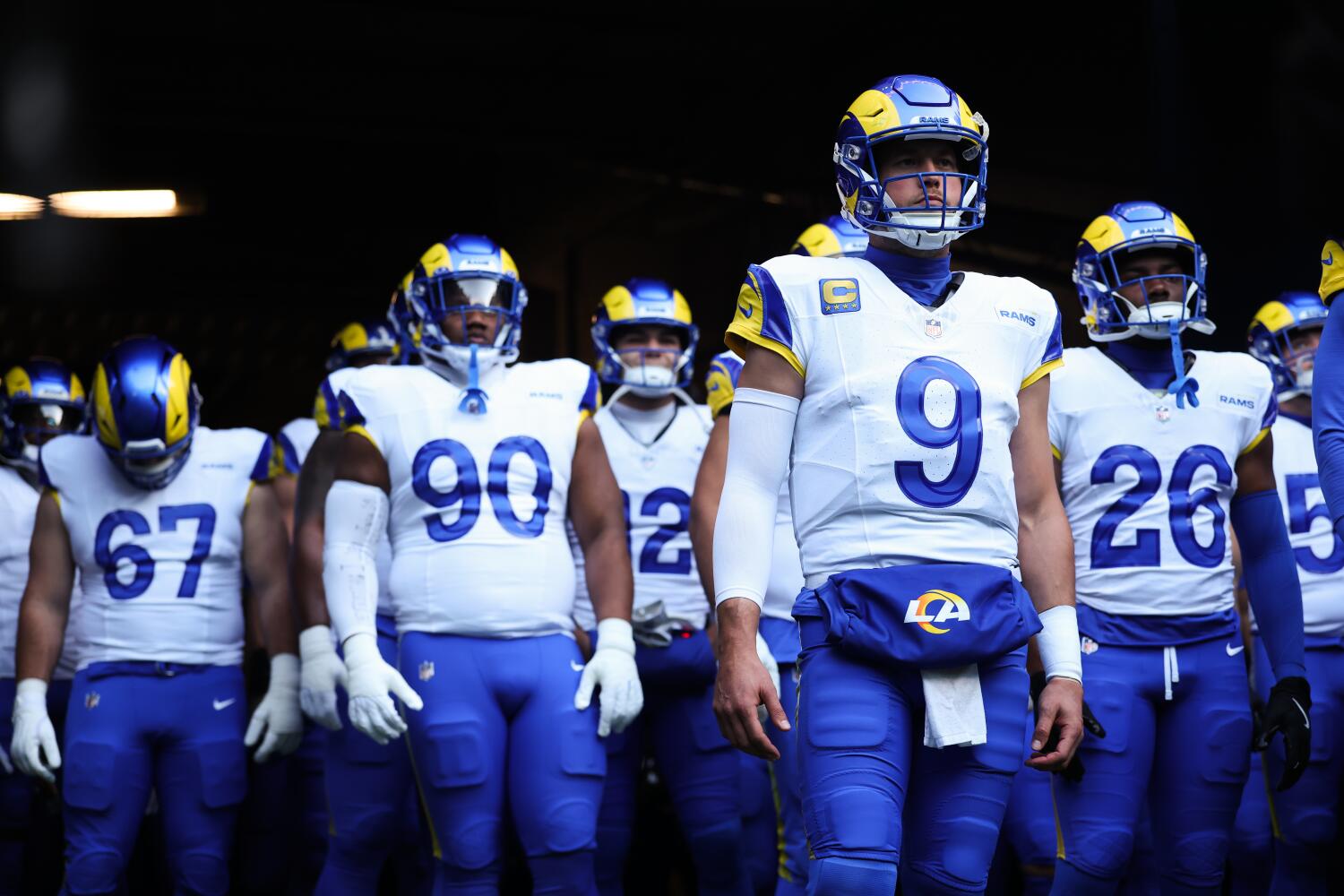
The NFL is finally pulling the trigger on Australia. After years of site visits, marketing handshake deals, and grassroots "flag football" posturing, the league has locked in the specifics for its first-ever regular-season foray into the Southern Hemisphere. On Friday, September 11, 2026, the Los Angeles Rams will "host" the San Francisco 49ers at the Melbourne Cricket Ground (MCG).
For the American audience, the timing is a calculated play for primetime. The game kicks off at 5:35 p.m. PT on Thursday, September 10. While Melburnians are sipping morning flat whites at 10:35 a.m. on a Friday, fans in Los Angeles and San Francisco will be settling into their couches for a high-stakes divisional opener. It is a logistical tightrope walk that prioritizes domestic television revenue over the traditional Sunday afternoon window.
The choice of the MCG is as much about ego as it is about economics. With a capacity pushing 100,000, the NFL is hunting for a visual spectacle that rivals the Super Bowl. But beneath the "razmatazz" of a Week 1 kickoff lies a series of brutal physical and financial realities that the league's press releases conveniently ignore.
The 8000 Mile Hangover
Sending two elite professional football teams across the Pacific is a physiological nightmare. The flight from Los Angeles to Melbourne spans roughly 15 hours. The time difference is 17 hours. When the 49ers and Rams take the field on that Friday morning in Victoria, their internal clocks will be screaming.
Standard NFL road trips involve a one-to-three-hour time shift. This is different. To mitigate the "jet lag tax," teams typically require a full week of acclimatization. However, the NFL schedule is an unforgiving machine. The league has positioned this game as the second act of a Wednesday-Thursday kickoff blitz, following the Seattle Seahawks’ season opener on September 9. This leaves the Rams and 49ers in a precarious position for Week 2. Unless the league grants both teams an immediate bye—an unlikely move so early in the season—the physical toll of the return journey could compromise the early-season standings for two NFC West contenders.
The Cricket Ground Compromise
There is a reason most NFL international games are played in rectangular stadiums like Tottenham Hotspur or the Allianz Arena. American football is a game of inches played on a 120-yard strip. The MCG is a massive, circular cricket oval.
While the "G" is hallowed ground for Australians, it is an awkward fit for the gridiron. Fans in the front rows will be significantly further from the action than they would be at SoFi Stadium or Levi's Stadium. To fill the cavernous space and create the "atmosphere" required for a global broadcast, the league will likely have to resort to temporary seating structures or elaborate on-field staging.
The turf itself is another variable. Converting a cricket pitch to an NFL-grade surface requires more than just painting lines. The league demands a specific level of "hardness" and "cleat-in" depth to prevent the non-contact injuries that have plagued other international experiments. If the MCG surface doesn't hold up under the weight of 300-pound linemen, the historic opener could quickly turn into a PR disaster.
Chasing the 100 Billion Dollar Dragon
Why Australia? Why now? The answer is never about growing the "spirit of the game." It is about the $100 billion media rights deal.
The NFL has hit a ceiling in the United States. Domestic viewership is massive, but it is saturated. To satisfy the demands of broadcast partners and streaming giants, the league must prove it can capture new "eyeballs" in wealthy, English-speaking markets. Australia has a built-in fan base of roughly six million people, many of whom are already accustomed to high-impact sports like AFL and Rugby League.
By scheduling the game on a Friday morning locally, the NFL isn't just courting Australians; they are creating a "Thursday Night Football" special for the U.S. market. It is a double-dip strategy. They get the ticket revenue from 90,000+ fans at the MCG and the primetime ad rates from American networks.
The Ticket Price Barrier
For the local fan, the "Down Under" experience won't be cheap. Ticketing starts with a pre-sale for MCC members on April 1, 2026, followed by a general public sale on April 7. While the league hasn't finalized the exact AUD pricing, historical data from London and Munich suggests a steep "prestige tax."
Hospitality packages, handled by On Location and Sportsnet Holidays, are expected to reach thousands of dollars. The NFL isn't looking for the casual observer; they are looking for the affluent "super-fan" willing to pay for a once-in-a-lifetime event.
The 49ers and Rams are the perfect guinea pigs for this experiment. Both franchises have established marketing rights in Australia through the league's Global Markets Program. They have spent the last two years "planting the flag" with youth clinics and merchandise deals. Now, they are the ones who have to deal with the 8,000-mile flight and the pressure of performing on a circular field in front of a confused but curious crowd.
The Melbourne game is a massive gamble on the physical limits of the players and the loyalty of the fans. If it works, it paves the way for a permanent international rotation that could eventually include a Super Bowl played outside the United States. If the logistics crumble, it will be remembered as the time the NFL flew halfway around the world just to find out that some distances are too great, even for the Shield.
Would you like me to analyze the projected economic impact on the city of Melbourne versus the actual revenue retained by the NFL?**