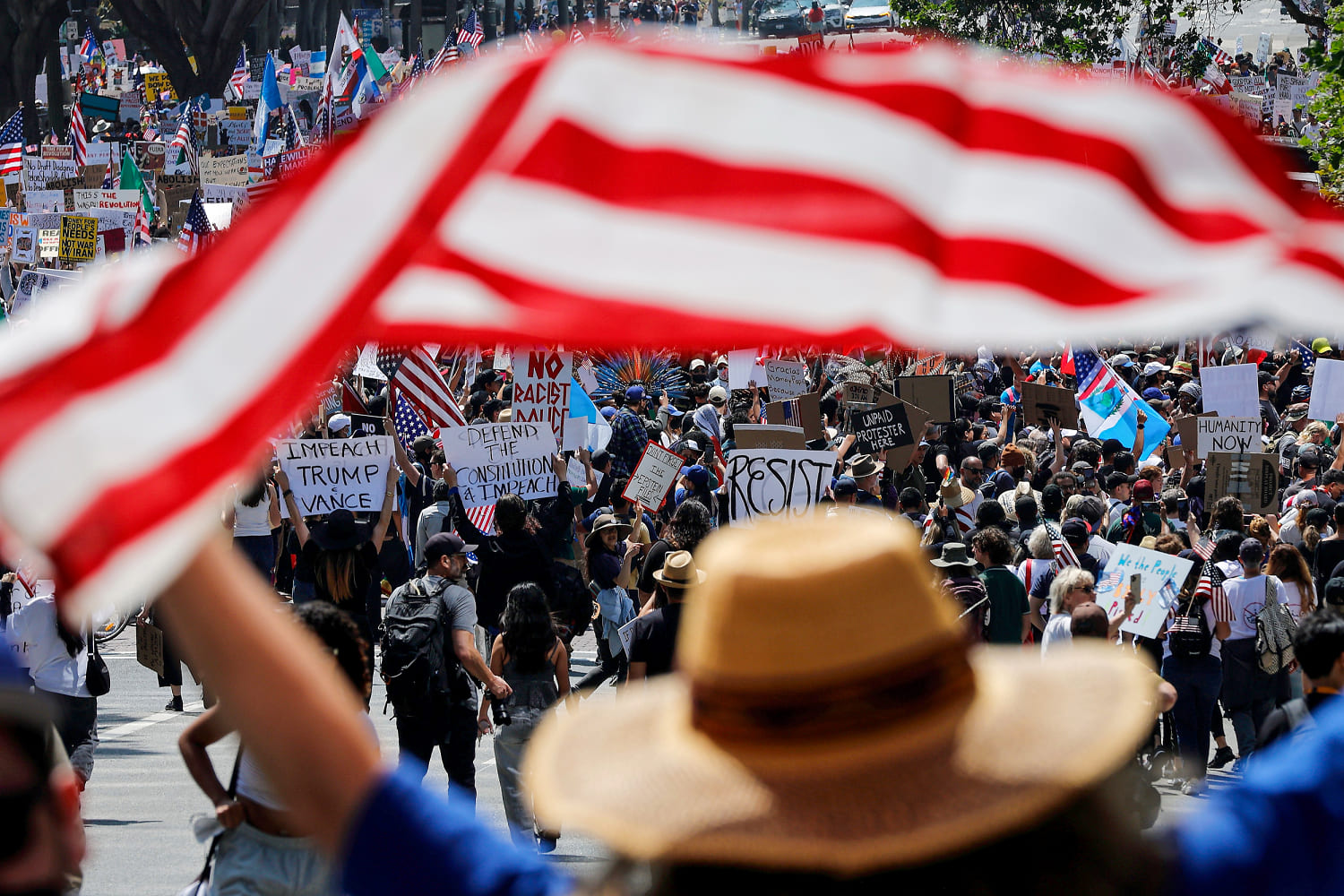
The third wave of "No Kings" protests scheduled for this weekend is no longer a localized grievance about tax hikes or zoning laws. It has morphed into a decentralized referendum on institutional legitimacy. Organizers are projecting record-breaking turnout across fourteen major hubs, dwarfing the previous two demonstrations combined. While mainstream outlets have framed this as a simple populist flare-up, the reality is a sophisticated, digitally-coordinated assault on the current concentration of executive power. This isn't just a crowd in the street. It is a stress test for the very mechanisms of modern governance.
The Architecture of Discontent
The "No Kings" moniker is deceptive in its simplicity. It suggests a monarchist threat that doesn't exist in the literal sense, but the symbolism resonates because of a perceived "imperial" shift in corporate and political leadership. This round of protests focuses specifically on the erosion of legislative oversight. When leaders bypass traditional checks and balances to implement sweeping economic shifts, the "No Kings" banner becomes a catch-all for everyone from displaced labor unions to privacy advocates.
Data from the previous two events shows a shift in the demographic makeup of the participants. The first protest was dominated by students and career activists. The second saw a surge in small business owners. This third wave is different. Internal logistics memos leaked from organizing committees show a heavy influx of middle-management professionals and civil servants—the very people who usually keep the machinery of the state running. When the bureaucrats start joining the picket lines, the narrative of "fringe radicalism" falls apart.
Money and the Ghost in the Machine
One of the most overlooked factors in the rapid scaling of these protests is the funding model. Unlike the top-down structures of 20th-century movements, "No Kings" operates on a hyper-local, peer-to-peer financial grid. There is no central bank account for authorities to freeze. There is no single leader to co-opt or discredit.
Instead, the movement utilizes micro-donations tied to specific logistics—buying water for a specific street corner, renting a sound system for a specific hour, or providing legal aid for a specific precinct. This granular approach makes the movement incredibly resilient. If one "cell" is shut down, the others remain unaffected. It is an asymmetrical organizational strategy that the current policing models are not equipped to handle.
The Breakdown of Traditional Media Gatekeeping
For decades, large-scale protests lived or died by their evening news coverage. If the cameras weren't there, it didn't happen. "No Kings" has inverted this power dynamic. By using encrypted broadcast channels and localized mesh networks, they have created their own internal media ecosystem.
They aren't asking for a seat at the table; they are building a different room. This allows them to bypass the "sanitized" versions of their demands often presented by major networks. They are communicating directly with the public, and the public is listening because the traditional gatekeepers have lost their monopoly on the truth.
Why the Third Wave Changes the Calculus
Historical precedent suggests that movements usually lose steam by the third iteration. Fatigue sets in. The "thrill" of the initial rebellion fades. However, "No Kings" is seeing the opposite trend.
The reason is simple: the underlying economic pressures have only intensified. Inflationary spikes and the rapid automation of entry-level professional roles have created a permanent class of "over-educated and under-employed" individuals. These are people with the time to organize and the intellect to do it effectively. They aren't just angry; they are precise.
The Strategy of Strategic Friction
The organizers have moved away from the "occupy" model of stationary camping. It was too easy to surround and clear. This weekend’s strategy focuses on "strategic friction"—short-duration, high-impact blockades of critical infrastructure.
- Logistics Hubs: Targeted slowdowns at shipping ports and distribution centers.
- Data Centers: Peaceful but massive assemblies around the physical locations that house the digital economy.
- Transit Arteries: Coordinated "walk-slows" across major bridges and tunnels.
The goal isn't to destroy; it is to demonstrate how easily the status quo can be paused. It is a show of force that targets the wallet rather than the heart.
The Counter-Argument and the Risk of Overreach
Critics argue that the movement lacks a coherent "Plan B." It is easy to say "No Kings," but it is much harder to propose a functional "No Kings" bureaucracy. There is a legitimate fear that the movement could create a power vacuum that more radical, less disciplined elements might fill.
The volatility of a leaderless movement is its greatest strength and its most dangerous weakness. Without a central negotiator, there is no one to sign a peace treaty with. If the government wants to make concessions, who do they talk to? This lack of a clear exit strategy could lead to a protracted stalemate that hurts the very working-class people the movement claims to represent.
The Police Response and the Escalation Ladder
Law enforcement agencies have spent the last month re-tooling. We are seeing a move away from the heavy-handed riot gear displays of the past, which only served as recruitment footage for the movement. The new tactic is "surgical containment"—using high-tech surveillance to identify and isolate key logistical coordinators before the protests even begin.
This creates a cat-and-mouse game of digital hide-and-seek. For every coordinator the police "neutralize" through pre-emptive arrests or digital de-platforming, two more take their place. The "No Kings" movement has anticipated this, utilizing "shadow organizers" who remain silent until the primary leaders are taken off the board.
The Failure of the Political Class
The most damning indictment of the current situation is the silence from both sides of the political aisle. Neither the incumbents nor the opposition have been able to wrap their heads around a movement that rejects the entire binary of modern politics.
Politicians are used to dealing with interest groups. They know how to trade a tax break for a vote or a subsidy for an endorsement. But "No Kings" isn't asking for a subsidy. They are asking for a fundamental restructuring of how power is exercised. This isn't a policy debate; it's a constitutional crisis in slow motion.
The Role of Corporate Influence
While the government is the visible target, the underlying rage is directed at the "shadow sovereigns"—the massive tech and finance conglomerates that exert more influence over daily life than any elected official. The protesters see the government not as a separate entity, but as a protective layer for these corporate interests.
This is why we are seeing protests in front of corporate headquarters rather than just city halls. The movement has correctly identified that in the 21st century, the scepter isn't held by a person, but by a balance sheet.
The Logistics of Saturday
Expect the unexpected. The organizers have hinted at "surprises" that go beyond standard marching. There are rumors of mass-coordinated digital actions happening simultaneously with the physical protests. Imagine a thousand people blocking a bridge while ten thousand more crash the servers of the city's utility providers or tax offices.
This "hybrid warfare" approach is a new frontier in civil disobedience. It requires a level of coordination that was impossible only a decade ago. The success or failure of this weekend will depend on whether the movement can maintain its discipline under the inevitable pressure of a security crackdown.
The Reality of the "No Kings" Demand
At its core, the movement is demanding a return to human-scale governance. They want decisions to be made by people they can see, in places they can visit, through processes they can understand. The complexity of modern systems has become a form of oppression in itself. When a system becomes too complex to be held accountable, it ceases to be a democracy and becomes a technocracy.
The "No Kings" protesters are effectively saying that if a system cannot be understood by the people it governs, it has no right to govern them. This is a radical proposition, but it is one that is gaining traction across the globe.
The streets this weekend will be loud, but the silence that follows will be more telling. If the government responds with the same tired scripts of "listening sessions" and "task forces," they will have missed the point entirely. The "No Kings" movement isn't looking for a conversation; they are looking for a surrender of the unchecked power that has become the hallmark of the modern era.
As the sun rises on what is expected to be the largest day of civil unrest in recent memory, the question isn't how many people show up. The question is what happens on Monday morning when the banners are put away but the grievances remain. The state can clear a street, but it cannot clear an idea whose time has come. The "No Kings" movement has already won the most important battle: they have proven that the current trajectory is not inevitable.
Watch the intersections. Watch the data streams. Most importantly, watch the people who aren't shouting, but are quietly stepping back from a system they no longer trust. That is where the real revolution is happening.