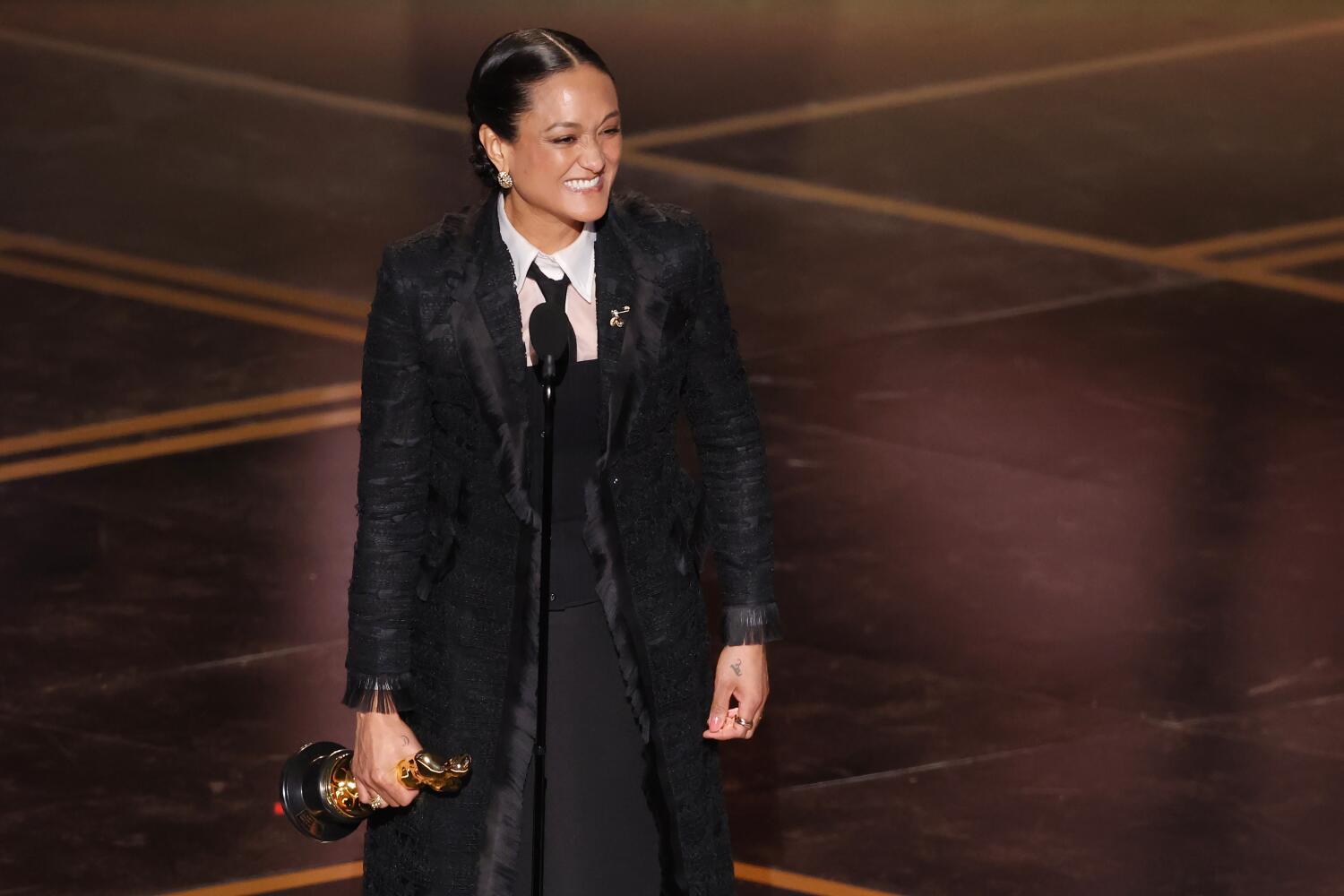
Autumn Durald Arkapaw has officially rewritten the history of the Academy Awards by becoming the first woman to win the Oscar for Best Cinematography for her work on Sinners. This is more than a trophy for a mantle. It is a fundamental shift in an industry that has, for over a century, treated the Director of Photography (DP) role as a masculine fortress. While the win acknowledges her technical mastery and the atmospheric, high-contrast visual language she brought to Ryan Coogler’s latest project, it also exposes the glacial pace of progress in Hollywood’s technical branches.
The lens has finally turned.
For decades, the cinematography category remained the last holdout. Since the first Oscars were handed out in 1929, thousands of men were nominated and hundreds won. Women were largely kept out of the camera department, relegated to "softer" crafts like costume design or makeup. Arkapaw’s victory isn't just a personal milestone; it is a signal that the gatekeepers of the American Society of Cinematographers (ASC) and the Academy can no longer ignore the shift in who holds the power behind the glass.
The Technical Grit Behind the Win
Arkapaw didn't win because of a diversity initiative. She won because she managed to capture a visceral, textured reality in Sinners that felt both period-accurate and hauntingly modern. To understand the gravity of this win, one must look at the specific aesthetic challenges she faced on the set. Working with Coogler, she had to balance the darkness of a supernatural thriller with the rich, deep tones required for a predominantly Black cast—a technical feat that many DPs have historically struggled with or ignored.
She utilized large-format cameras and custom-tuned lenses to create a shallow depth of field that isolated characters in their own psychological turmoil. This wasn't about "pretty" pictures. It was about visual storytelling that used shadow as a character. In a year where every other nominee leaned heavily on digital clean-lines, Arkapaw embraced the dirt and the grain. She chose a visual palette that felt earned.
The industry has long maintained a myth that women lack the physical stamina or the "technical mind" for the rigors of a massive action set. Arkapaw dismantled that. On Sinners, she managed a massive crew, coordinated complex lighting rigs for night shoots, and maintained a singular vision through a demanding production schedule. The result is a film that looks unlike anything else in the current blockbuster circuit.
A Century of Exclusion
To appreciate why it took until now for a woman to hold this specific golden statuette, we have to look at the apprenticeship model of Hollywood. The camera department operates like a guild from the Middle Ages. You start as a loader, move to a second assistant, then a first assistant, and eventually a camera operator before you ever get to call the shots as a DP.
For the better part of the 20th century, these crews were "boys' clubs."
Mentorship is the lifeblood of cinematography. If the veteran DPs are only hiring and mentoring people who look like them, the pipeline remains clogged. It wasn't until Rachel Morrison broke the nomination barrier with Mudbound in 2018 that the industry even admitted there was a problem. Ari Wegner followed with a nomination for The Power of the Dog. But nominations are soft nods. A win is a declaration.
Arkapaw’s career trajectory is a blueprint for how the modern DP survives. She cut her teeth on indie darlings like Palo Alto before transitioning into the massive machinery of the Marvel Cinematic Universe with Loki and Black Panther: Wakanda Forever. She proved she could handle the $200 million pressure cooker without losing her artistic soul. That balance—the ability to satisfy corporate stakeholders while maintaining a distinct visual "thumbprint"—is what makes a veteran analyst take notice.
The Coogler Arkapaw Partnership
The relationship between a director and a cinematographer is often compared to a marriage. There is a shorthand, a shared language that goes beyond the script. Ryan Coogler has a history of elevating his collaborators, but in Arkapaw, he found a visual partner who could translate his themes of legacy and blood into light and shadow.
In Sinners, the camera is rarely static. It prowls. Arkapaw’s use of the "unsettled frame" keeps the audience in a state of constant anxiety, mirroring the film’s themes of hidden monsters and societal rot. This wasn't just about lighting a scene so the actors were visible. It was about creating an environment where the light felt like it was closing in on them.
This partnership also highlights a shift in how directors choose their cinematographers. The old guard often looked for a DP who would simply execute their orders. Modern directors look for an architect of the image. Arkapaw is an architect. She builds the world from the sensor out.
Breaking the Financial Barrier
There is a cold, hard business reality behind this Oscar win. Studios have historically been hesitant to hand the keys of a massive budget to a female cinematographer, fearing a lack of experience with heavy visual effects or large-scale lighting setups. It is a circular logic: you can't get the experience without the job, and you can't get the job without the experience.
Arkapaw broke that loop by sheer force of output. By the time Sinners went into production, she was already one of the most bankable DPs in the business. Her work on Wakanda Forever proved she could handle high-intensity VFX integration, which is often the final hurdle for DPs looking to move into the A-list tier.
When a woman wins this award, it changes the risk assessment in the minds of studio executives. It proves that the "risk" was never real. The data now shows that some of the most visually stunning and commercially successful films of the last five years have had women behind the lens. The financial argument for the "old boys' club" has disintegrated.
The Myth of the Female Aesthetic
Critics often try to pigeonhole female cinematographers by claiming they bring a "softer" or more "empathetic" touch to the camera. This is a patronizing narrative that Arkapaw’s work flatly rejects. There is nothing "soft" about the visuals in Sinners. It is aggressive. It is sharp. It is uncompromising.
Cinematography is about physics, optics, and the manipulation of photons. It is a technical science. By winning, Arkapaw has forced the conversation away from gendered descriptions of art and back toward the craft. She didn't win as a "female cinematographer." She won as the best cinematographer of the year, period.
The Oscars often get flack for being out of touch, but this specific win feels like the Academy finally catching up to where the talent actually is. The industry is full of young women who have been told for years that the camera department was a dead end for them. They now have a definitive piece of evidence to the contrary.
The Logistics of a Masterpiece
If you strip away the glamour of the awards ceremony, you are left with the brutal reality of the set. Arkapaw is known for her meticulous pre-production. She doesn't just show up and light. She spends months testing film stocks, digital sensors, and lens coatings to find the exact texture that fits the story.
For Sinners, this involved deep research into the historical era the film inhabits, combined with a speculative look at the supernatural elements. She had to ensure that the "monsters" in the film weren't just guys in suits, but were integrated into the very atmosphere of the frames. This requires a deep understanding of color science and how different wavelengths of light interact with various materials.
- The Use of Negative Fill: Arkapaw is a master of "taking away" light. In Sinners, she uses darkness as a tool to direct the viewer’s eye, often leaving large portions of the frame in deep shadow to build tension.
- Composition as Narrative: Her framing often places characters at the edge of the screen, creating a sense of isolation or vulnerability that mirrors the film's plot.
- Color Theory: The transition from the warm, earthy tones of the human world to the cold, sickly hues of the supernatural threats provides a subconscious roadmap for the audience.
The Long Road to Parity
Despite this win, the numbers remain grim. Recent studies from the Center for the Study of Women in Television and Film show that women still make up a tiny fraction of the DPs working on the top 250 grossing films. One win doesn't fix a systemic imbalance.
However, the "Oscar effect" is real. A win like this leads to more offers, higher budgets, and most importantly, the power to hire. As Arkapaw continues to lead major productions, she will be the one hiring the next generation of camera assistants and operators. That is how the culture actually changes—not through a speech at the Dolby Theatre, but through the hiring decisions made in a production office months before a single frame is shot.
The technical branches of the Academy are notoriously slow to change because they are based on lifetime achievement and long-standing reputations. Arkapaw’s win suggests that the demographic of the voters is finally shifting, or at the very least, their eyes are finally opening to the work being done outside the traditional circles.
The Visual Legacy of Sinners
When people look back at the films of the mid-2020s, Sinners will stand out for its refusal to look like a "content" piece. In an era where many streaming and theatrical releases are starting to suffer from a homogenized, flat digital look, Arkapaw’s work is a reminder of what the medium can do when pushed.
She used the camera to explore the darkest corners of the human (and inhuman) experience. She proved that you can have a massive, entertaining genre film that still maintains a high-art visual sensibility. That is the true "Autumn Durald Arkapaw" style—technical perfection served with a side of raw, unfiltered emotion.
The glass ceiling didn't just crack; it was shattered by a 35mm lens. The industry can no longer hide behind the excuse that the talent isn't there or that the "experience" is lacking. Arkapaw has the hardware, the box office numbers, and the critical acclaim to prove that the future of cinematography is no longer a restricted club.
What happens next will be the true test. Will studios continue to diversify their DP rosters, or will they treat this as a one-off anomaly? If the current slate of upcoming productions is any indication, the momentum is finally on the side of the innovators. Arkapaw has set a new standard, and the rest of the industry is now playing catch-up.
Every frame of Sinners is a testament to what happens when a director trusts a visionary with the light. It is a dark, beautiful, and terrifying achievement that will be studied by film students for decades. Not because a woman shot it, but because it is a masterclass in how to use a camera to tell a story that gets under the skin and stays there.
The era of the "female cinematographer" as a novelty is over. The era of Autumn Durald Arkapaw as a titan of the craft has begun. Ask any camera assistant currently working their way up the ranks; the map of Hollywood just got a lot bigger.