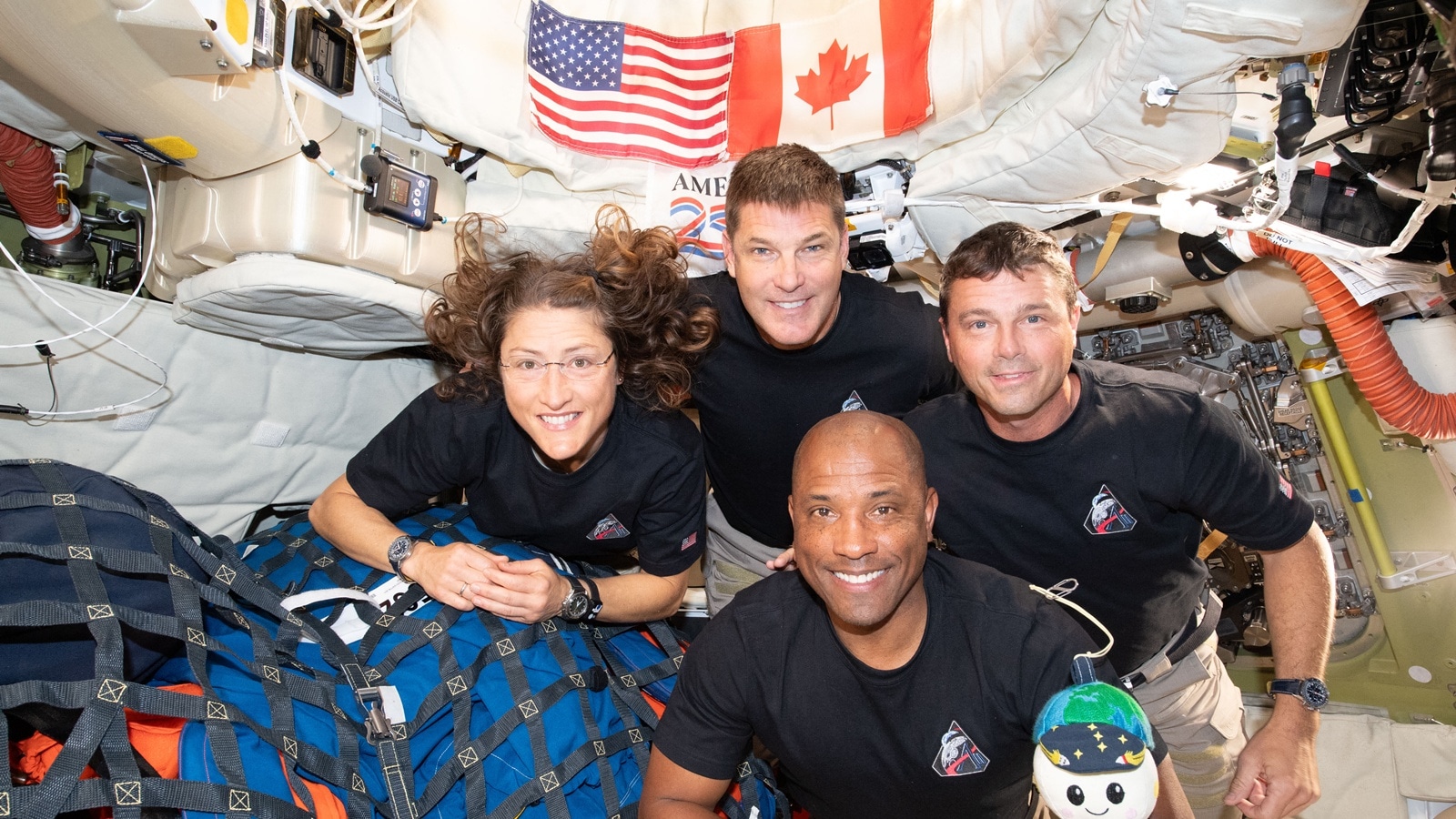
The success of the Artemis II mission hinges not on the extraction of the Orion capsule from Earth’s gravity, but on the management of its kinetic energy during the final 20 minutes of flight. While public attention focuses on the Space Launch System (SLS) lift-off and the lunar flyby, the reentry phase represents a concentrated period of high-consequence variables where the margin for error approaches zero. To understand the risk profile of Artemis II, one must analyze the physics of high-velocity atmospheric braking and the mechanical failure points of the Orion heat shield.
The Velocity-Thermal Nexus
Artemis II is fundamentally different from Low Earth Orbit (LEO) missions like those conducted by the International Space Station or SpaceX’s Dragon. A capsule returning from LEO enters the atmosphere at approximately 17,500 mph. Orion, returning from a lunar trajectory, will impact the atmosphere at roughly 25,000 mph. For a deeper dive into similar topics, we recommend: this related article.
This difference in velocity is not linear in its impact; it is exponential. The thermal load on a spacecraft is proportional to the cube of its velocity. The kinetic energy that must be dissipated as heat follows the formula:
$$E_k = \frac{1}{2}mv^2$$ For broader information on the matter, in-depth analysis is available at CNET.
Returning from the Moon requires the Orion heat shield to withstand temperatures of approximately 5,000°F (2,760°C). This thermal stress is managed through an ablative process using Avcoat—a material designed to char and erode, carrying heat away from the crew module. The integrity of this process is the primary technical hurdle. During the Artemis I uncrewed test, NASA observed unexpected "char loss," where small pieces of the Avcoat material liberated from the shield rather than wearing away uniformly. In a crewed mission, non-uniform ablation changes the aerodynamic profile of the capsule, potentially introducing unplanned oscillations or "tripping" the flow from laminar to turbulent, which spikes localized heating.
The Three Pillars of Reentry Survivability
The safety of the four-person crew depends on the synchronized performance of three distinct systems. A failure in any one of these pillars results in a total loss of mission and crew.
1. The Skip-Reentry Flight Profile
Unlike the Apollo missions, which used a direct-entry method, Orion utilizes a "skip-reentry" maneuver. The capsule hits the upper atmosphere, uses its lift-to-drag ratio to bounce back up briefly, and then performs a final descent.
- The Logic: This extends the ground track, allowing for more precise splashdown locations near recovery teams. More importantly, it splits the heat load into two distinct pulses, lowering the peak G-loads sustained by the crew.
- The Risk: The skip maneuver requires precise attitude control. If the capsule enters at too shallow an angle, it could skip back into space and remain in an unrecoverable orbit. If the angle is too steep, the thermal load exceeds the material limits of the Avcoat, leading to structural breach.
2. Pyrotechnic and Sequencing Reliability
Reentry is a sequence of irreversible mechanical events. Following the separation of the Service Module—which exposes the heat shield—the capsule must be oriented perfectly.
The sequence includes:
- Jettisoning the Forward Bay Cover: This must occur at a specific altitude to expose the parachutes.
- Drogue Deployment: Two small chutes stabilize and slow the craft from supersonic speeds.
- Main Chute Inflation: Three massive parachutes must unfurl without tangling to slow the 20,000-pound module to a survivable 20 mph impact.
The failure of a single pyrotechnic bolt or a mortar firing mechanism during this sequence is a "Single Point Failure" (SPF). In a vacuum-sealed environment, these mechanical components must survive the transition from the extreme cold of deep space to the vibration of atmospheric interface.
3. Structural Integrity under Variable Loading
The transition from the vacuum of space to the dense atmosphere subjects the Orion module to massive pressure differentials. As the air thickens, the capsule experiences decelerative forces up to 7 or 8 Gs. The internal pressure vessels must maintain a breathable atmosphere while the external skin is effectively melting. The "dangerous" nature of coming home lies in the fact that these stresses occur after the hardware has already been "soaked" in the radiation and thermal cycles of a 10-day lunar mission, which can fatigue materials in ways that are difficult to model with 100% certainty.
The Recovery Bottleneck: The "Golden Hour" at Sea
Even a successful splashdown does not equate to mission success. The Artemis II crew will be bobbing in the Pacific Ocean in a capsule that has just survived a 5,000°F descent. This creates a secondary risk environment defined by two factors:
- Toxic Off-gassing: The ablation of the heat shield and the potential for propellant leaks (hydrazine) mean the air surrounding the capsule immediately after splashdown is lethal. If the capsule's uprighting system (the bags that inflate to keep it bobbing right-side up) fails, the crew is suspended upside down in a cramped, hot, and potentially toxic environment.
- Physiological Deconditioning: After days in microgravity, the crew’s vestibular systems will be compromised. The sudden return to 1G, followed by the erratic motion of ocean swells, induces severe nausea and disorientation. This complicates their ability to self-extract if an emergency—such as a cabin leak or fire—occurs before the USS San Diego or recovery teams arrive.
Quantifying the "Unknown Unknowns"
The primary differentiator between Artemis I and II is the presence of a Life Support System (LSS). On Artemis I, the capsule was a shell. On Artemis II, it is a pressurized vessel filled with nitrogen, oxygen, water, and human waste management systems.
This adds a layer of complexity to the reentry thermodynamics. The internal heat loads generated by four humans and their electronics must be managed by the spacecraft’s cooling loops. If the cooling system fails during the high-heat phase of reentry, the cabin temperature can spike to unlivable levels within minutes, even if the heat shield remains intact. This is a coupled-risk scenario: the external environment is trying to cook the ship, while the internal systems are struggling to reject the heat generated by the crew.
The Strategic Path Forward
To mitigate the terminal risks of the Artemis II mission, the operational focus must shift from "redundancy" to "resilience." Redundancy is having two of the same part; resilience is the ability of the system to survive the failure of a part through alternative logic.
- Thermal Margin Analysis: NASA must establish a definitive threshold for Avcoat char loss. If the Artemis I data suggests that material liberation is stochastic (random) rather than deterministic, then the safety factor for the heat shield must be increased by thickening the application, despite the weight penalty.
- Automated Abort Logic: The reentry flight computer must have autonomous authority to adjust the skip-reentry trajectory in real-time based on thermal sensors embedded in the shield. If one section of the shield is thinning too fast, the capsule must be able to roll to shift the stagnation point (the hottest spot) to a fresh area of the shield.
- Rapid Recovery Protocols: The time between splashdown and "hatch open" is the most vulnerable window for the crew. Strategic investment should be placed in autonomous recovery craft that can neutralize toxic gasses and provide external cooling to the capsule within 10 minutes of water impact.
The reentry of Artemis II will be the most significant test of human-rated deep-space technology in over fifty years. The physics are non-negotiable; the only variable remains the engineering margin applied to the heat-velocity equation. The mission's survival depends not on avoiding the fire, but on perfectly calculating its consumption of the vehicle.