NASA wants you to stare at a digital rendering of the far side of the moon while a capsule streaks across a void you can't see. They’ve spent billions on a PR machine designed to make you feel like a participant in a "return to the lunar surface."
Here is the cold, orbital reality: Artemis II is not a moon mission. It is a high-altitude stress test of a life-support system that is decades behind schedule. If you spend the mission obsessing over the "far side" or trying to sync your telescope with a grainy livestream, you are falling for the vanity metrics of space exploration.
The real drama isn't happening 230,000 miles away. It’s happening in the thermal shielding and the carbon dioxide scrubbers. While the general public hunts for a "blip" on a tracker, the real insiders are watching the telemetry for the one thing NASA doesn't want to talk about: the Orion heat shield’s tendency to char in ways we didn't predict.
The Myth of the Lunar Flyby
The "free-return trajectory" is the oldest trick in the book. It’s a gravity-assisted U-turn. To call Artemis II a "lunar mission" is like claiming a flight from New York to London is an "exploration of England" when the pilot just circles Heathrow and flies back.
The competitor guides tell you to track the spacecraft as it swings behind the moon. They’ll give you coordinates. They’ll tell you when the signal will drop. They treat the "loss of signal" (LOS) as a moment of high-stakes tension.
It isn't. In 1968, Apollo 8 did this with a fraction of the computing power of your toaster. We know the math of gravity. We know exactly when the signal will return because physics doesn't take a day off. The "dark side of the moon" narrative is a cinematic crutch used to mask the fact that this mission is essentially a glorified checkout flight.
Stop Watching the Moon and Start Watching the Orbit
If you want to actually understand what is happening during Artemis II, you have to stop looking at the moon. The lunar flyby is the least technically interesting part of the mission.
The real "make or break" moments happen in the High Earth Orbit (HEO) phase. NASA is going to park four humans in a massive, elliptical loop around Earth for 24 hours before they even think about the moon. Why? Because they are terrified the Orion capsule’s Environmental Control and Life Support System (ECLSS) will fail.
Most tracking guides gloss over this 24-hour window. They want to get to the "cool stuff." But the HEO phase is where the mission lives or dies. If the crew can't manage the CO2 levels or if the radiators don't shed heat properly while we are still close enough to abort to Earth, the moon is off the table.
What You Should Actually Be Tracking:
- The Interim Cryogenic Propulsion Stage (ICPS) separation: This isn't just a "separation." It’s a proximity operations demo. The crew will manually fly Orion back toward the spent rocket stage. This is a high-risk maneuver that tests manual handling in deep space.
- Van Allen Belt Radiation Dosimetry: The crew will pass through the inner and outer radiation belts. Forget the moon's craters; look for the data on how much "soaking" the electronics and the biology are taking during these transits.
- Delta-V Maneuvers: Every time the spacecraft fires its service module engine, it’s a potential point of failure. The European Service Module (ESM) is the heart of this ship. If those burns aren't precise to the millisecond, the "free return" becomes a "one-way ticket to deep space."
The Orion Heat Shield Scandal
NASA’s biggest nightmare isn't the far side of the moon. It’s the return to Earth. During the Artemis I uncrewed mission, the heat shield experienced "unexpected charring." Instead of wearing away smoothly (ablation), pieces of the shield chipped off in a way that defied the computer models.
When you see "experts" telling you to follow the mission's progress toward the lunar far side, they are distracting you from the reentry math. Artemis II will hit the atmosphere at 25,000 miles per hour. That’s Mach 32. The friction creates a plasma field that reaches 5,000 degrees Fahrenheit.
If you are "tracking" the mission, don't look for the moment they pass the moon. Look for the "Skip Reentry" profile. This is a brand-new technique where the capsule hits the atmosphere, bounces back up like a stone on a pond, and then enters for a second time. It’s designed to reduce G-loads on the crew, but it adds a massive layer of complexity. If the skip is too high, they drift into an unrecoverable orbit. If it’s too shallow, they burn up.
The Problem with "Real-Time" Trackers
Most public-facing NASA trackers are smoothed-out visualizations. They are to orbital mechanics what a weather app is to a hurricane—a simplified, polite version of a violent reality.
The "distance to moon" counters you see on news sites are largely irrelevant. In space, distance is secondary to velocity.
The Physics of the Lunar Sling
To "follow" the mission correctly, you need to understand the TLI (Trans-Lunar Injection). The rocket doesn't aim for where the moon is. It aims for where the moon will be in three days.
- The Burn: The ICPS fires to kick the craft out of Earth orbit.
- The Coast: This is where the tracking gets boring for the casual observer, but vital for the engineer. The craft is decelerating the entire way up.
- The Pericynthion: This is the closest point to the lunar surface. This is where the moon’s gravity finally takes over.
If you are using a standard star-map app to find Orion, you're wasting your time. At its furthest point, Orion is a speck that even high-end consumer telescopes will struggle to distinguish from a dim star. You aren't "watching" the mission; you’re watching a software rendering of where a spreadsheet says the mission should be.
Why We Are Really Going (The Truth NASA Won't Say)
The competitor articles talk about "inspiration" and "the next generation of explorers." That’s marketing fluff.
Artemis II exists because the SLS (Space Launch System) is a "Senate Launch System." It uses Shuttle-era technology—the RS-25 engines and solid rocket boosters—repackaged into a massive, non-reusable pillar of fire. Each launch costs roughly $2 billion.
We aren't going to the moon because it’s the next logical step in science. We’re going because the industrial base for the Space Shuttle needed a new contract. If you want to "follow" the mission, follow the money. Follow the fact that we are using 1970s engine tech to fly a 2020s capsule.
The "contrarian" take isn't that the mission is fake—it’s that the mission is a desperate attempt to prove that "Old Space" can still compete with the rapid iteration of SpaceX’s Starship. If Artemis II succeeds, it buys the traditional aerospace giants another decade of relevance. If it fails, or even if it’s delayed by another two years, the SLS program is dead.
The "Far Side" Obsession is a Distraction
There is nothing on the far side of the moon that we haven't seen before. We have high-resolution maps of every square inch thanks to the Lunar Reconnaissance Orbiter (LRO). The crew won't even see the surface clearly with their own eyes for much of the flyby because they’ll be moving too fast and focused on their instruments.
The obsession with the "far side" is a narrative tool to evoke the mystery of Apollo 13. But Artemis II isn't Apollo 13. It is a carefully managed, low-risk (relative to Apollo) loop.
Stop Asking These Questions:
- "Can they see the flags from Apollo?" No. They are too far away, and they are on the wrong side.
- "Will they land?" No. They don't even have a lander. The lander (Starship HLS) doesn't exist in a flight-ready state yet.
- "Is there a signal blackout?" Yes, but it’s a math certainty, not a mystery.
Start Asking These Questions:
- "What is the partial pressure of Oxygen in the cabin?"
- "How much nitrogen leakage is occurring in the ESM valves?"
- "Is the heat shield sensor data trending toward the Artemis I anomalies?"
How to Actually "Follow" the Mission Like a Pro
If you want to move beyond the "lazy consensus" of general news trackers, you need to look at the raw data.
- Monitor the DSN (Deep Space Network) Now: NASA’s "DSN Now" website shows which giant antennas on Earth are talking to which spacecraft. When "ORDN" (Orion) pops up, you can see the data rates. If the bit rate drops unexpectedly, that is when you should pay attention.
- Listen to the Flight Director Loop: Don't wait for the polished NASA TV commentator to tell you what’s happening. They are three minutes behind the reality and five layers deep in PR scrubbing. Find the raw audio feeds. When you hear "Negative Return" or "Aborts to Z-axis," you’re hearing the real mission.
- Watch the Sun: The biggest threat to Artemis II isn't the moon; it’s a Coronal Mass Ejection (CME). Orion has a "storm shelter" in the center of the capsule where the crew has to huddle if the sun burps. If you see a major solar flare while they are outside the Earth's magnetic field, the "far side of the moon" becomes the least of their worries.
The Harsh Reality of Space 2.0
We are in an era where space has been "democratized" by pixels but restricted by physics. NASA wants you to have a "holistic" (to use their kind of buzzword) experience, but the reality of Artemis II is a cramped, smelly metal can flying through a lethal vacuum.
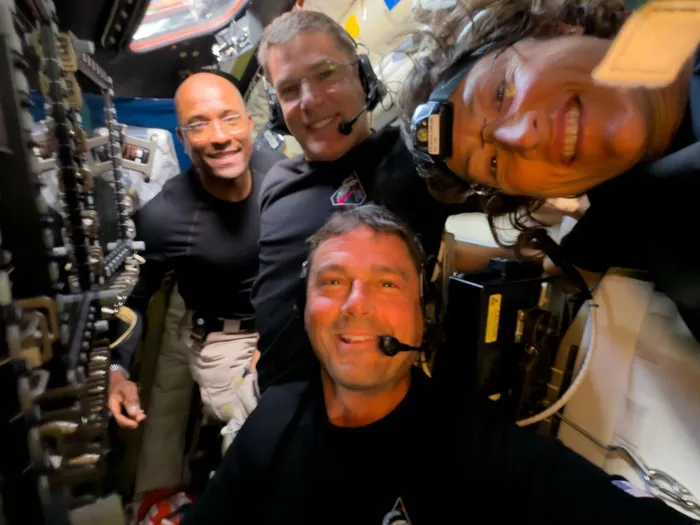
The crew—Wiseman, Glover, Koch, and Hansen—are incredible pilots, but they are essentially "passengers" on a mission where 99% of the maneuvers are pre-programmed. The drama isn't in their bravery; it’s in whether the software, written by thousands of different contractors, decides to play nice with the hardware.
Forget the romanticism. Forget the "follow the moon" guides.
Space is a series of thermal gradients, pressure checks, and orbital maneuvers. If you want to follow Artemis II, stop looking at the moon and start looking at the telemetry. The moon is just the goalpost. The game is played in the vacuum between.
The mission ends when the parachutes deploy, but the success or failure is written in the logs of the High Earth Orbit phase long before they ever see the lunar horizon. If you can't see the difference between a PR stunt and a technical flight test, you aren't tracking the mission—you're watching a movie.