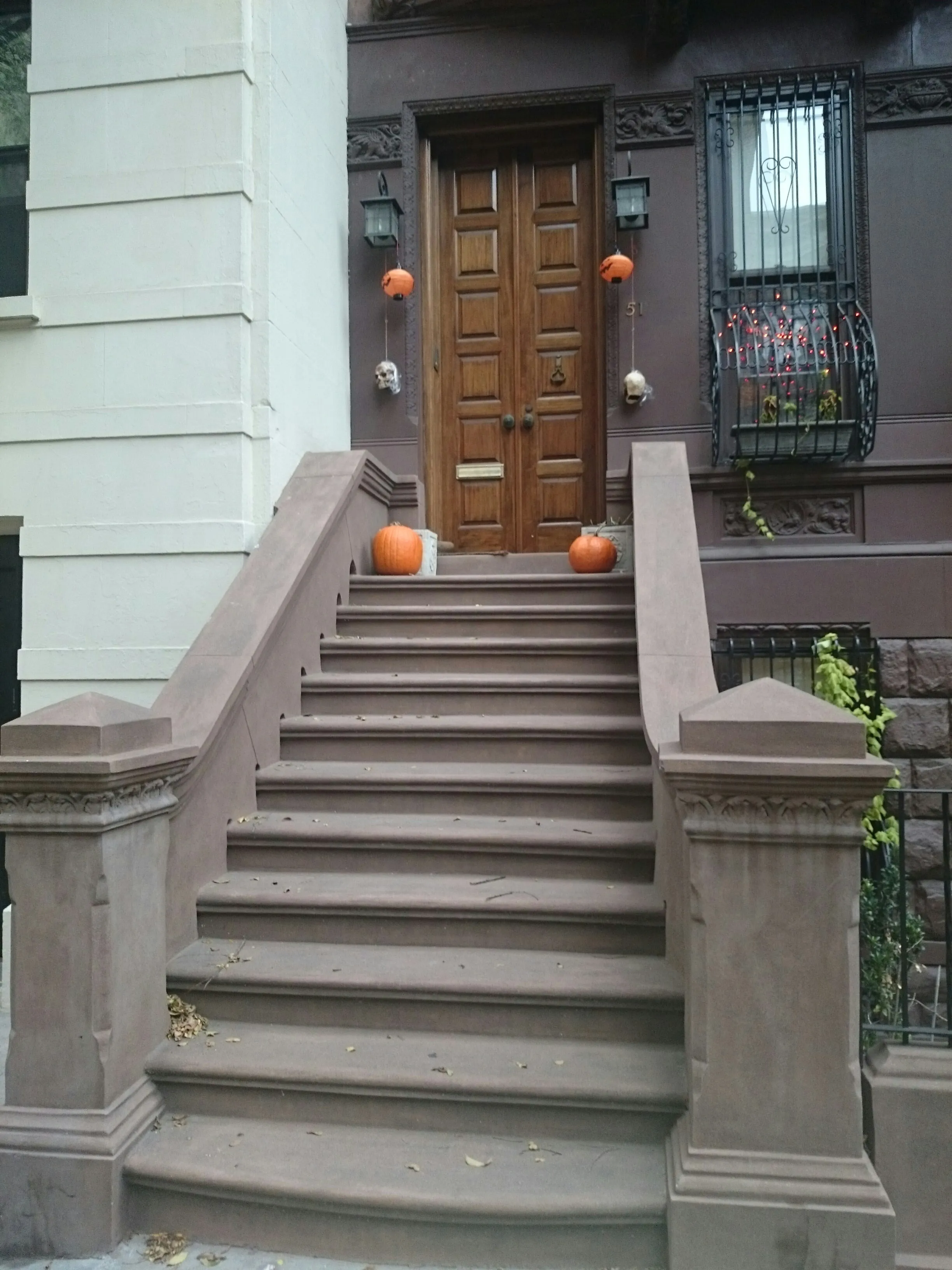
Finding a specific address in Manhattan that doesn't house a celebrity or a Michelin-star restaurant usually feels like a wild goose chase. But 51 West 95th Street is different. It's one of those classic Upper West Side brownstones that looks exactly like what you’d see in a Woody Allen movie, minus the neurotic monologue.
Located just steps from Central Park, this building represents the "old" New York that everyone claims is dying but is actually just hiding in plain sight. It’s a pre-war beauty. Built back in 1910, it has survived the city’s endless cycles of boom and bust. Honestly, if these walls could talk, they’d probably just complain about the rising cost of a bagel, but they’d also tell a story of architectural resilience.
The Reality of Living at 51 West 95th Street
Let's get real for a second. When people look up 51 West 95th Street, they aren't just looking for a map pin. They want to know what it’s like to actually exist inside a building that was constructed before the Titanic sank.
It's a low-rise. It's intimate. You don’t have a doorman named Greg greeting you every morning, and you certainly aren’t taking a high-speed elevator to the 60th floor. Instead, you're dealing with the quirks of a 115-year-old structure. Maybe the floors creak. Maybe the radiators hiss like an angry cat in January. But that's the trade-off for living in a place with genuine soul.
The building sits on a tree-lined block between Columbus Avenue and Central Park West. It’s quiet. Well, "New York quiet," which means you can still hear the occasional siren, but you don't feel like you're sleeping in the middle of Times Square.
Why the location is the actual selling point
You’re basically living in the city’s backyard.
Walking out of the front door of 51 West 95th Street and hitting Central Park in two minutes is a luxury that billionaire's row residents pay $20 million for, yet here it is, accessible to the rest of us. You have the Reservoir right there. You have the tennis courts. It’s a runner's dream and a dog owner’s paradise.
But it's not just the park.
The neighborhood vibe is distinct. You've got the Whole Foods on 97th and Columbus, which is basically the community hub for anyone trying to justify spending $8 on organic kale. Then there’s the local haunt, Barney Greengrass, just a few blocks south for when you need a real New York lox fix.
Architectural Bones and Interior Vibes
The building is categorized as a walk-up, which is basically Manhattan’s version of a forced gym membership. You’re looking at four or five stories of brick and limestone.
Inside, the units vary wildly. Because it’s an older building, many of the apartments at 51 West 95th Street have been renovated over the decades. You might find one unit with sleek, minimalist IKEA cabinets and another that still has the original crown molding and a decorative fireplace that hasn't seen a flame since the Nixon administration.
- High Ceilings: Most units boast 9-to-10-foot ceilings, making small square footage feel much larger.
- Original Detail: Wood window shutters and parquet floors are common finds here.
- Light: Depending on which way you face, you’re either getting blasted by southern sun or looking into a quiet, leafy backyard.
One thing people get wrong about these types of buildings is assuming they are all tiny studios. While there are definitely some "cozy" (read: cramped) spaces, many brownstones on 95th street were originally grand single-family homes that were later carved into floor-through apartments. This means you often get a layout that feels more like a house than a shoebox.
The Market: What Most People Get Wrong
People think the Upper West Side is strictly for the ultra-wealthy or the rent-stabilized old guard. The truth is somewhere in the middle.
Properties like 51 West 95th Street represent the "missing middle" of Manhattan real estate. They are often co-ops or small rentals. They don't have the flashy amenities of the new glass towers on 57th street—no indoor lap pools, no pet spas, no "meditation rooms."
You get a roof and a radiator.
And for many, that’s exactly the point. You’re paying for the zip code and the proximity to the park, not for a concierge to hold your packages. In recent years, property values in this specific pocket (the 90s between CPW and Columbus) have remained remarkably stable. While the Financial District or Long Island City might see wild swings based on the tech market, the UWS is steady. It’s old money, even if you’re living in a one-bedroom.
Comparing 51 West 95th to its Neighbors
If you look at the surrounding blocks, you’ll see massive luxury condos like The Park Royal or the grand pre-wars on Central Park West. Those buildings come with massive monthly carry costs (HOA fees and taxes).
A building like 51 West 95th Street is often much more manageable. If it’s a co-op, the board is likely smaller and less "corporate." If it’s a rental, you’re dealing with a landlord who probably owns the whole row. It's a more human scale of real estate.
Navigating the Neighborhood Like a Local
If you’re moving here or even just visiting someone at this address, don’t act like a tourist.
- Skip the 1 train if you can: The B and C trains at 96th street are your best friends. They get you to Midtown in ten minutes.
- The 97th Street Greenmarket: Every Friday, this is where you go. It’s smaller than Union Square but way less chaotic.
- The Hidden Garden: There are community gardens tucked away on 94th and 95th that most people walk right past. Find them.
Honestly, the best part about 51 West 95th Street isn't the building itself—it's the three-block radius surrounding it. You have the Birch Wathen Lenox School nearby, which brings a certain "family" energy to the morning hours, and enough coffee shops to keep you permanently over-caffeinated.
What to Look Out For (The "Gotchas")
No building is perfect, especially not one over a century old.
If you're looking at a unit here, check the water pressure. Old pipes are a thing. Ask about the heating system. Some of these buildings are still on oil, others have converted to gas. And check the basement—not because it's spooky, but because that’s usually where the laundry is (if there is any). Carrying a heavy basket of clothes down four flights of stairs is the reality of the "glamorous" Upper West Side life.
Also, look at the windows. If they haven't been replaced recently, you’re going to hear every conversation on the sidewalk. But hey, that's just free entertainment, right?
Public Records and Transparency
According to NYC Department of Buildings records, 51 West 95th Street is a relatively "quiet" building in terms of complaints. You don’t see the laundry list of elevator failures or heating strikes that plague some of the larger complexes in the area. It’s a well-maintained piece of the city’s history.
Property taxes in this area have risen, as they have everywhere in the five boroughs, but because it’s a smaller building, the assessments tend to be less volatile than the high-rise glass boxes.
Actionable Insights for Future Residents
If you’re serious about 51 West 95th Street or similar properties in this micro-neighborhood, you need to move fast. These units don't sit on the market for 90 days.
- Get your paperwork ready: If you're renting, have your 40x rent income proof and credit score printed and ready to hand over.
- Measure everything: Pre-war floor plans are notorious for "angled" walls. Your king-sized bed might not actually fit through the door or against the wall.
- Visit at night: See how the street lighting is and how noisy the block gets when the sun goes down.
- Check the "Line": In Manhattan buildings, units are often stacked. If you're looking at apartment 3R, ask about 2R and 4R. It'll give you an idea of the layout and potential noise issues.
Living here means embracing a specific kind of New York lifestyle. It’s about being a regular at the local bodega. It’s about knowing which entrance to Central Park has the fewest tourists. It’s about 51 West 95th Street being your home base in a city that never stops moving.
Next Steps for Research:
Check the latest ACRIS (Automated City Register Information System) filings for the building to see recent sales prices or mortgage recordings. This gives you the ultimate leverage in price negotiations. Additionally, walk the block between 10:00 AM and 2:00 PM on a weekday to gauge the true "vibe" of the street noise and foot traffic before signing any lease or purchase agreement.