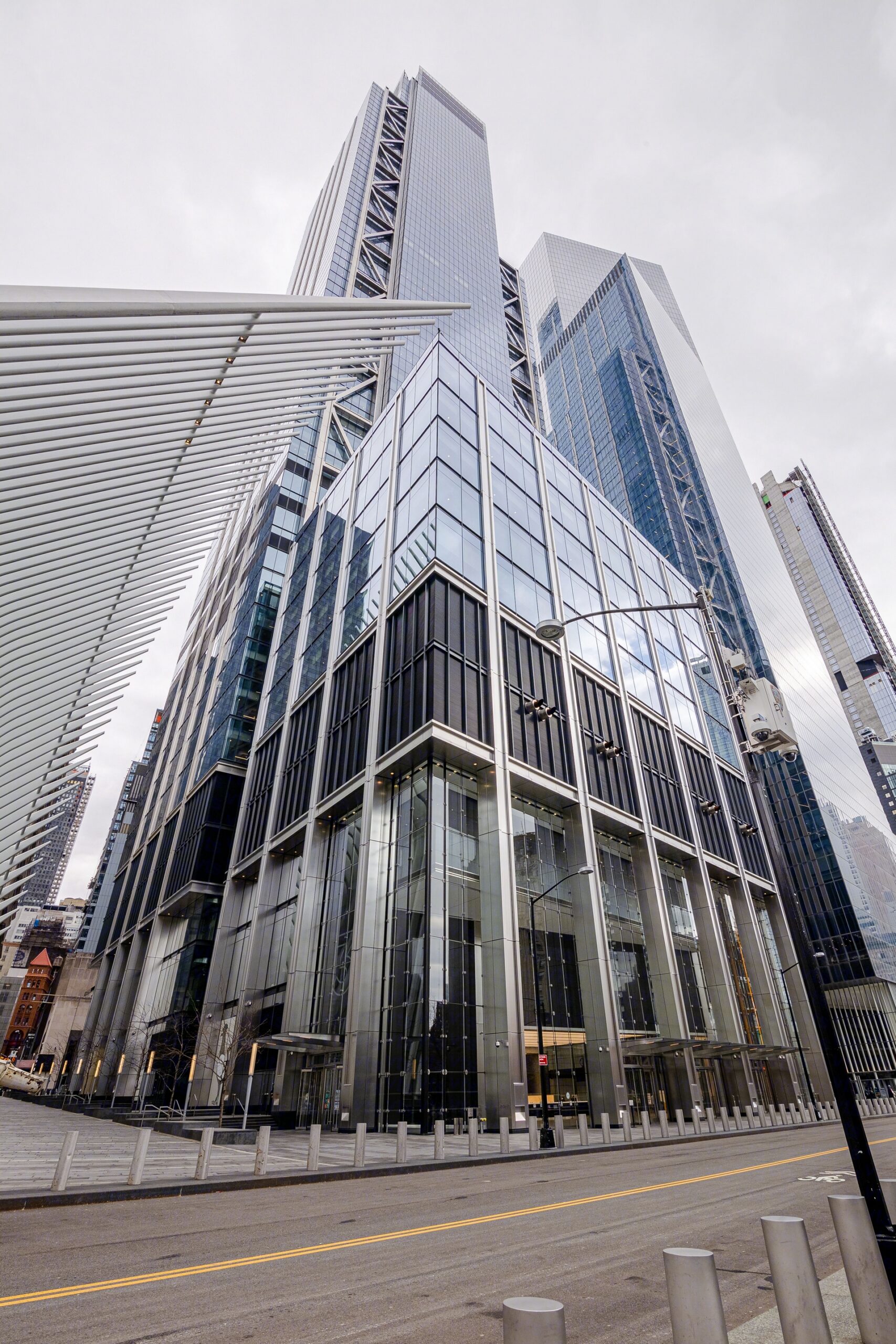
The World Trade Center site is a place of ghosts, steel, and incredible architectural ambition. Most people walking through Lower Manhattan today see the soaring height of One World Trade or the ribbed white wings of the Oculus and think the job is done. It isn't. Not by a long shot. Right there, on the southern edge of the site where the old Deutsche Bank Building used to stand, is a patch of land that has become one of the most debated pieces of real estate in American history. We're talking about 5 World Trade Center, the final skyscraper of the original master plan.
It’s been over two decades since 9/11. Why is this still a hole in the ground? For a more detailed analysis into similar topics, we recommend: this related article.
Honestly, the story of 5 World Trade Center is a messy mix of bureaucratic red tape, shifting economic priorities, and a massive community fight over who actually gets to live in the new New York. While the other towers were built as monuments to commerce and resilience, Tower 5 has become a lightning rod for the city's housing crisis. It’s the only spot in the complex where people will actually sleep at night. That changes the stakes completely.
The Long Road from Tragedy to Tower 5
Back in the day, the original 5 WTC was a nine-story office building. It didn't collapse immediately like the Twin Towers, but it was gutted by fire and eventually demolished. For years, the site—officially known as 130 Liberty Street—was occupied by the remains of the Deutsche Bank Building. That building was a nightmare to take down. It was contaminated with toxic dust and was the site of a tragic fire in 2007 that killed two firefighters. By the time the lot was finally cleared, the Port Authority and the Lower Manhattan Development Corporation (LMDC) had a blank slate, but no easy answers. To get more information on this development, in-depth reporting can also be found on Al Jazeera.
Initially, everyone thought it would be another office tower. JPMorgan Chase even looked at it for a while. But the world changed. The demand for massive floor-plate office space in Lower Manhattan started to soften, and the neighborhood started feeling a lot more residential. You’ve got grocery stores there now. You’ve got schools. So, the planners shifted gears.
In 2021, a team led by Silverstein Properties and Brookfield Properties won the bid to develop the site. Their vision? A 900-foot skyscraper designed by the famous firm Kohn Pedersen Fox (KPF). But this wasn't going to be just another glass box for hedge funds. It was proposed as a mixed-use residential tower. This is where things got really heated.
The Fight for Truly Affordable Housing
When the plans for 5 World Trade Center were first unveiled, the developer promised that about 25% of the 1,200 apartments would be "affordable." In New York City terms, that often means "affordable for people who still make a pretty good salary."
Community activists weren't having it.
Groups like 100% Affordable 5 WTC argued that building luxury condos on public land—especially land with such deep historical and emotional significance—was a slap in the face to the working-class New Yorkers who helped the city recover after the attacks. They wanted the whole thing to be affordable. They wanted homes for 9/11 survivors, first responders, and the people who were displaced from Lower Manhattan years ago.
You’ve gotta realize how rare this is. It's not every day you see protestors demanding more housing on the site of a national memorial. But that’s New York for you. The tension lasted for years. For a while, it looked like the project might just stall out forever because the math didn't work for 100% affordability without massive government subsidies that nobody wanted to sign off on.
The 2023 Breakthrough
Finally, in the summer of 2023, a deal was struck. Governor Kathy Hochul and Mayor Eric Adams announced a compromise. The tower will now include about 400 affordable units out of the roughly 1,200 planned. That’s roughly one-third of the building.
Is it 100%? No. But it’s significantly more than what was originally on the table. The state is putting up about $60 million, and there's another $5 million from the City Council to help cover the costs. This was a huge win for the community groups, even if they didn't get everything they wanted. It proved that in the shadow of One World Trade, public pressure can actually move the needle on urban planning.
What 5 World Trade Center Will Actually Look Like
If you’ve seen the renderings, the building is sleek. It’s got this sort of "shifted block" aesthetic that makes it look like it's composed of different sections stacked on top of each other. It’s not trying to compete with the height of the Freedom Tower, but at 80 stories, it’s still going to be a giant.
- Height: Approximately 900 feet.
- Residential Units: Around 1,200 apartments.
- Affordability: One-third of units reserved for lower and middle-income residents.
- Amenities: Large outdoor terraces, fitness centers, and community spaces.
- Commercial Space: There will still be some office and retail space at the base, about 190,000 square feet of it.
The design by KPF is meant to be a bridge. It bridges the commercial intensity of the WTC site with the more residential feel of Battery Park City and the Financial District. It’s supposed to be "human-scale" at the bottom, despite being a skyscraper.
Interestingly, the building will also house a permanent home for the World Trade Center Performing Arts Center (PAC NYC) which is nearby, though the tower itself will focus more on the residential and retail side. The idea is to make the WTC site a 24/7 neighborhood, not just a place where people commute to work at 9:00 AM and leave at 5:00 PM.
Why This Project Matters for the Future of NYC
This isn't just about one building. 5 World Trade Center is a test case for how New York handles public land in the future. We are in the middle of a massive housing shortage. Every time a new tower goes up, people ask: who is this for?
By forcing affordable housing into the most high-profile construction site in the world, activists set a precedent. It sends a message that even the most expensive real estate in the world can—and should—include the people who keep the city running.
There's also the environmental factor. Building a massive residential tower in a flood zone (remember Sandy?) requires some serious engineering. The developers have to account for future sea-level rise and extreme weather. This building will likely be one of the most resilient residential structures ever built in the city.
The Timeline: When Will it Be Finished?
If you're looking for a move-in date, don't pack your boxes just yet. Construction on these scales takes forever. Even though the deal is signed and the design is mostly set, groundbreaking only really gets moving once all the financing is locked down and the final permits are cleared through the maze of the Port Authority.
Current estimates suggest that we might see the building reach completion somewhere around 2028 or 2029.
That sounds like a long way off. But in the context of a site that has been under development since 2002, it’s the home stretch. When 5 World Trade Center finally opens its doors, the "New" World Trade Center will finally be complete. The scar in the skyline will be fully healed, or at least fully covered.
What You Can Do Now
If you are interested in the future of the neighborhood or perhaps even living in one of the affordable units, here is what you should keep an eye on:
- Watch NYC Housing Connect: This is the city's official portal for affordable housing lotteries. When the 400 units at 5 WTC eventually go up for grabs, it will be through this system. You’ll want your profile ready years in advance.
- Follow the LMDC Meetings: The Lower Manhattan Development Corporation still holds public sessions. If you live in the area, these are the places where small changes to the design or construction schedule are announced first.
- Visit the Site: Walk the perimeter of the southern site. You can see how it connects to Liberty Park and the St. Nicholas Greek Orthodox Church. It gives you a sense of the scale that a 900-foot tower will bring to that specific corner.
- Support Local Advocacy: Groups like Manhattan Community Board 1 are constantly reviewing the impacts of construction on local traffic and air quality. Staying involved with them is the best way to ensure the developers keep their promises regarding community benefits.
The story of 5 World Trade Center is still being written. It's a story of how a city recovers from a wound and how it decides what its values are in the process. It’s not just about glass and steel; it’s about making sure the people who love this city can actually afford to live in it.