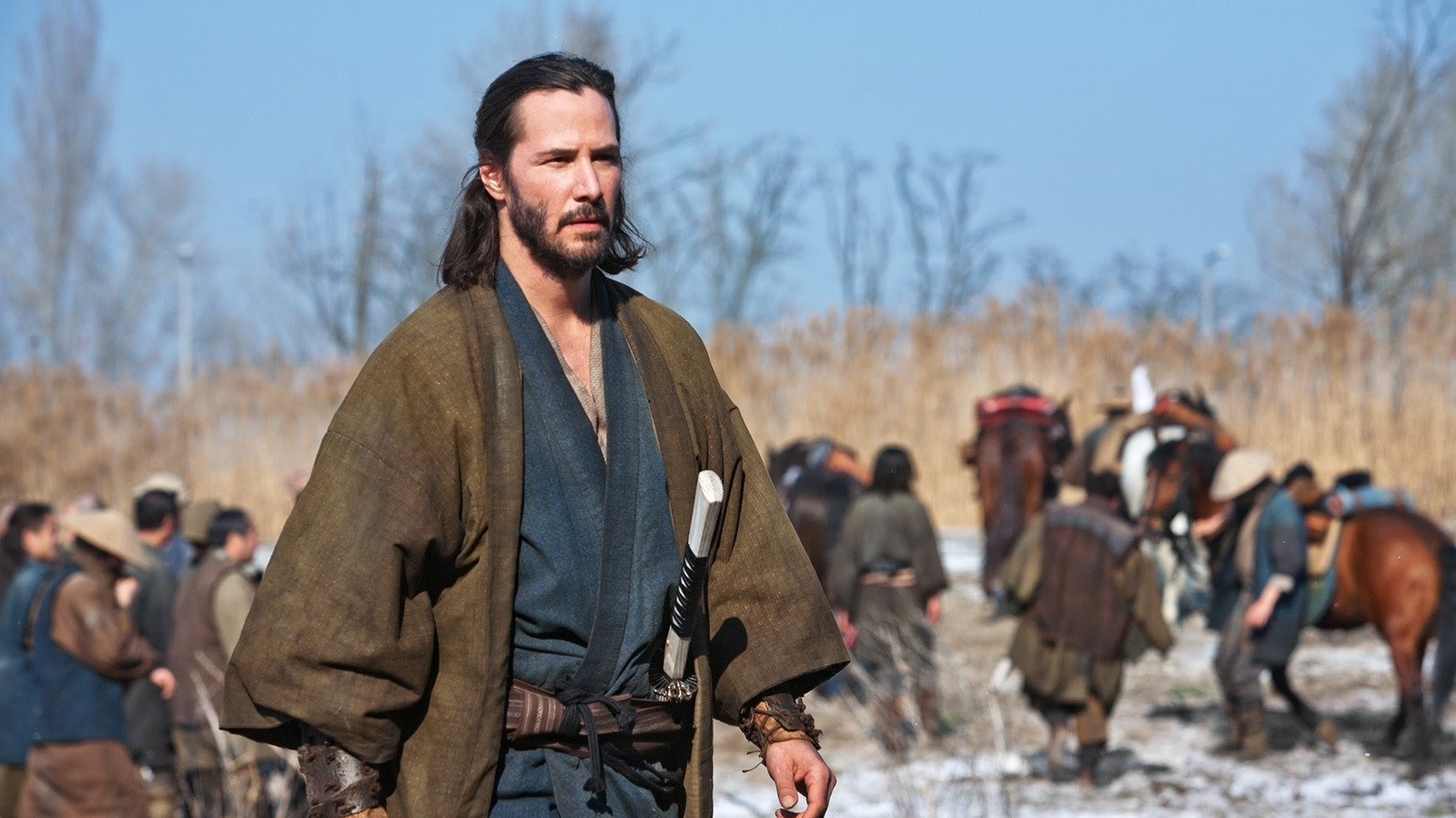
When you think of a Keanu Reeves samurai film, your brain probably goes straight to 47 Ronin. It’s that 2013 blockbuster that basically everyone called a disaster. Honestly, looking back, it's a miracle the movie even made it to theaters. It had a massive budget, a first-time director, and enough production drama to fill a whole separate documentary.
But here’s the thing. Despite the bad reviews and the "box office bomb" label, people are still watching it. It pops up on streaming services constantly. Why? Because underneath the messy CGI and the weird studio edits, there’s something kinda fascinating about how Hollywood tried to turn a sacred Japanese legend into a Lord of the Rings-style fantasy epic.
The Real Story vs. Hollywood Magic
The actual history of the 47 Ronin—the Akō Vendetta—is a big deal in Japan. It’s a story about loyalty, honor, and the lengths people will go to for their master. In 1701, Lord Asano was forced to commit seppuku after a conflict with a court official named Kira. His samurai became ronin (masterless) and spent over a year planning their revenge.
They eventually killed Kira and were then ordered to commit ritual suicide themselves. It’s a tragedy. It’s gritty. It’s real.
Enter Keanu Reeves and the "Half-Breed" Kai
Hollywood decided this story needed a bit more "oomph" for global audiences. They created the character of Kai, played by Keanu. He’s a fictional outcast of mixed English and Japanese ancestry who was raised by demons in the forest.
Wait, demons?
Yeah. The movie swaps historical realism for:
- Witches who can turn into dragons.
- Tengu masters who live in mystical forests.
- Giant ogres and armored beasts.
The writers, Chris Morgan (who did a lot of the Fast & Furious movies) and Hossein Amini, basically took a historical drama and shoved it into a blender with high-fantasy elements. Some fans loved the style. Others felt it was a bit disrespectful to the source material.
Why the Production Was a Total Mess
If you want to know why the movie feels a bit "off" in places, you have to look at what was happening behind the scenes. Universal Pictures gave a staggering budget—anywhere from $175 million to $225 million—to Carl Rinsch.
This was Rinsch’s first feature film. He was a commercial director before this.
The shoot in Budapest and London was notoriously difficult. There were constant delays. Reports surfaced that Rinsch was actually removed from the editing room because the studio wasn't happy with the "art-house" direction he was taking. Universal allegedly took over the final cut to make sure Keanu’s character had more screen time and to add more action beats.
The Financial Fallout
By the time the movie hit theaters on Christmas Day 2013, the buzz was toxic. It only made about $151 million worldwide.
When you factor in the marketing costs, the film reportedly lost the studio around $150 million. It’s often cited as one of the biggest flops in cinematic history. Even in Japan, where you'd think the interest would be highest, it bombed. Audiences there didn't really vibe with the "Kurosawa on meth" aesthetic.
Does 47 Ronin Actually Hold Up?
Okay, let's be real. It’s not a perfect movie. The pacing is weird, and some of the CGI looks a bit dated now. But if you watch it as a pure fantasy-action flick rather than a historical record, it’s actually pretty fun.
Keanu is, well, Keanu. He brings that quiet, intense energy he has in John Wick. And the Japanese cast is incredible. You've got Hiroyuki Sanada (who we all love from The Last Samurai and Shogun) as Oishi. He basically carries the emotional weight of the film. Rinko Kikuchi as the Witch is also a total scene-stealer.
The costumes by Penny Rose are gorgeous. The world-building—even if it's not historically accurate—is visually striking.
What You Should Know Before Watching
If you're going to dive into this Keanu Reeves samurai film today, keep a few things in mind:
- Ignore the "True Story" tag. It’s about as historically accurate as 300.
- Watch the 3D version if you can. It was actually shot in 3D, which was rare for the time, and the depth in some of the forest scenes is pretty cool.
- Appreciate the cast. It was one of the first major Hollywood films to feature an almost entirely Japanese cast alongside a Western lead.
Moving Forward With Samurai Cinema
If 47 Ronin leaves you wanting more, don't stop there. The "Chūshingura" story has been told dozens of times in Japanese cinema. Look for the 1962 version directed by Hiroshi Inagaki for a more traditional take.
Or, if you just want more Keanu-style action, check out the recent 47 Ronin: The Blade (2022). It's a sequel set 300 years in the future. It’s lower budget and more of a cyberpunk-samurai vibe, but it shows that this weird little franchise still has legs.
Ultimately, the 2013 film is a lesson in what happens when big-budget ambition hits the reality of studio interference. It’s a beautiful, messy, honorable failure that's worth at least one watch on a rainy Sunday afternoon.
Next Steps for Fans:
- Compare the 2013 film to the 1703 historical accounts of the Akō incident to see where the fantasy starts.
- Track down the concept art by Carl Rinsch to see the "art-house" movie he originally intended to make.
- Explore the filmography of Hiroyuki Sanada to see how he transitioned from this role to his recent success in Shogun.