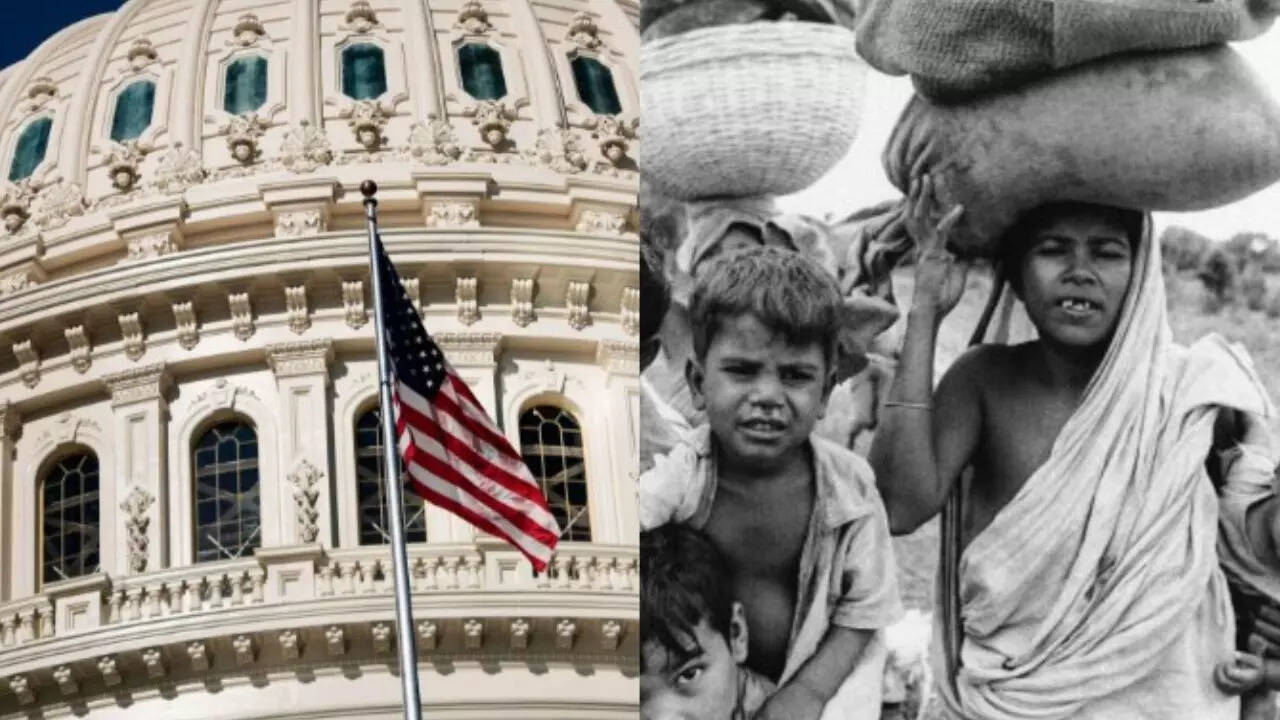
The 1971 atrocities in Bangladesh aren't just a "dark chapter" or a "civil war" footnote. We're talking about a systematic, cold-blooded campaign of mass murder, rape, and displacement that specifically targeted Bengali Hindus. For decades, the international community looked the other way because of Cold War optics and messy alliances. That silence is finally cracking. A resolution introduced in the US House of Representatives is pushing to officially recognize these acts by the Pakistani military as genocide. It’s about time.
History usually gets written by the winners, but in 1971, the victims were nearly erased before they could even speak. The Pakistani military, supported by local militias like the Razakars, launched Operation Searchlight on March 25, 1971. Their goal was simple: crush the Bengali nationalist movement. But their methods were barbaric. They didn't just target political activists; they went after the intellectual elite and the Hindu minority with a terrifying focus. Meanwhile, you can find similar events here: The Calculated Silence Behind the June Strikes on Iran.
Why the US House Resolution Matters Now
This isn't just a symbolic gesture for the history books. This resolution, spearheaded by Congressmen like Steve Chabot and Ro Khanna, explicitly calls on the President of the United States to recognize the atrocities committed against Bengalis and Hindus as crimes against humanity, war crimes, and genocide.
Why does this matter in 2026? Because you can’t build a stable future on a foundation of unacknowledged mass graves. Pakistan has never formally apologized for the 1971 genocide. By pushing for this tag, the US is signaling that strategic partnerships shouldn't provide a shield for historical accountability. If the US officially recognizes this, it changes the diplomatic dynamic in South Asia forever. It forces a conversation about reparations, textbooks, and the fundamental truth of how Bangladesh was born. To see the full picture, check out the recent analysis by NPR.
The Numbers the World Ignored
People argue about the death toll. Some say 300,000. The government of Bangladesh says three million. Honestly, even the lower estimates represent a slaughter on a scale that defies comprehension. Think about that. Even at the "conservative" end, we're talking about the systematic elimination of an entire generation of thinkers, teachers, and community leaders.
The violence against women was a weapon of war. Estimates suggest between 200,000 and 400,000 women were victims of state-sponsored mass rape. This wasn't "collateral damage." It was a deliberate policy intended to break the spirit of the Bengali people and "purify" the population. It’s stomach-turning. Yet, for years, the US State Department—led by Henry Kissinger at the time—ignored the frantic cables from Archer Blood, the US Consul General in Dhaka. Blood warned of a "selective genocide," but his career was sidelined for telling a truth that was inconvenient for Nixon’s foreign policy.
Targeting the Bengali Hindu Population
The resolution specifically highlights the plight of Bengali Hindus. While the Pakistani army targeted all Bengalis who wanted independence, Hindus bore a disproportionate brunt of the hatred. They were viewed as an internal "fifth column" for India.
The statistics are staggering. Roughly 80% of the ten million refugees who fled into India during the nine-month conflict were Hindu. Their homes were torched. Their temples were leveled. In many villages, the military would separate the men, check for circumcision to identify Muslims, and execute those who didn't pass the "test." This was ethnic cleansing in its purest, most horrific form.
The Role of Local Collaborators
The Pakistani military didn't act alone. They had help. Groups like the Razakars, Al-Badr, and Al-Shams—mostly made up of religious extremists—acted as the eyes and ears of the army. They knew who the professors were. They knew which houses belonged to Hindus.
These collaborators were the ones who rounded up the "intellectuals" in the final days of the war, just before Pakistan surrendered. They took doctors, journalists, and poets to killing fields like Rayer Bazar and executed them. They wanted to ensure that even if Bangladesh became independent, it would be a "brain-dead" nation. They almost succeeded.
The Problem with Selective Memory
Pakistan’s official narrative often paints 1971 as a "conspiracy" by India. They focus on the fall of Dhaka and the military defeat, glossing over the months of slaughter that preceded it. This denialism is dangerous. It fuels radicalism and prevents the region from ever truly moving past the trauma.
When a country refuses to acknowledge its crimes, it’s doomed to repeat the mindsets that led to them. You see the echoes of 1971 in how religious minorities are treated in the region today. That’s why the "genocide" tag is so vital. It’s a tool for truth-telling. It’s about saying that what happened in 1971 wasn't just "war"—it was an attempt to wipe out a culture and a faith.
What Recognition Would Actually Change
You might think a US House resolution is just paper. It’s not. Official recognition triggers several shifts:
- Educational Impact: It forces international textbooks to stop using vague language like "internal unrest" and start using the word genocide.
- Legal Precedent: It provides a framework for future international court cases or claims for reparations.
- Diplomatic Pressure: It makes it harder for the US and other Western nations to provide unconditional military aid to regimes that refuse to reckon with a history of mass violence.
- Closure for Survivors: For the millions of families in Bangladesh and the diaspora, it’s a long-overdue validation of their pain.
Moving Toward Accountability
The world has spent fifty years ignoring the ghosts of 1971. We talk about Rwanda, we talk about Srebrenica, and we talk about the Holocaust—as we should. But the fields of Bangladesh are just as soaked in blood, and the victims deserve the same level of global recognition.
If you want to support this movement, stay informed. Read the Archer Blood telegrams. Look at the work of the International Crimes Tribunal in Bangladesh, which, despite its political complexities, has tried to bring aging collaborators to justice. Support organizations that document the oral histories of the survivors.
The goal isn't to hold a grudge against today's generation of Pakistanis. It’s to ensure that the state itself cannot hide behind a curtain of lies. The truth is messy, and it’s painful, but it’s the only way forward. Write to your representatives. Tell them that historical truth isn't negotiable. Demand that the 1971 genocide finally be called what it is. No more euphemisms. No more looking away.